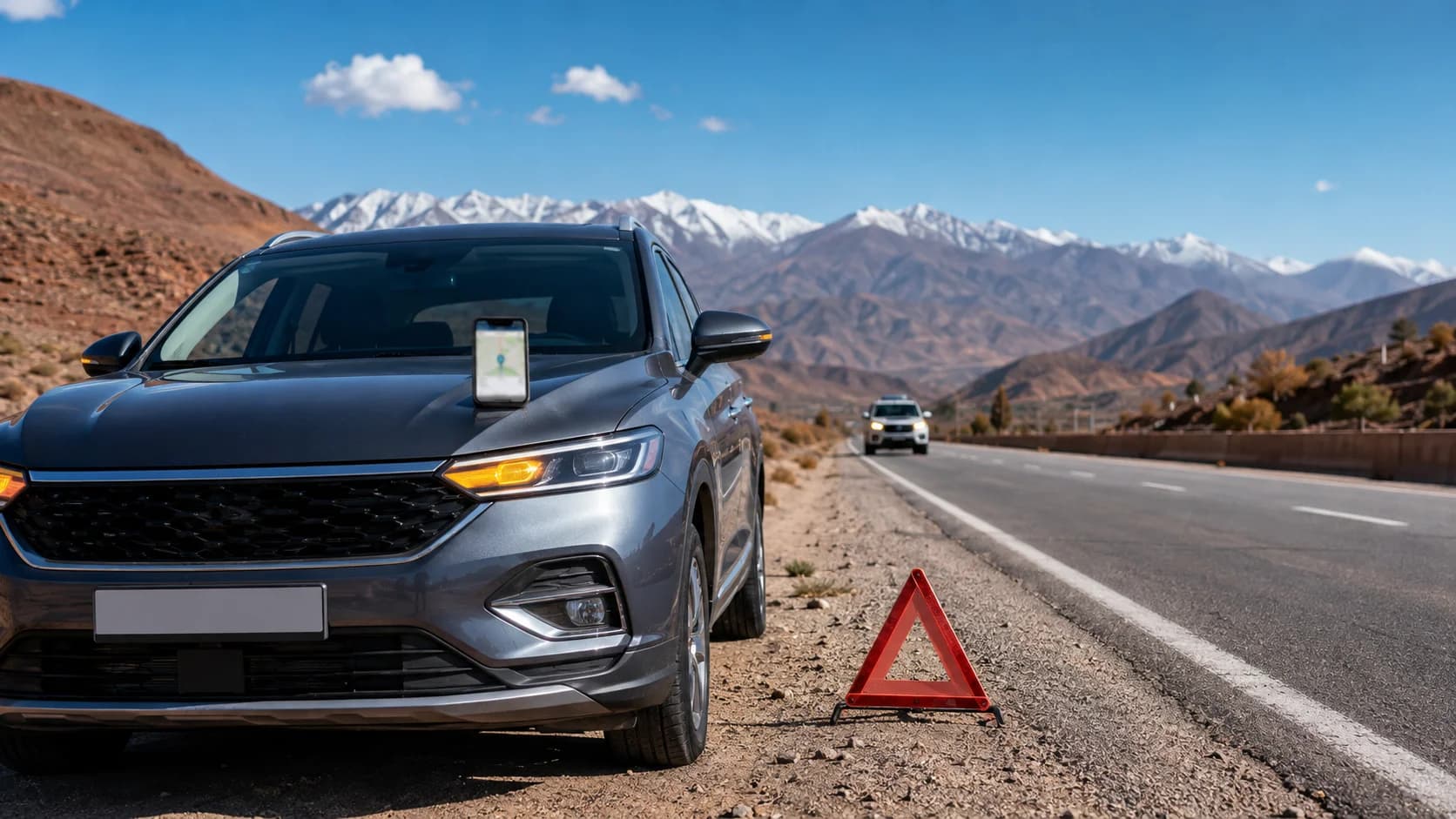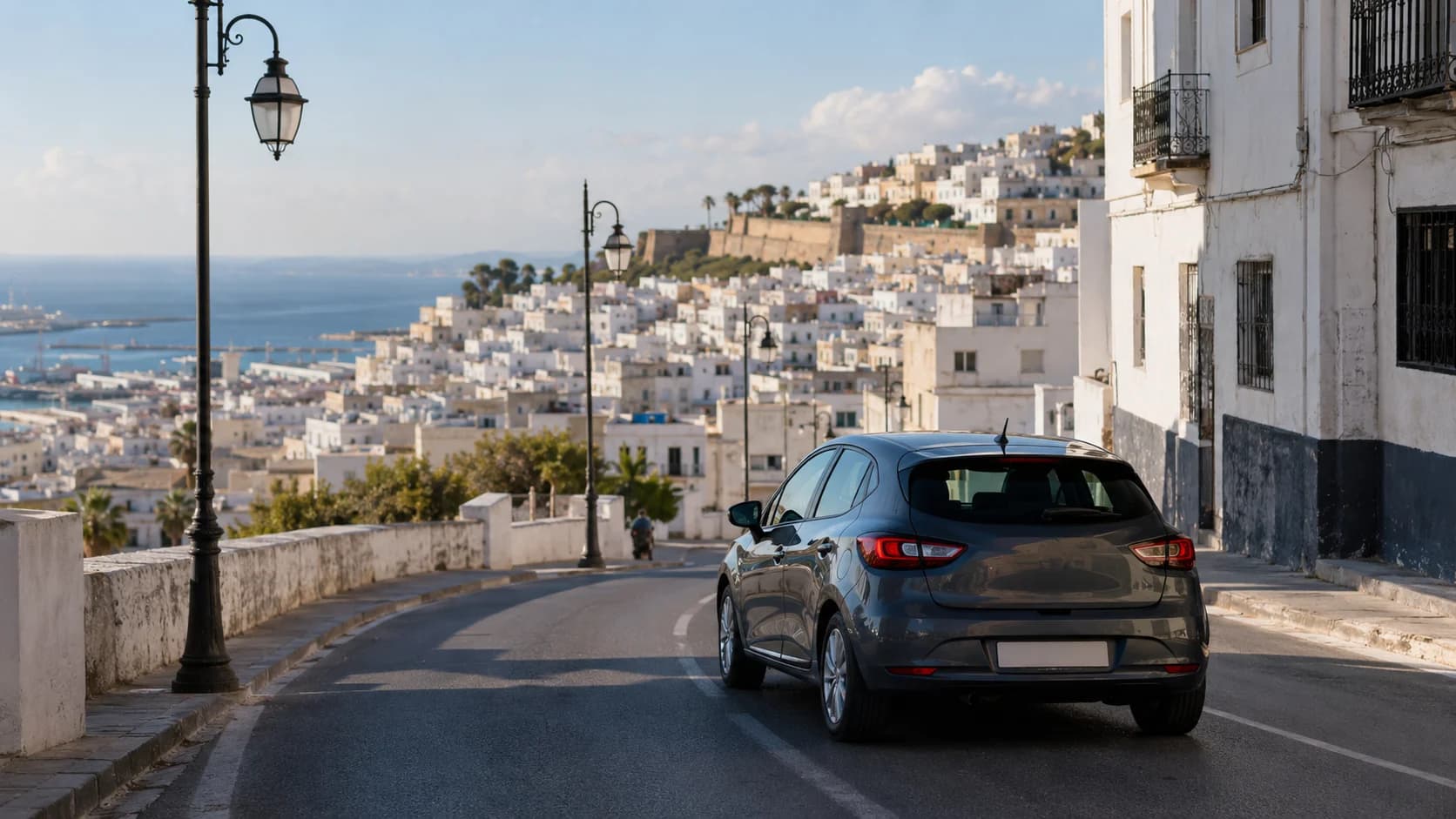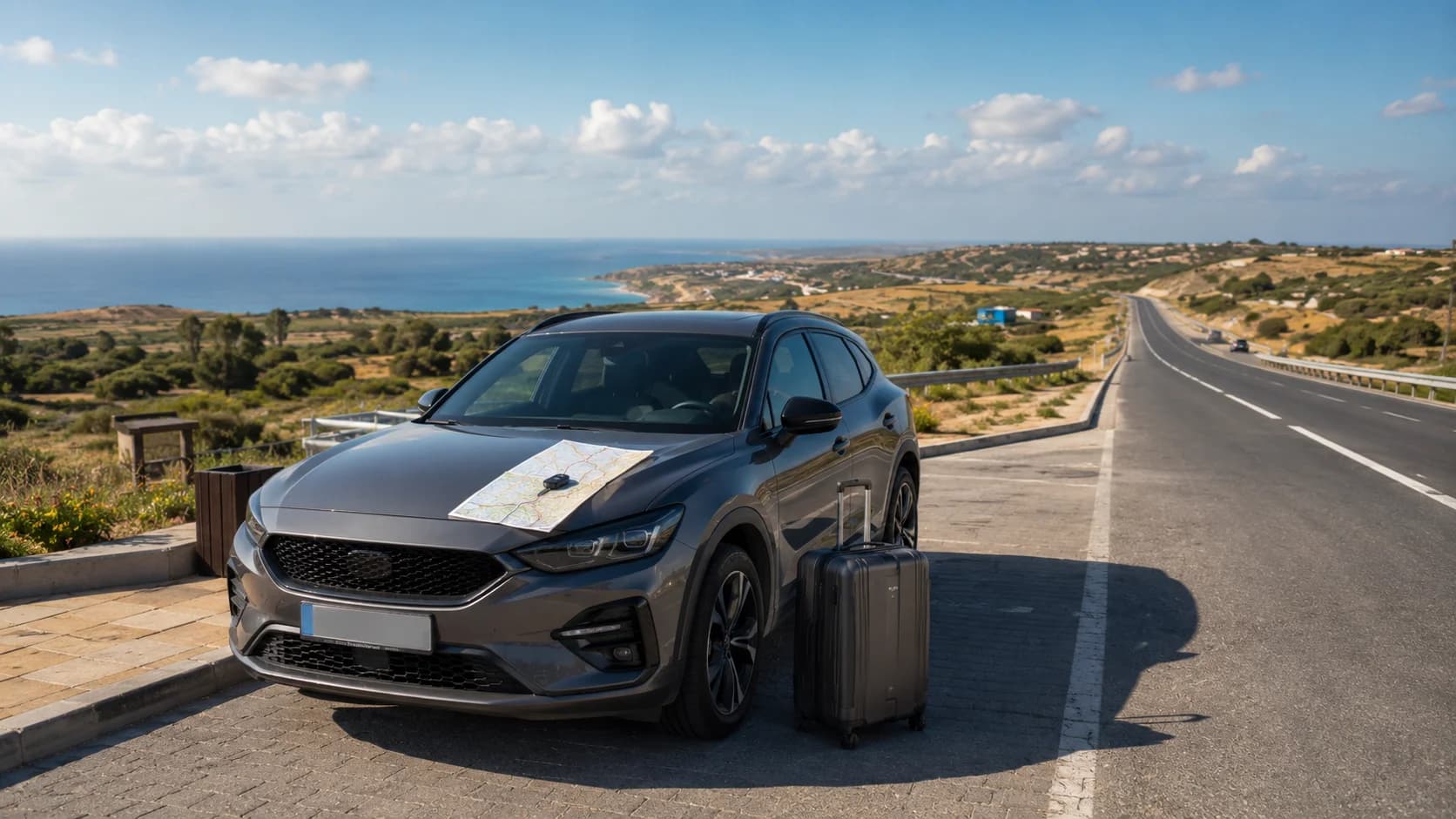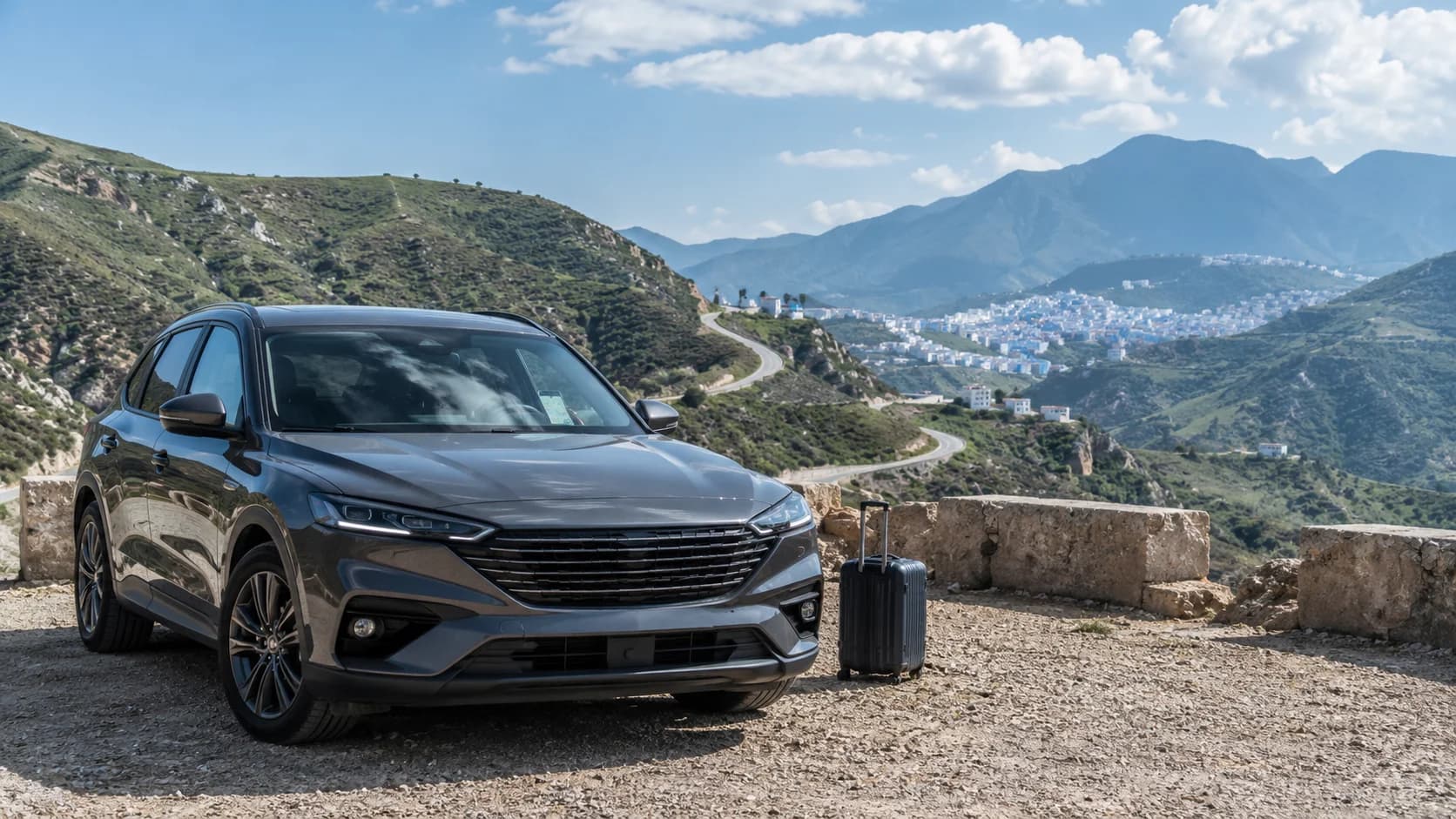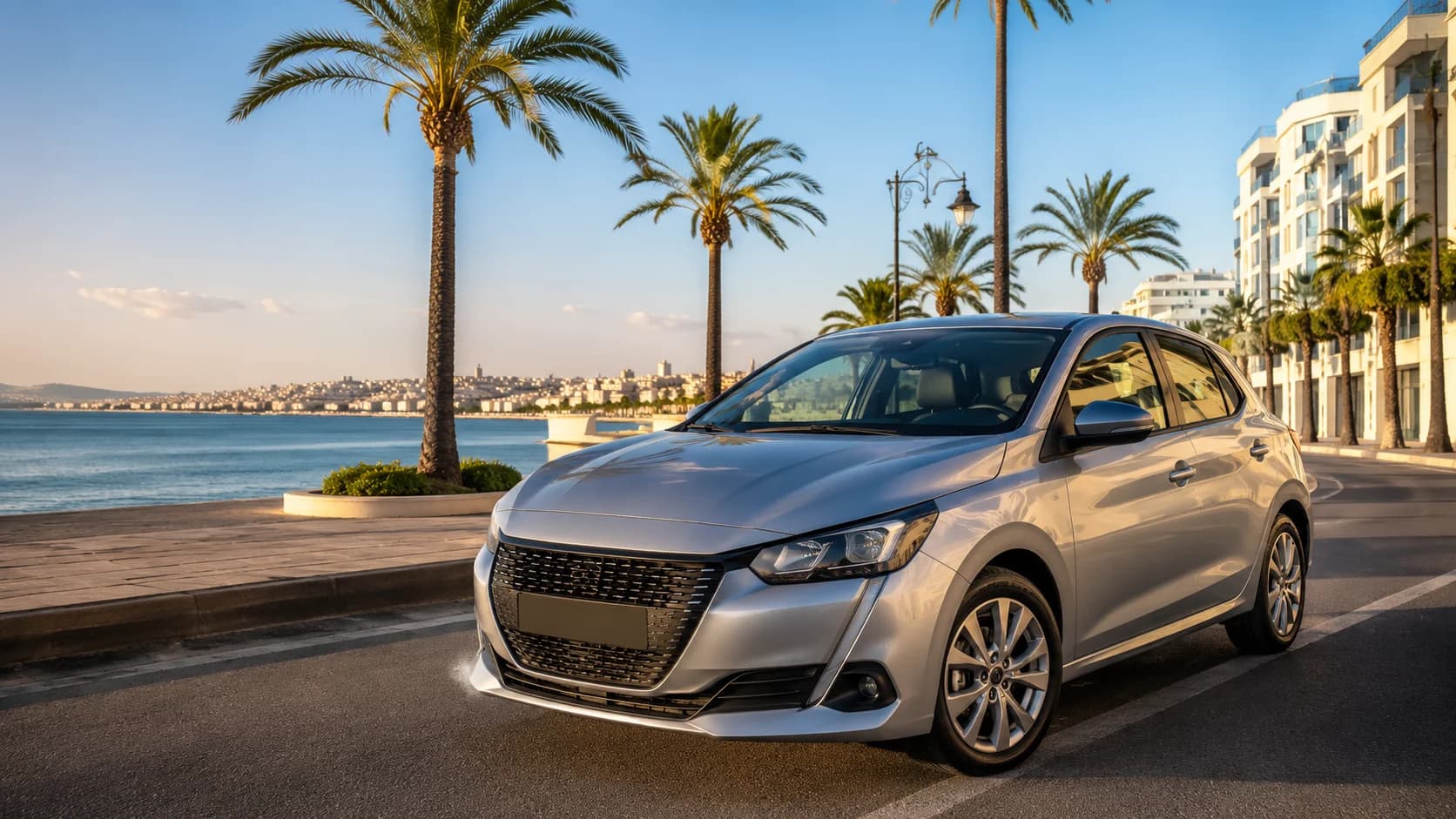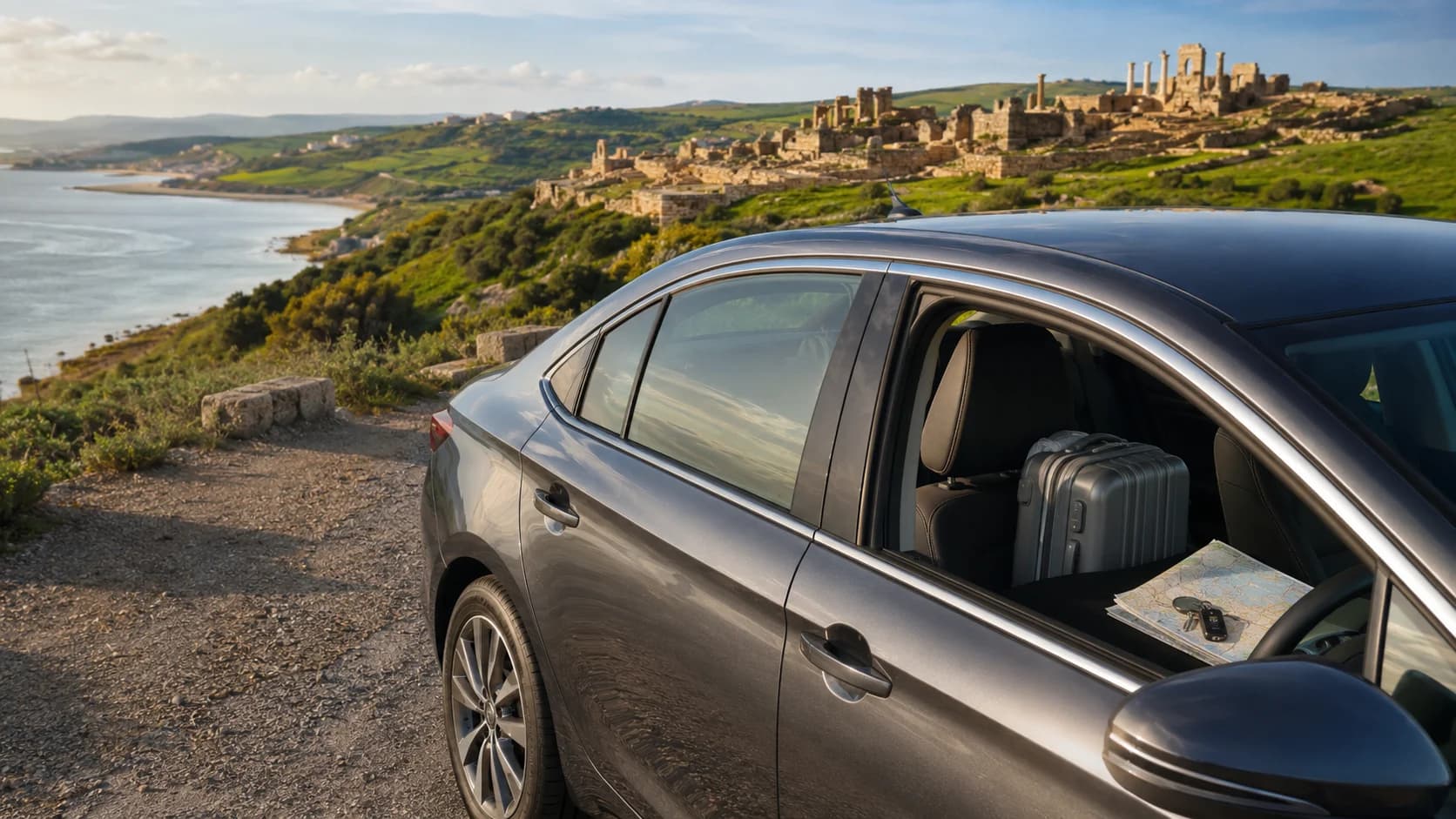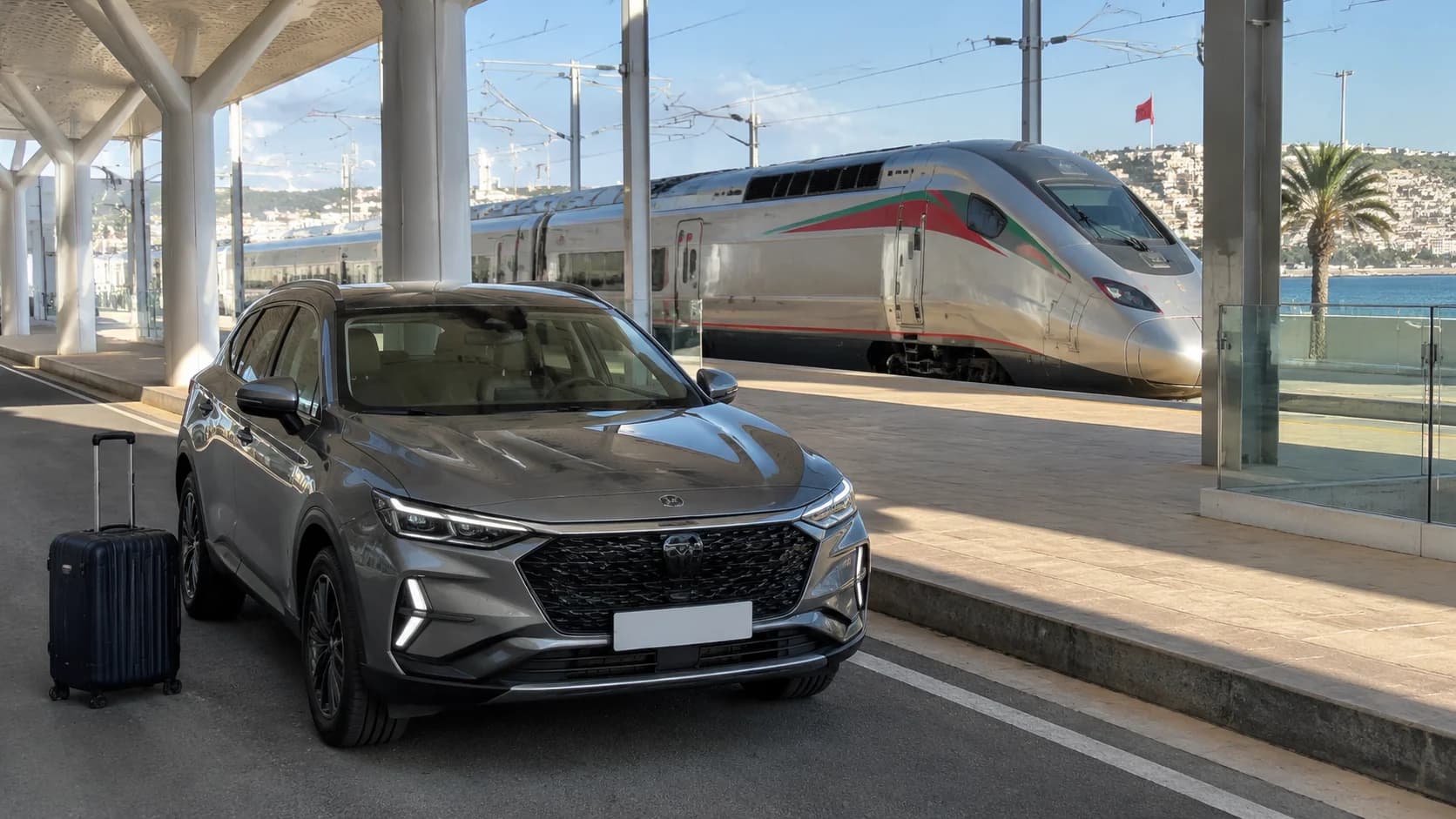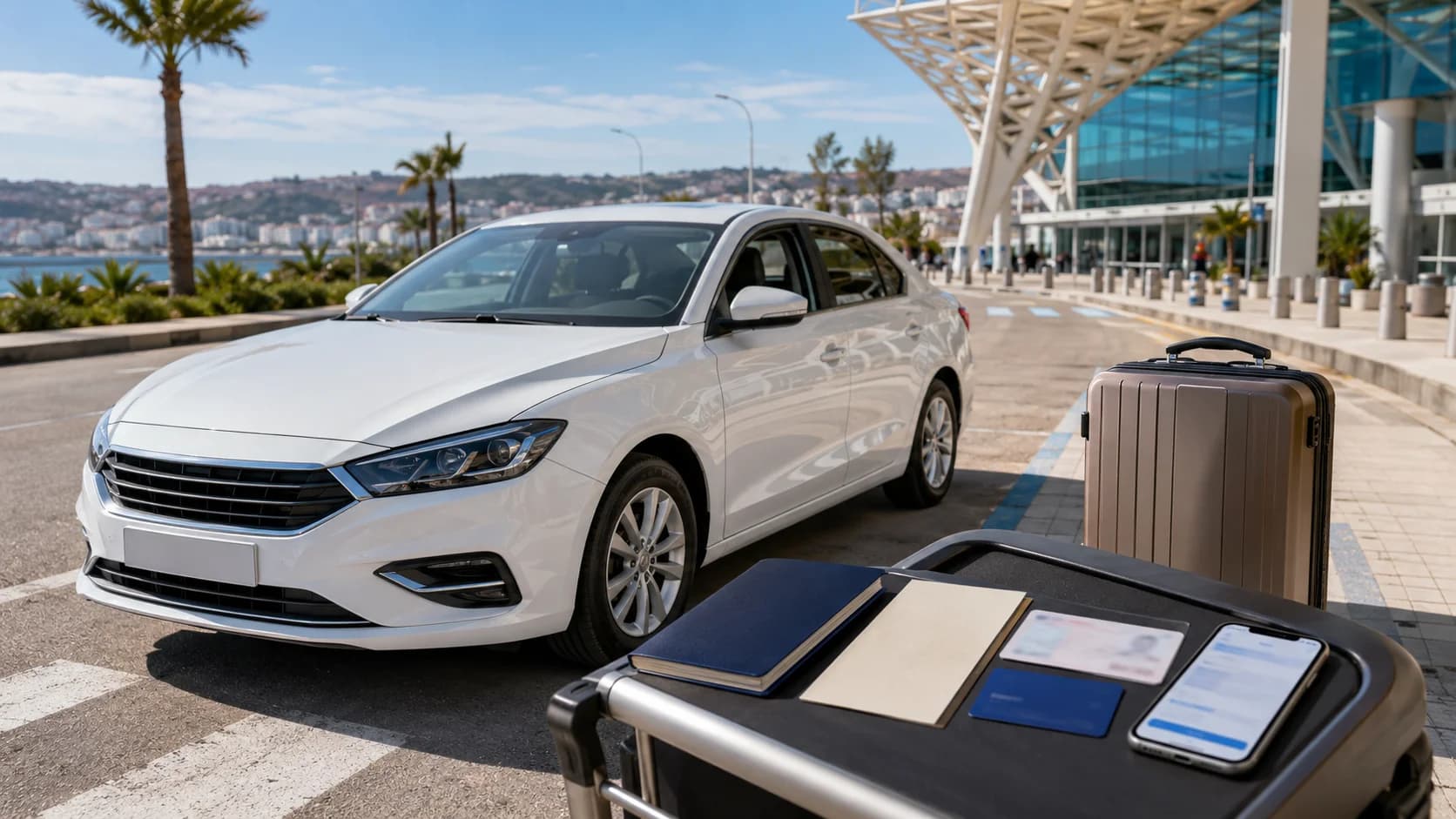









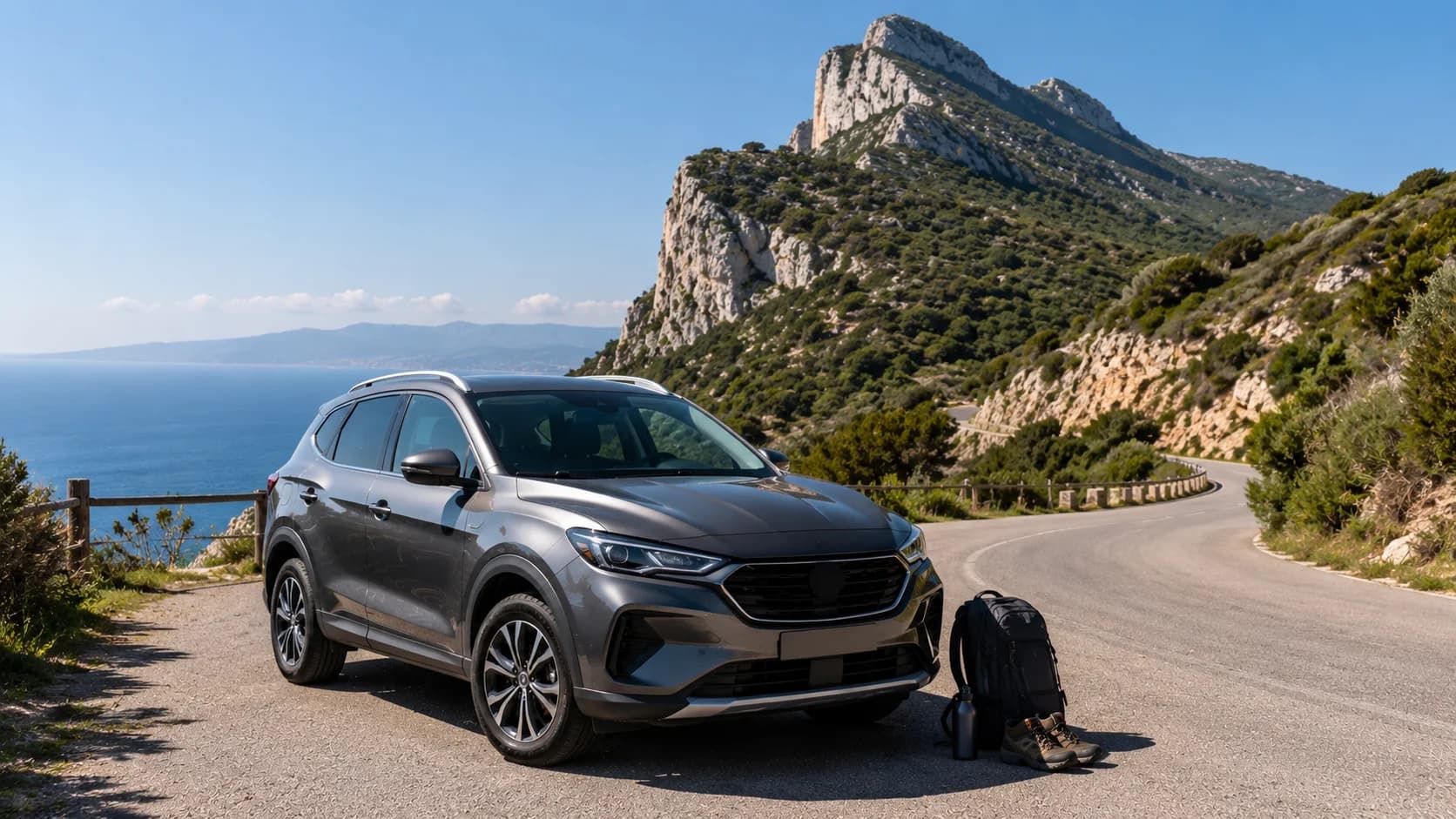
A Tangier to Jebel Moussa by car day trip combines one of northern Morocco’s most scenic drives with access to a rugged mountain and coastal landscape near the Strait of Gibraltar. For self-drive travelers, the most important point is to treat the journey as two separate parts: first, reaching the Jebel Moussa area safely by car, and second, completing the hike on foot.
Belyounech, a coastal village at the foot of Jebel Moussa, is commonly used as an access point for hikes in the area. Published hiking accounts place it roughly 70 km from Tangier, with driving times often around 1 to 1.5 hours depending on the chosen route, traffic and the exact stopping point.
For travelers planning a Jebel Moussa day trip from Tangier, a rental car can make the road portion easier because you can leave early, carry water and hiking equipment, and manage your own return schedule. The main challenge is not simply reaching the mountain area, but deciding beforehand where you intend to leave the car and begin walking.
Can You Drive from Tangier to Jebel Moussa?
Yes. You can drive from Tangier toward the Jebel Moussa area, with Belyounech being one of the most commonly referenced starting points for hikes. The car takes you to the access area; it does not take you to the summit.
A practical plan is:
-
Leave Tangier early.
-
Drive toward the Belyounech/Jebel Moussa area.
-
Confirm your intended hiking access point before departure.
-
Park only where it is safe and permitted.
-
Complete the mountain section on foot.
-
Return to the vehicle with enough daylight for the drive back to Tangier.
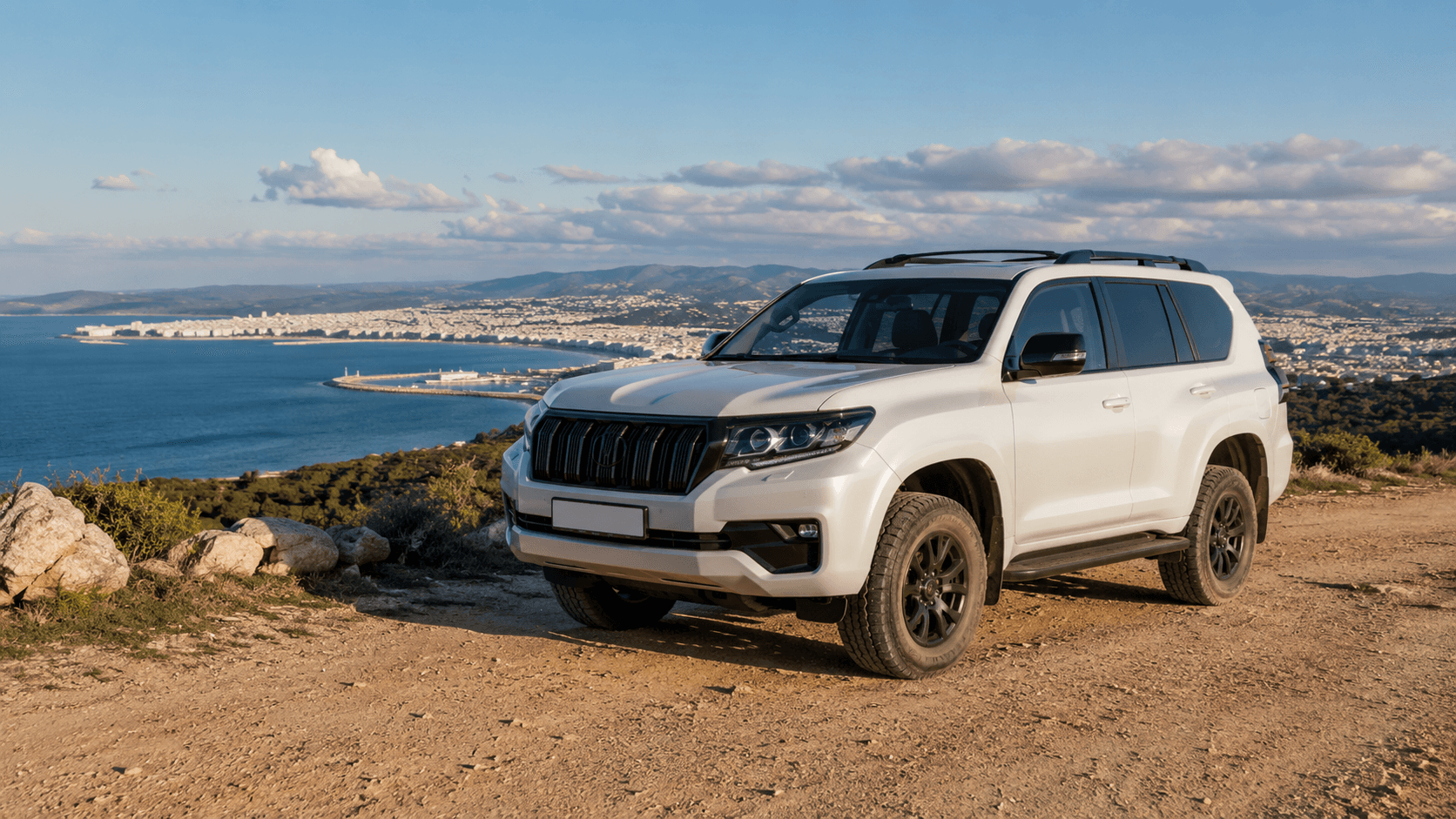
A sedan can be practical when you remain on normal surfaced roads. An SUV can provide additional clearance and luggage space, while a 4x4 becomes more relevant only when your confirmed access plan genuinely involves rougher surfaces.
Table of Contents
- Jebel Moussa Trip Overview
- How to Drive from Tangier Toward Jebel Moussa
- Choosing a Practical Hiking Access Point
- Road Conditions and the Final Approach
- Parking Before the Hike
- What to Carry in the Car
- SUV vs Sedan vs 4x4
- Daylight, Weather and Return Timing
- Frequently Asked Questions
Jebel Moussa Trip Overview
Jebel Moussa rises above Morocco’s northern coast close to the Strait of Gibraltar. The nearby village of Belyounech is promoted locally as a destination connected with the mountain, coastal scenery and outdoor tourism.
For drivers coming from Tangier, the key planning mistake to avoid is treating “Jebel Moussa” like a normal attraction with one large official entrance and one obvious parking area.
Hiking sources describe routes starting around Belyounech, but individual recorded trails differ significantly in length, elevation gain and difficulty. That means you should not choose a starting point simply because an online map places you close to the mountain.
Driving and hiking are separate parts of the trip
Think of the day as:
Tangier → road journey → selected access area → parked car → hike → parked car → Tangier
This distinction matters because a rental car solves the transport problem, not the hiking-navigation problem.
Before leaving Tangier, save the location where you plan to park, save your return route offline if possible, and make sure your hiking plan corresponds to that parking location.
How to Drive from Tangier Toward Jebel Moussa
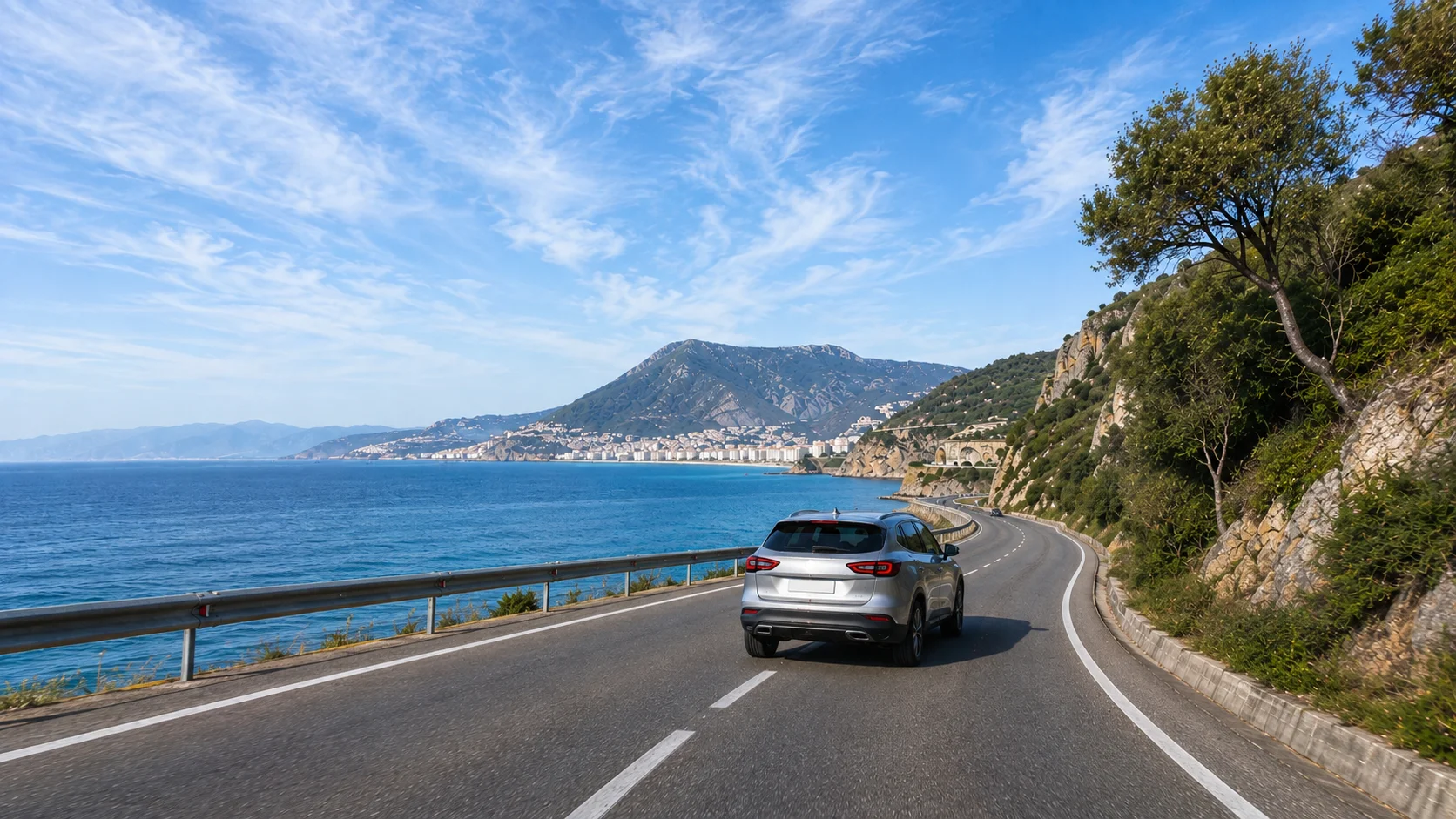
The journey heads east from Tangier toward Morocco’s northeastern Strait of Gibraltar coastline.
A commonly referenced road approach to Belyounech uses the N16 corridor before turning toward the village. Hiking guide publisher Rother describes accessing Belyounech from the N16 on the approach from the Ceuta/Fnideq side, confirming the village’s road connection to this coastal corridor.
For someone starting in Tangier, navigation should therefore be planned around your specific Belyounech access point, rather than simply entering “Jebel Moussa” into a map and following the final pin without checking where it leads.
How long does Tangier to Jebel Moussa take?
Published estimates vary according to what is treated as the destination. One hiking account estimates about 90 minutes from Tangier to Belyounech, while route-planning services can show shorter times under favorable driving conditions.
For a hiking day, it is safer to budget approximately 1 to 1.5 hours each way rather than planning around the fastest theoretical journey.
That gives you room for:
-
slower sections,
-
navigation stops,
-
finding the correct access road,
-
locating a suitable parking place,
-
and unexpected traffic.
Choosing a Practical Hiking Access Point
This is the most important preparation step for a Tangier hiking road trip.
Belyounech is repeatedly identified by hiking resources as a common starting area for Jebel Moussa routes.
However, that does not mean every road or track around the village leads to the same trail.
Different hiking records show different route lengths and profiles. One recorded Belyounech route covers roughly 9 km, while another published route describes a longer 12 km outing.
Therefore, before driving from Tangier:
Choose the hike first, then choose the parking location.
Do not do it in the opposite order.
Where do you start a Jebel Moussa hike?
Many published routes begin around Belyounech, but there is no reason to assume that every traveler should use exactly the same starting point.
Your selected route, hiking experience and current local access conditions should determine where you begin.
If you are uncertain about the route, local guidance is more useful than improvising from a general map pin.
Road Conditions and the Final Approach
The road-driving portion and the mountain-access portion should also be treated differently.
Normal public roads toward Belyounech are one thing. Small local roads, steep lanes or unpaved approaches near a chosen hiking start are another.
That distinction influences which rental vehicle makes sense.
Stay on confirmed vehicle-access roads
Do not follow a hiking GPS track with your car simply because the line appears drivable on a phone screen.
Hiking routes can include:
-
footpaths,
-
rocky sections,
-
steep slopes,
-
narrow village passages,
-
or surfaces unsuitable for normal vehicles.
Several published Jebel Moussa hikes describe substantial elevation gain and rocky mountain terrain, reinforcing that the summit portion is a hiking objective rather than a vehicle route.
If the final approach appears rough, narrow or questionable, stop at an appropriate safe parking area rather than attempting to continue simply because you rented an SUV or 4x4.
Is higher ground clearance useful?
Sometimes.
Higher ground clearance can be reassuring if your confirmed parking location involves uneven surfaces, but it should not be treated as permission to enter unofficial tracks.
A normal sedan remains entirely reasonable for a car rental Tangier hiking trip when your plan keeps the vehicle on paved or ordinary maintained roads.
Parking Before the Hike
Visitors often search specifically for Jebel Moussa parking, but hikers should be careful about assuming there is one universal official car park for every route.
Because access routes differ, parking arrangements may also differ.
The best approach is to determine before departure:
-
the exact hike you plan to follow,
-
the intended walking start,
-
the nearest sensible place where vehicles can be left,
-
and whether local access or parking arrangements have changed.
Safe parking practices
When leaving a rental car for several hours:
Do not leave passports, cash, laptops, cameras or visible luggage inside the cabin.
Place non-essential items out of sight before arriving at the parking location rather than moving valuables around after you park.
Also avoid:
-
blocking gates or entrances,
-
narrowing a local road,
-
parking on unstable ground,
-
obstructing another vehicle,
-
or leaving the car somewhere that may become difficult to exit later.
Take a photo of your parked-car location and save its GPS position before starting the hike.
That simple step can be surprisingly useful after several hours on the mountain.
What to Carry in the Car
One advantage of driving yourself is that the car can serve as a base for the day.
Bring enough equipment for both the drive and the walk.
Water
Carry more water than you expect to need, especially during warmer weather.
Do not plan your entire hydration strategy around being able to purchase water immediately at the hiking start.
Proper footwear
Published hiking reports describe rocky terrain, loose surfaces and, on some routes, steeper sections near the upper mountain.
Walking shoes or hiking footwear with useful grip are therefore more appropriate than casual city footwear.
Useful items to keep in the car
Consider carrying:
-
additional drinking water,
-
snacks,
-
sun protection,
-
a hat,
-
light extra clothing,
-
a small first-aid kit,
-
a phone charging cable or power bank,
-
offline navigation,
-
and clean shoes or clothing for the drive back.
The car is particularly useful for storing items you need for the journey but do not want to carry throughout the hike.
SUV vs Sedan vs 4x4 for Jebel Moussa
You do not automatically need a 4x4 simply because Jebel Moussa is mountainous.
Choose the vehicle for the road you actually intend to drive, not for the hiking terrain you will cover on foot.
Sedan
A sedan is a sensible choice if you:
-
plan to stay on normal surfaced roads,
-
are traveling with one to four people,
-
have limited hiking equipment,
-
and do not intend to drive rough approaches.
For comfortable road travel from Tangier, browse sedan rental Tangier.
SUV
An SUV can be useful if you want:
-
additional ground clearance,
-
more luggage and equipment space,
-
easier loading of hiking gear,
-
or a more flexible vehicle for a longer northern Morocco road trip.
See available SUV rental Tangier.
4x4
A 4x4 makes more sense when your wider itinerary includes genuinely rough roads or destinations where additional traction and clearance are useful.
It should not be rented simply to drive onto unknown mountain tracks.
Which one should you choose?
For most travelers, think of it this way:
Normal road access: sedan
More space and clearance: SUV
Confirmed rough-road itinerary: 4x4
The hiking route itself does not determine the car category because the vehicle remains parked while you climb.
Daylight, Weather and Return Timing
A successful drive to Jebel Moussa Morocco depends heavily on timing.
Because some published hikes require several hours and significant elevation gain, leaving Tangier late can create unnecessary pressure on the return. Recorded and published routes vary considerably, with examples ranging from roughly four to several hours depending on the chosen route and pace.
Leave Tangier early
For most hikers, morning departure provides the best margin.
An early start gives you time to:
-
drive without rushing,
-
confirm the correct starting point,
-
organize parking,
-
complete the hike,
-
handle delays,
-
return to the car before darkness,
-
and drive back toward Tangier comfortably.
Do not treat a published hiking time as a guarantee
Trail times depend on:
-
fitness,
-
route choice,
-
navigation,
-
stops,
-
surface conditions,
-
wind,
-
heat,
-
and group pace.
One recorded Jebel Moussa route shows a substantial difference between moving time and total elapsed time, illustrating why driving plans should include a generous buffer.
Check conditions before departure
Mountain and coastal conditions can change.
If visibility, wind or rain makes your planned hike unsuitable, the fact that you already rented a car should never become a reason to continue with an unsafe plan.
The advantage of having your own vehicle is flexibility: you can delay, change your activity or turn the outing into a northern-coast road trip instead.
Frequently Asked Questions
Can you drive from Tangier to Jebel Moussa?
Yes. You can drive from Tangier to the Jebel Moussa area, with Belyounech commonly referenced as an access point for hiking routes. The mountain ascent itself is completed on foot.
How long does it take to reach Jebel Moussa from Tangier?
Allow roughly 1 to 1.5 hours for the road journey toward the Belyounech access area, although actual driving time depends on traffic, your route and the exact location where you plan to park. Published estimates vary.
Where should I park for a Jebel Moussa hike?
Parking depends on the hiking route and starting point you select. Rather than looking for one generic “Jebel Moussa parking” pin, identify your hike first and confirm an appropriate vehicle-accessible parking location nearby.
Do I need a 4x4 for Jebel Moussa?
Not necessarily. A sedan can work when the road portion stays on normal surfaced roads. An SUV provides additional clearance and space. Choose a 4x4 only when your confirmed road itinerary genuinely requires it.
Is Jebel Moussa a good day trip from Tangier?
Yes, it can work well as a full-day outdoor trip because the Belyounech area is reachable by road from Tangier and serves as a common starting point for Jebel Moussa hikes.
What should I bring for the drive and hike?
Bring plenty of water, suitable footwear, sun protection, snacks, offline navigation, a charged phone or power bank, and additional clothing appropriate to the conditions. Keep unnecessary valuables out of sight in the vehicle.
Is the road to Jebel Moussa suitable for a normal rental car?
A normal rental car can be suitable for the standard road portion toward the access area. What matters is the final parking location you choose. Do not attempt rough or unofficial tracks simply because a map appears to show vehicle access.
What time should I leave Tangier for Jebel Moussa?
An early-morning departure is the most practical option. It creates a buffer for the drive, parking, several hours of hiking and the return to Tangier before darkness.
Plan Your Tangier to Jebel Moussa Road Trip
A Tangier to Jebel Moussa by car trip works best when the road journey is planned as carefully as the hike itself. Choose your hiking access point before leaving Tangier, keep the rental car on appropriate vehicle roads, park responsibly and allow generous daylight for the return.
For the vehicle, there is no universal requirement for a 4x4. A sedan may be perfectly practical for standard road access, while an SUV offers extra space and ground clearance for travelers carrying hiking equipment or combining Jebel Moussa with a wider northern Morocco itinerary.
Plan the road portion with confidence with MarHire Car Tangier, with practical SUV rental options, 4x4 rentals and sedan rentals, clear booking terms and local support before departure.