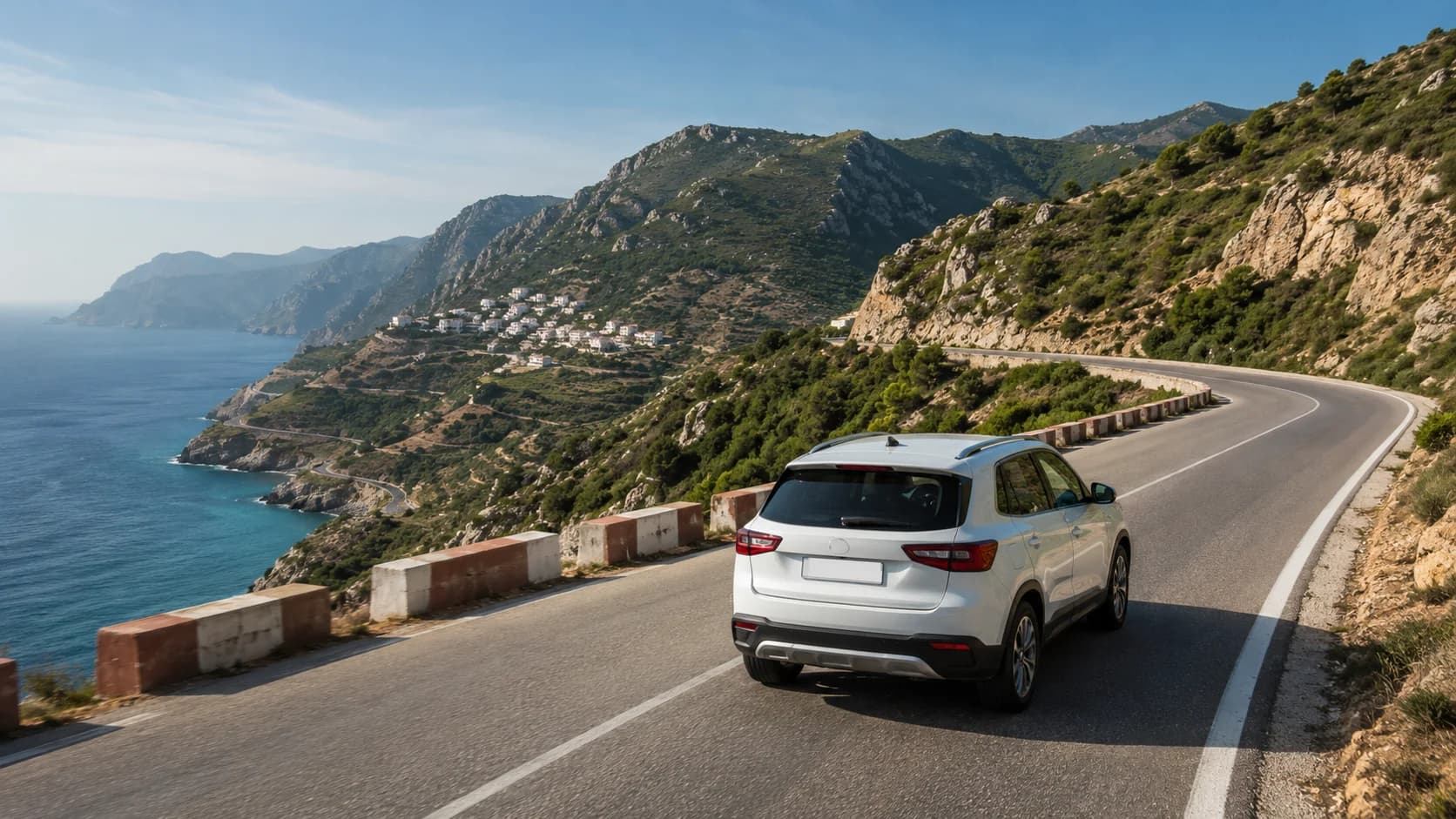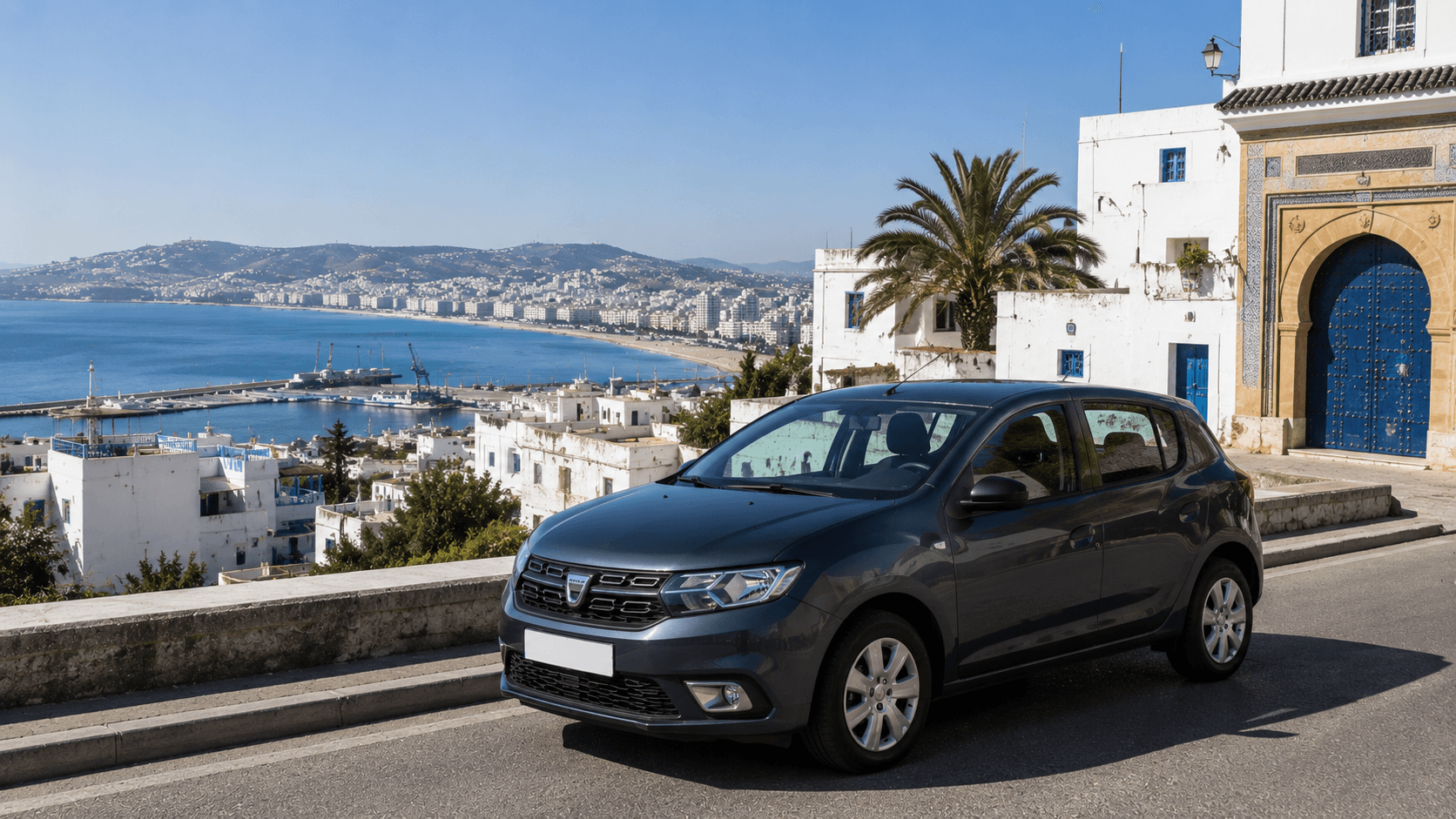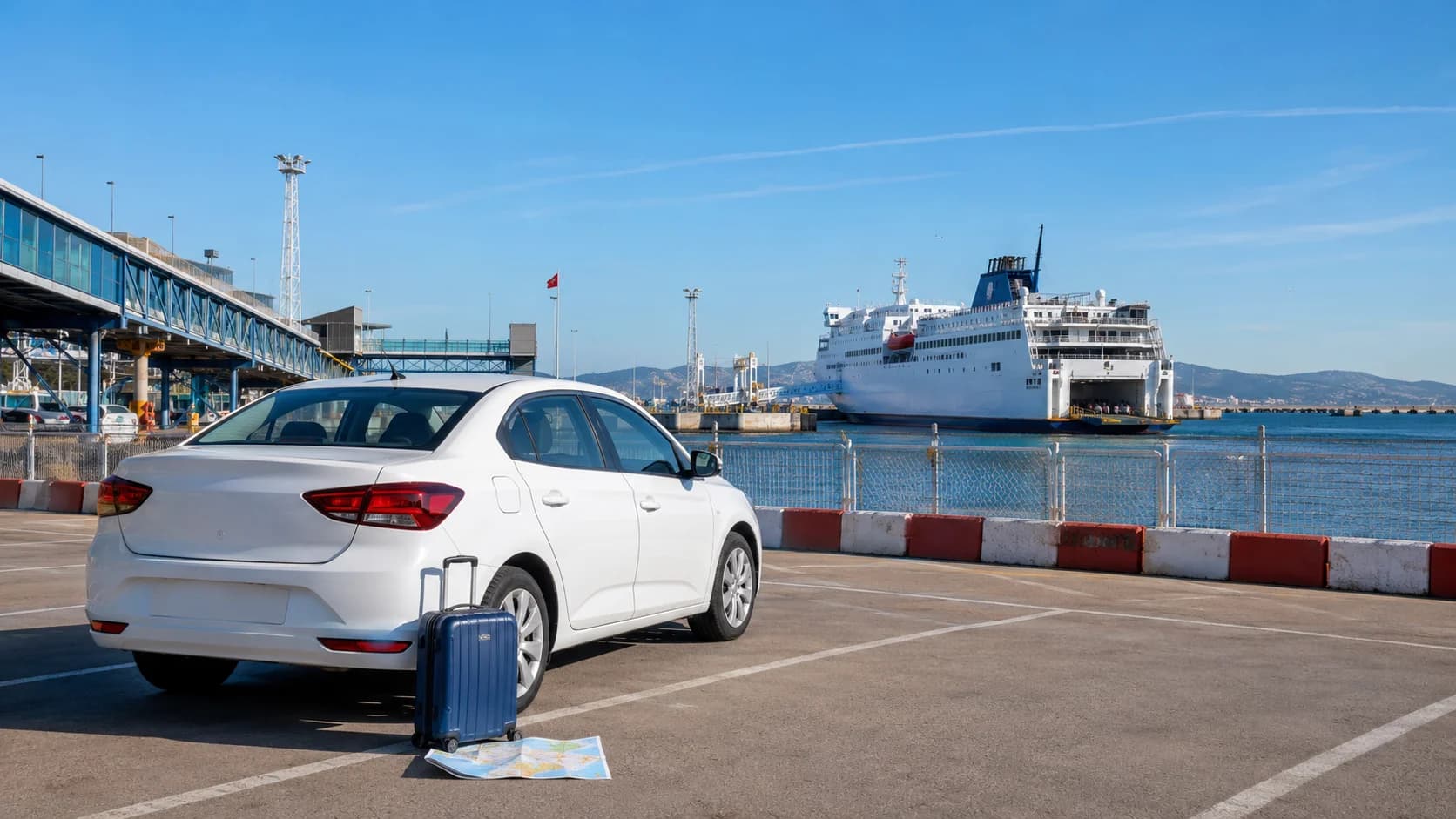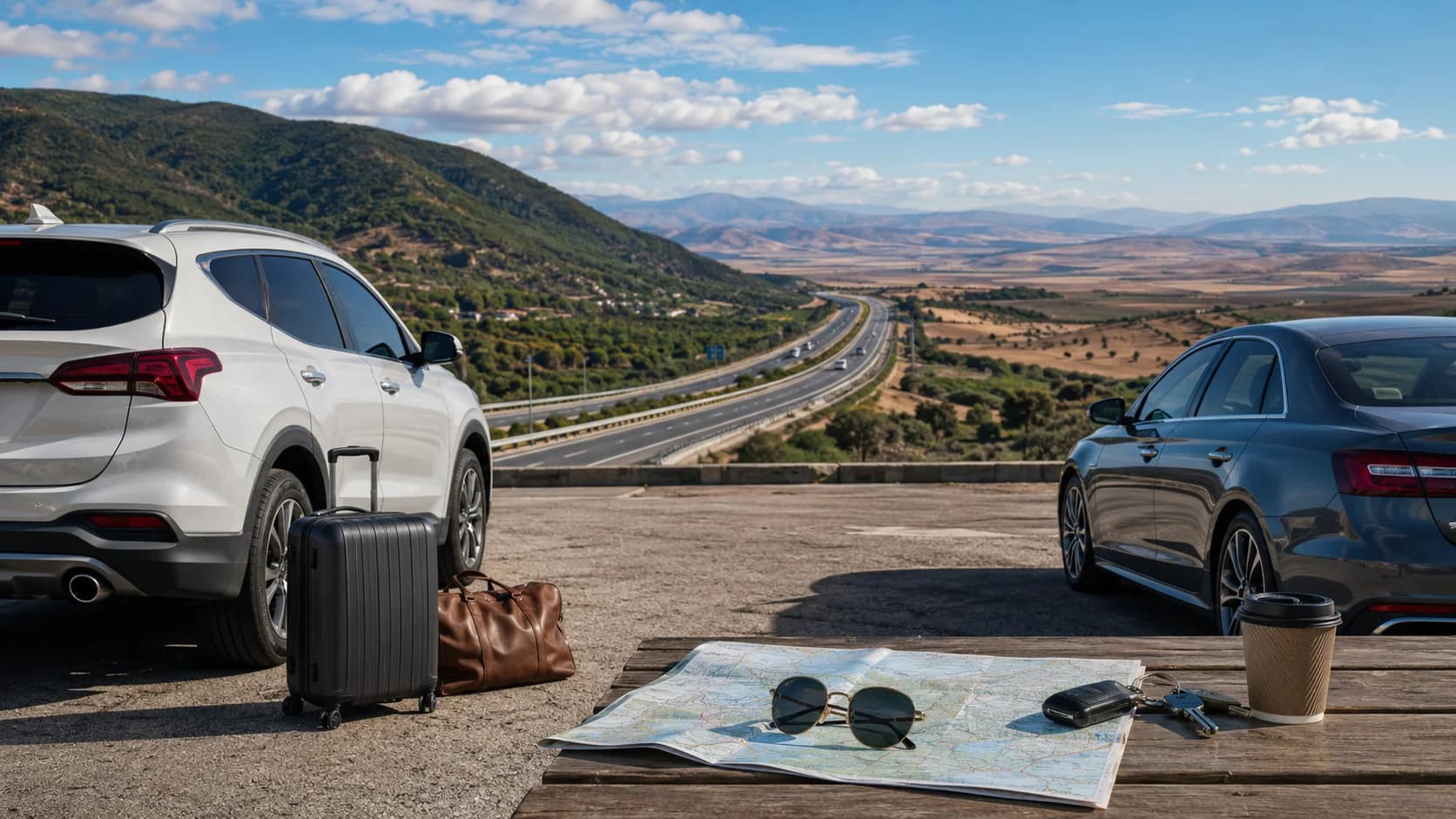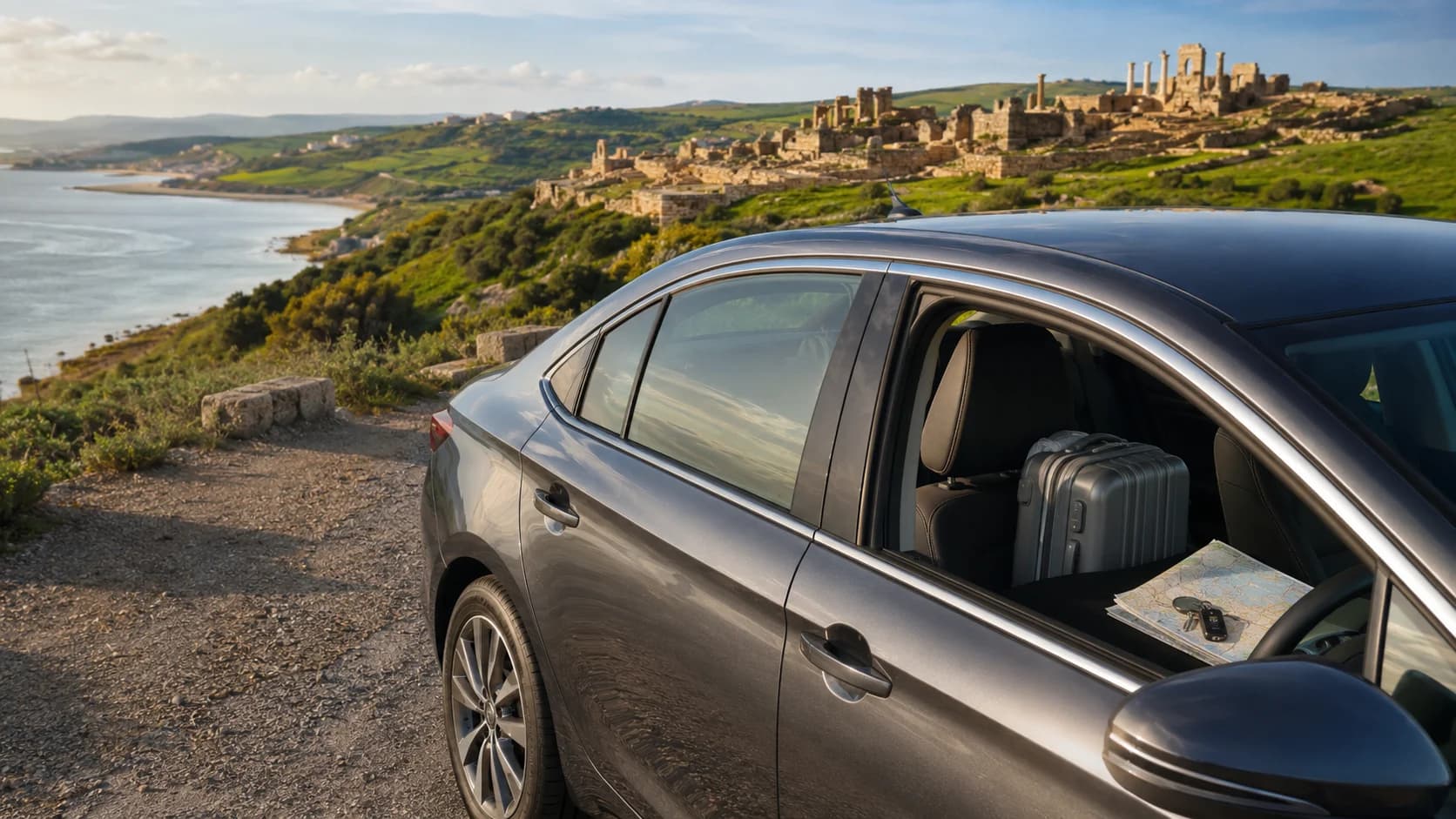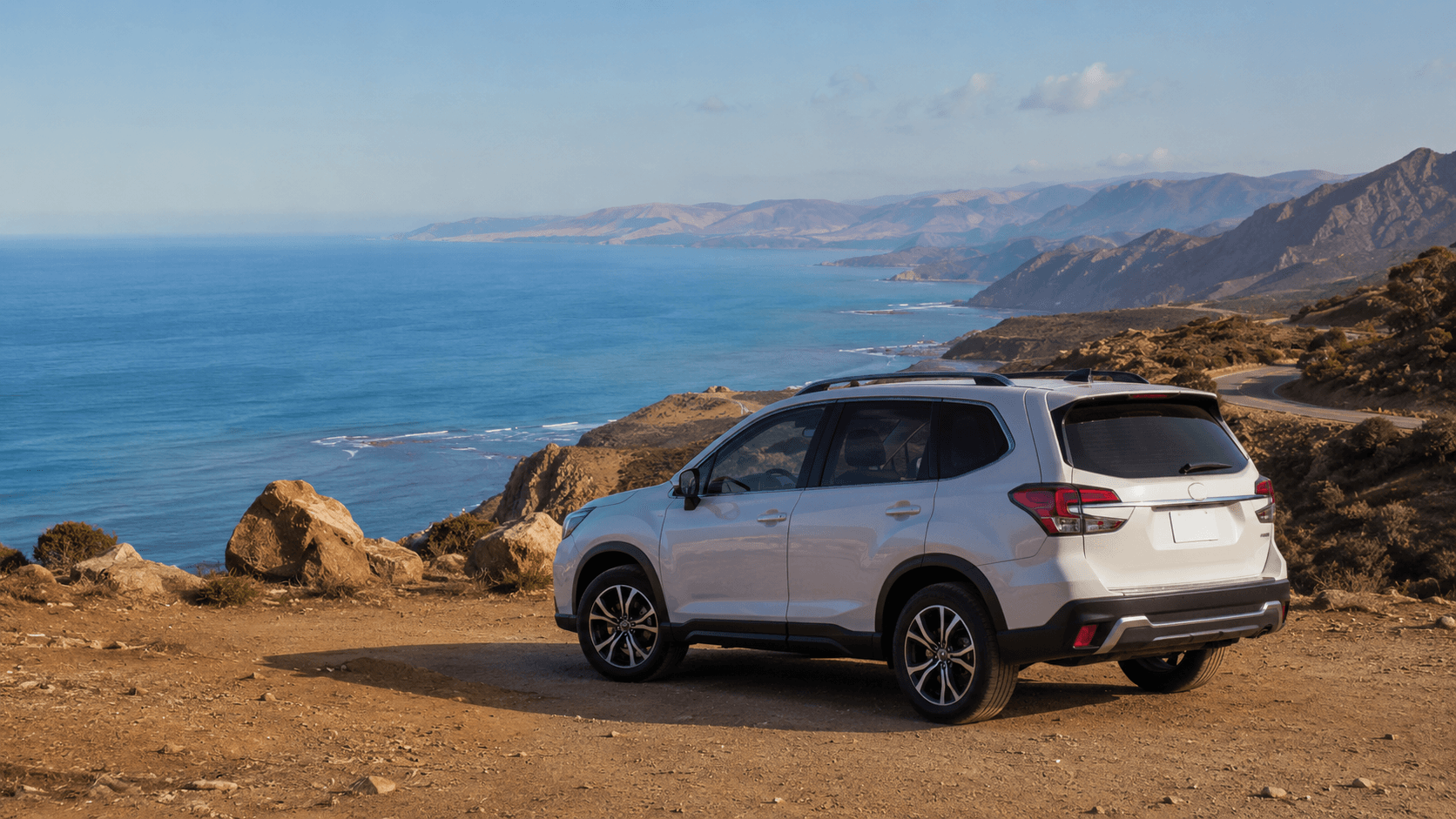









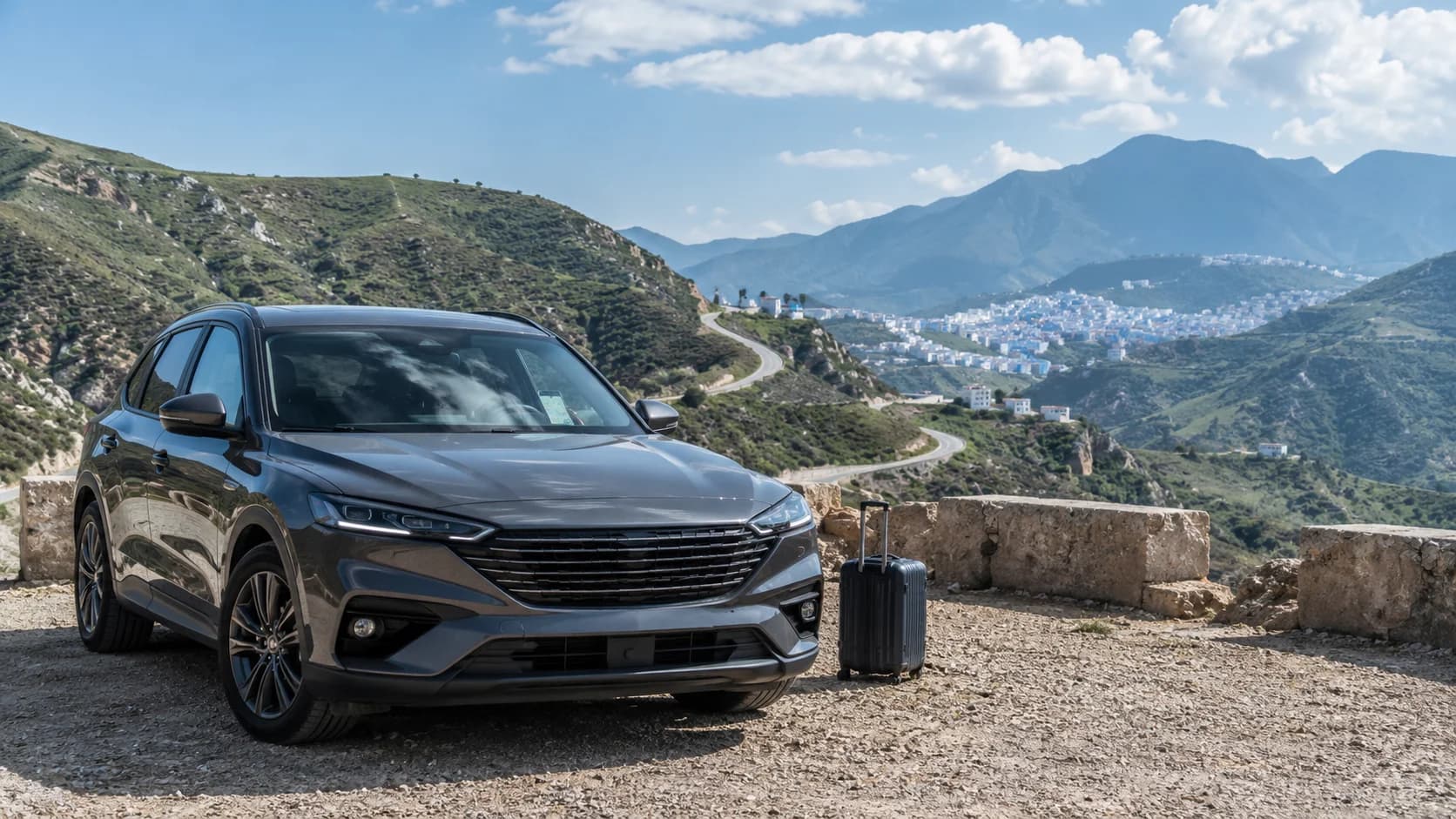
Driving from Tangier to Chefchaouen by car is one of the best road trips in northern Morocco. The journey is about 115 km, usually takes around 2 hours in normal conditions, and gives you the freedom to stop, take photos, enjoy the Rif mountain scenery and explore the Blue City without following a bus schedule. For most travellers, a comfortable sedan is enough, while an SUV is better if you want extra comfort, more luggage space or a smoother ride on mountain bends.
Table of Contents
-
Why drive to Chefchaouen
-
Tangier to Chefchaouen: distance and route
-
The N2 to N13 through the Rif
-
Drive time and a realistic buffer
-
Crosswinds and mountain driving tips
-
Do you need a 4x4?
-
Where to park near Bab El Ain
-
Day trip vs overnight
-
Best car for the route
-
Plan your Chefchaouen drive
-
FAQs
Why drive to Chefchaouen
Chefchaouen is one of the most popular day trips from Tangier because it feels completely different from the coast. Tangier is busy, open and maritime, while Chefchaouen is calm, compact and surrounded by the Rif Mountains. The blue streets, small stairways, old medina gates and mountain views make it one of the most photographed places in Morocco.
Driving gives you more control than taking a bus or shared taxi. You can leave Tangier early, stop for coffee, slow down on scenic mountain sections and return when you want. This matters because Chefchaouen is best enjoyed slowly. The medina is not a place to rush through in one hour. You need time to walk, take photos, visit the kasbah area, enjoy a relaxed lunch and climb slightly above the town for a wider view.
For travellers staying in Tangier for only a few days, the route is very practical. You do not need to change cities, carry luggage through bus stations or depend on fixed departure times. With your own rental car, Chefchaouen becomes an easy full-day escape from Tangier.
Tangier to Chefchaouen: distance and route
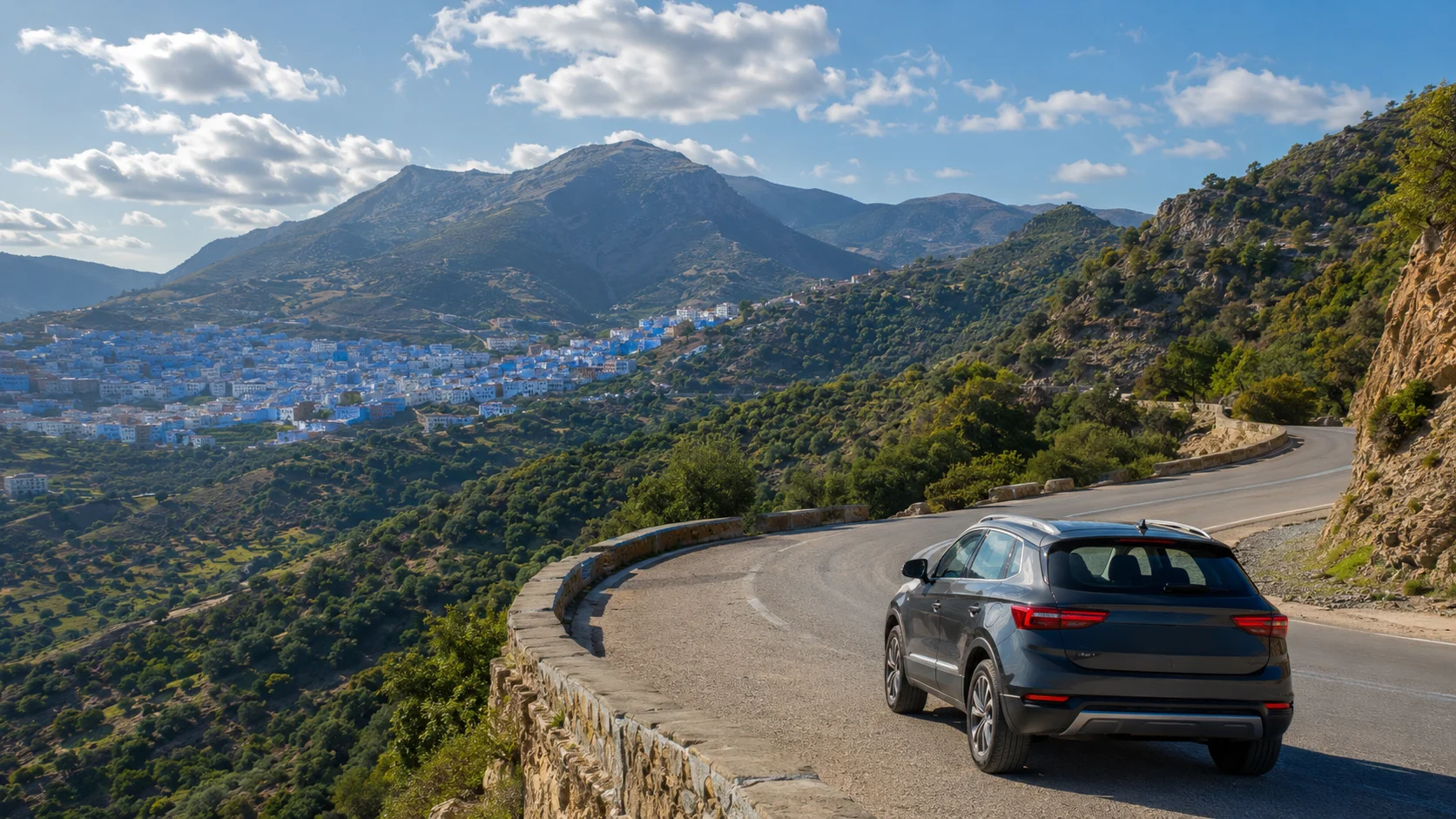
The Tangier to Chefchaouen distance is roughly 115 km by road, depending on your exact pickup point in Tangier and where you park in Chefchaouen. From central Tangier, Tangier Ibn Battouta Airport or the hotel zones around the city, the journey normally follows the main road network toward Tetouan before continuing inland toward Chefchaouen.
The most common Tangier Chefchaouen route uses the N2 and N13 direction. This is the practical route for visitors because it stays on main roads, passes through known towns and avoids unnecessary rural detours. The road is not a desert track or an off-road adventure. It is a normal Moroccan mountain road with bends, climbs, local traffic and changing scenery.
You should not plan the drive only by distance. On paper, 115 km may look short, but the final part near Chefchaouen is slower than a motorway journey. The road becomes more scenic and more curved as you approach the Rif area, so the last section naturally requires more attention.
If you are collecting your car in Tangier, ask for a clear handover location and leave the city after the morning rush when possible. For visitors landing at the airport, it is also possible to drive directly from the airport toward Chefchaouen, but this is better if your flight arrives early in the day. Late arrivals should normally stay in Tangier first and drive the next morning.
The N2 to N13 through the Rif
The N2 and N13 route is popular because it gives a good balance between convenience and scenery. The first part of the drive is easier and more open. As you move away from Tangier, the landscape starts to change from coastal city roads to greener hills, small towns and mountain views.
The Rif section is the reason this drive feels special. You begin to see the terrain rise, with curves, valleys and roadside viewpoints. This is where a relaxed schedule makes a big difference. The road is not only about reaching Chefchaouen. It is part of the experience.
The best approach is to keep the drive smooth and steady. Avoid aggressive overtaking, especially near bends or villages. Local drivers may know the road better than you, but that does not mean you need to copy their speed. Stay comfortable, respect signs and give yourself space.
Navigation apps are useful, but do not follow every shortcut they suggest. For a tourist drive, the best route is usually the main route, not the shortest-looking rural alternative. Main roads are easier for fuel stops, signage, assistance and predictable driving.
Drive time and a realistic buffer
The Chefchaouen drive time from Tangier is usually around 2 hours in normal conditions. A realistic plan is closer to 2 hours 15 minutes or 2 hours 30 minutes once you include city traffic, slower mountain sections, photo stops, parking and finding the right entrance to the medina.
For a day trip, the best schedule is simple. Leave Tangier early in the morning, ideally between 8:00 and 9:00. This gives you enough time to arrive before lunch, explore the medina during daylight and avoid driving back too late. Chefchaouen is beautiful in the afternoon, but mountain roads are easier and more relaxing during daylight.
A good day trip rhythm looks like this: leave Tangier in the morning, arrive in Chefchaouen late morning, park near the medina, explore the blue streets, have lunch, visit the kasbah area or Ras El Maa side, then leave before sunset or shortly after depending on the season.
For an overnight trip, the timing is more flexible. You can leave Tangier later, enjoy the route, sleep in Chefchaouen and return the next morning. This is often the better option for travellers who want photos without rushing or who prefer not to drive both ways in one day.
Crosswinds and mountain driving tips
Northern Morocco can feel windy, especially around open roads and higher sections. Crosswinds are not usually a reason to avoid the trip, but they are something to respect. Keep both hands on the wheel, slow down when the road opens into exposed areas and be careful when passing larger vehicles.
Mountain driving also requires a calmer style. Use lower speeds before bends rather than braking hard in the middle of them. Keep a safe distance from the car in front. Watch for scooters, local taxis, pedestrians, animals and vehicles stopping unexpectedly near viewpoints or roadside shops.
Avoid driving too close to the edge of the lane on narrow parts. Some sections can feel tighter when buses or trucks pass in the opposite direction. Stay patient and let larger vehicles complete their movement before you continue.
In rainy weather, give yourself even more time. Mountain roads can become slippery, visibility can drop and bends require extra care. If your plan is flexible and heavy rain is expected, consider leaving earlier or staying overnight rather than forcing a rushed day trip.
Fuel is another small detail that matters. Fill up before leaving Tangier or before the mountain section. You do not need a full tank only for the distance, but it is always better to start a mountain drive with enough fuel and no stress.
Do you need a 4x4?
No, you do not need a 4x4 to drive from Tangier to Chefchaouen on the normal N2/N13 route. A regular sedan or compact car can handle the journey if it is in good condition and driven carefully. The road is paved and used daily by locals, taxis, buses and visitors.
A 4x4 only becomes useful if you are planning extra mountain routes, remote rural stays or side trips beyond Chefchaouen. For a standard Blue City visit, a full 4x4 is not required. What matters more is choosing a comfortable, reliable car with good brakes, working air conditioning and enough power for uphill sections.
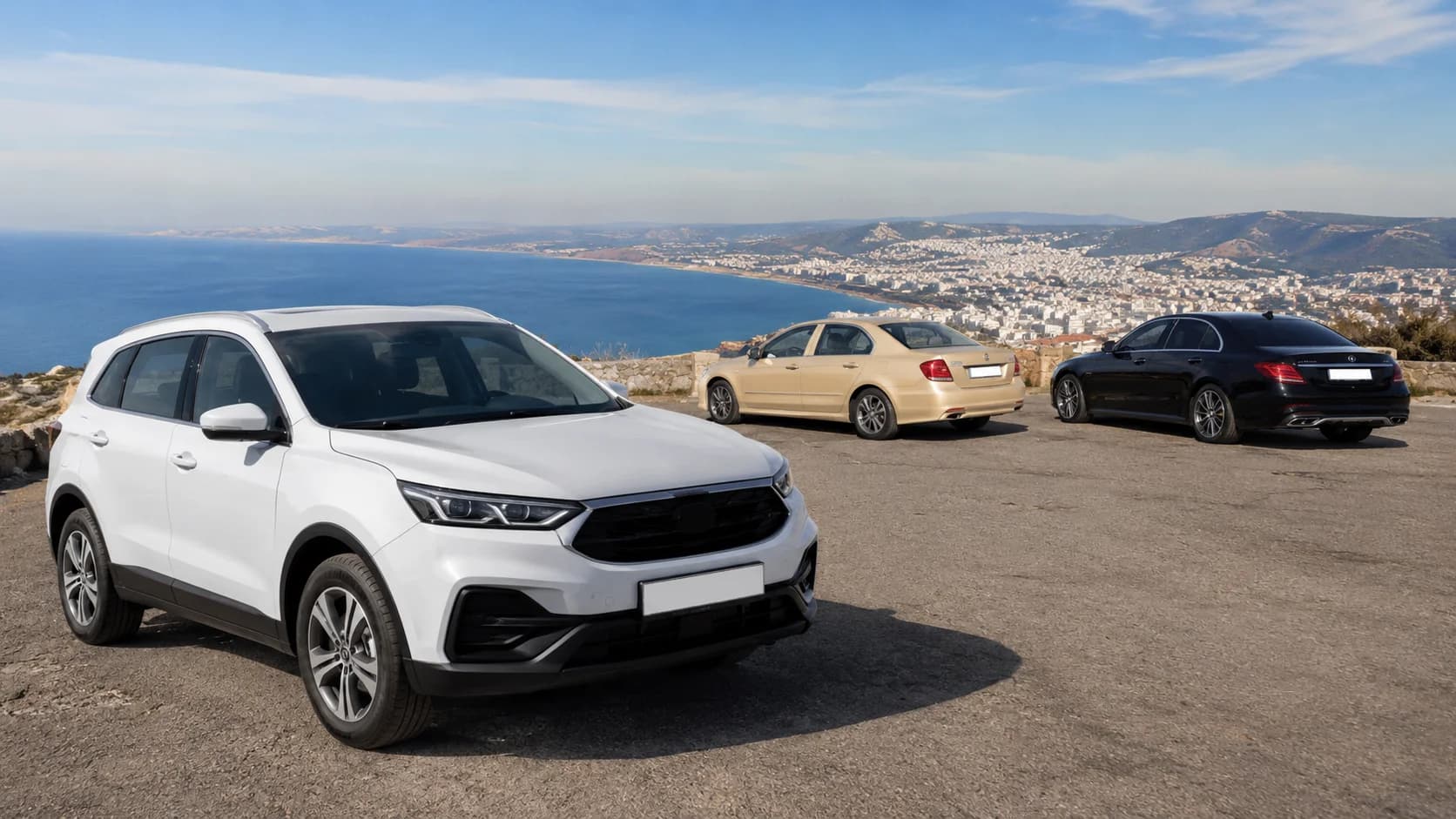
That said, an SUV can be a smart upgrade. An SUV rental Tangier gives you a higher driving position, more luggage room and a more comfortable feeling on bends and uneven city approaches. Families, groups with bags and travellers who prefer a stronger road presence often choose an SUV for this route.
For couples or two travellers with light luggage, a sedan rental Tangier is usually enough. Sedans are comfortable on main roads, easier to park than larger cars and often more fuel-efficient than bigger SUVs.
If your main priority is price, a cheap car rental Tangier can work well for the Chefchaouen road, as long as the vehicle is recent, well maintained and suitable for mountain driving.
Where to park near Bab El Ain
Chefchaouen’s medina is not designed for tourist cars. The old streets are narrow, steep and mostly explored on foot. The best plan is to park outside or near the medina entrance, then walk in.
Bab El Ain is one of the most practical reference points because it is a well-known gate into the old town. Many visitors use parking areas around the lower town, Bab El Ain side, Plaza Mohammed V area or near the medina approaches, depending on availability. Parking can change by season and local traffic, so follow local signs and choose a supervised parking area when possible.
Do not try to drive deep into the old medina. Even if a navigation app suggests a road close to your riad, the streets may be too narrow, steep or restricted. If you are staying overnight, ask your accommodation where to park before arrival. Many riads will tell you the closest supervised parking point and may send someone to help with luggage.
For a day trip, park once and forget the car until you leave. Chefchaouen is best explored on foot. The medina is compact, but it has steps and slopes, so wear comfortable shoes. Keep your parking ticket or remember your parking point clearly, because the blue streets can feel like a maze on the first visit.
Day trip vs overnight
A Tangier to Chefchaouen day trip is possible and very popular. It works best when you leave early, keep your plan simple and avoid trying to add too many extra stops. For most travellers, the perfect day trip includes the blue streets, Outa El Hammam square, the kasbah exterior, a relaxed lunch and a short walk toward the higher viewpoints before returning to Tangier.
The day trip is best for travellers who have limited time, already booked a hotel in Tangier or want to use Tangier as a base for northern Morocco. It is also practical for people who prefer not to change hotels every night.
An overnight stay is better if you want a slower experience. Chefchaouen is calmer in the evening after many day visitors leave. Morning light can also be beautiful for photography, especially in the quiet streets before shops become busy. Staying overnight also removes pressure from the return drive.
Choose a day trip if your schedule is tight. Choose overnight if Chefchaouen is one of the main highlights of your Morocco trip.
Best car for the route
The best car for Tangier to Chefchaouen depends on your group size, comfort expectations and luggage.
For solo travellers or couples, an economy car or compact sedan is usually enough. It keeps fuel costs lower, makes parking easier and handles the normal paved route without problems.
For families, an SUV is often the better choice. The higher seating position gives better visibility on mountain roads, and the extra space makes the journey more comfortable. If you are travelling with children, suitcases, camera bags or extra day-trip items, the added room is useful.
For business travellers or visitors who want a smoother ride, a sedan is a strong option. It feels stable on the road, comfortable for two to four passengers and practical for a long day trip.
For budget travellers, the cheapest car is not always the smartest choice if it feels underpowered or too small for the group. Choose value, not only the lowest price. A clean, well-maintained, insured car with clear rental terms is more important than saving a small amount on a mountain route.
MarHire Car Tangier can help match the vehicle to the route, whether you want an SUV for comfort, a sedan for balance or a budget car for a simple day trip.
Plan your Chefchaouen drive
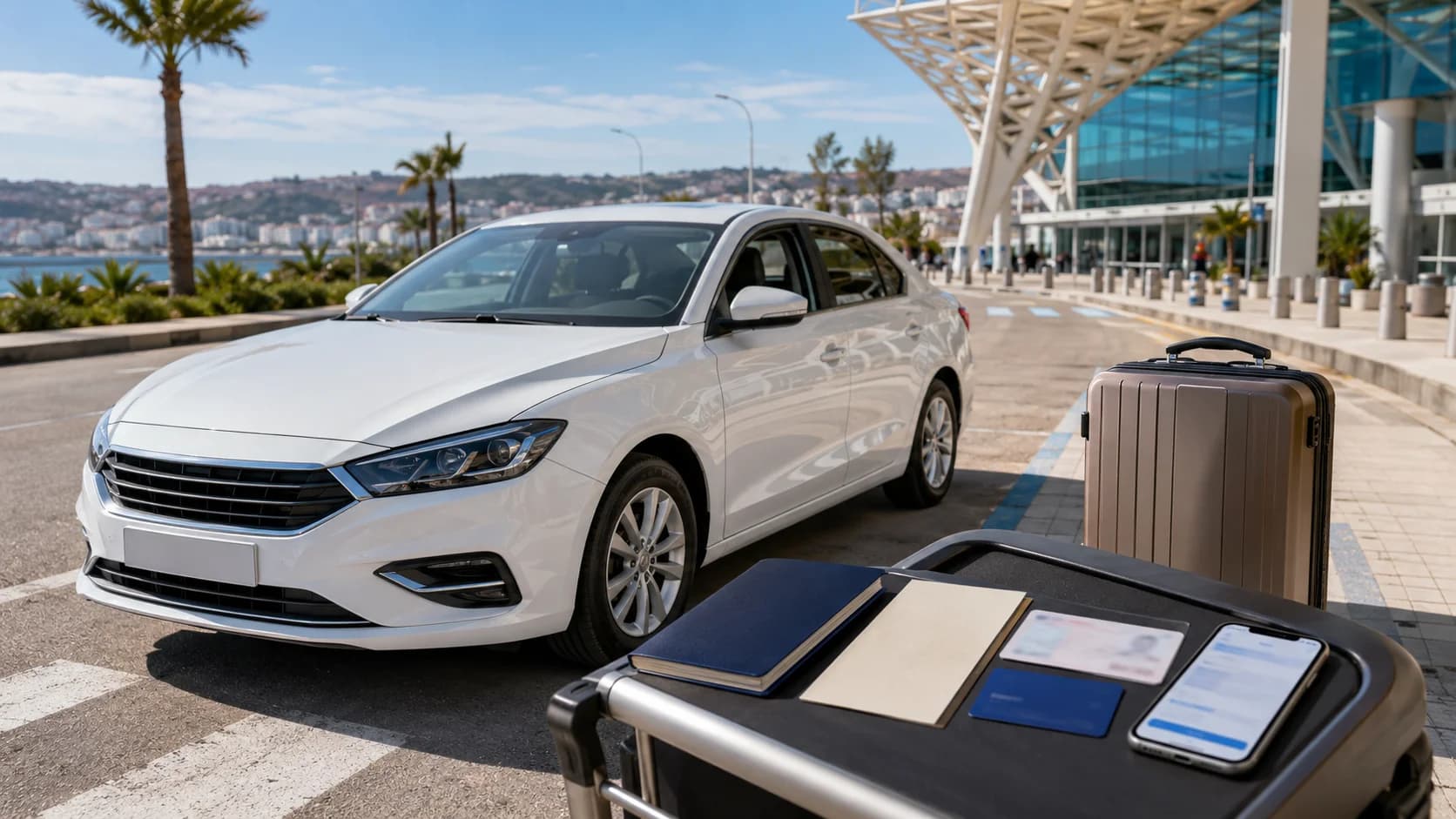
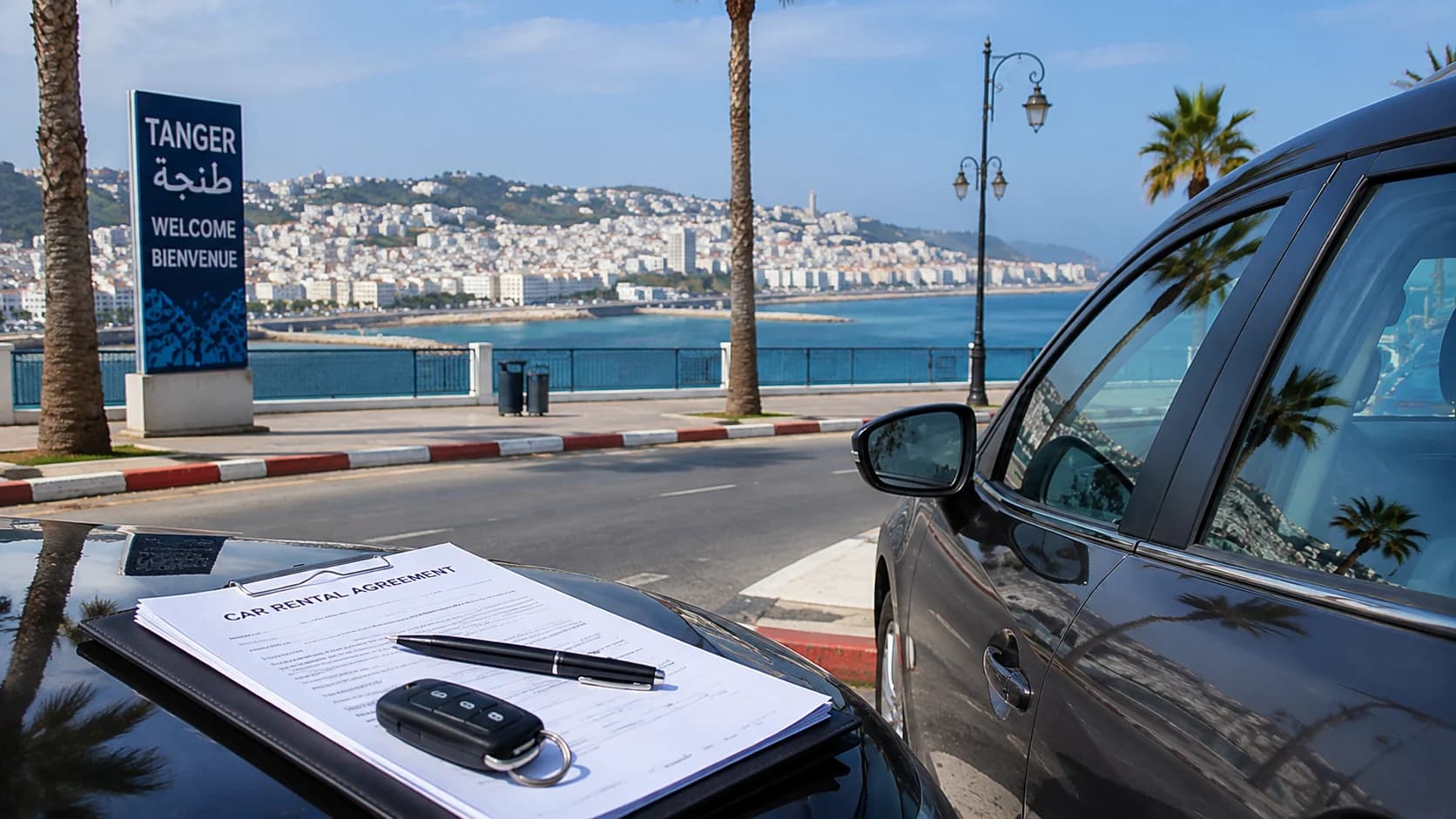
Before leaving Tangier, check your route, fuel level, documents and return timing. Take your passport or ID, driving licence, rental agreement and phone with offline maps or mobile data. Save your parking location when you arrive in Chefchaouen.
Pack light for the day. You do not need much more than water, a phone charger, comfortable shoes, sunglasses and a small bag. In winter or windy months, bring a light jacket because the mountain air can feel cooler than Tangier.
The smartest plan is to avoid rushing. Chefchaouen is not a checklist city. The real experience is walking slowly, turning into quiet blue lanes, finding small viewpoints and enjoying the mountain setting. Driving gives you that freedom.
Drive to the Blue City on your own schedule with MarHire Car Tangier. Book a comfortable SUV or sedan with no deposit options, unlimited kilometers on most rentals and full insurance for a smooth Rif road trip from Tangier to Chefchaouen.
FAQs
How far is Chefchaouen from Tangier by car?
Chefchaouen is about 115 km from Tangier by car, depending on your starting point in Tangier and where you park in Chefchaouen.
How long does the Tangier to Chefchaouen drive take?
The drive usually takes around 2 hours in normal conditions. With traffic, photo stops, mountain bends and parking, plan around 2 hours 15 minutes to 2 hours 30 minutes.
Is it safe to drive from Tangier to Chefchaouen?
Yes, it is generally safe to drive from Tangier to Chefchaouen if you use the main route, drive during daylight and stay careful on mountain bends. Avoid rushing and leave extra space around local traffic.
Do you need a 4x4 to drive to Chefchaouen?
No, you do not need a 4x4 for the standard Tangier to Chefchaouen route. A sedan or compact car is enough. An SUV is useful if you want more comfort, space and confidence on mountain roads.
What is the best route from Tangier to Chefchaouen?
The most practical route is the main N2/N13 direction toward Chefchaouen. It is the easiest option for visitors because it stays on known roads and avoids unnecessary rural shortcuts.
Can you do Chefchaouen as a day trip from Tangier?
Yes, Chefchaouen works well as a day trip from Tangier. Leave early in the morning, explore during the day and return before it gets too late.
Is there a train from Tangier to Chefchaouen?
No, Chefchaouen does not have a direct train station. Travellers usually go by car, bus, taxi or private transfer from Tangier.
Where do you park in Chefchaouen?
Most visitors park near the medina entrances, especially around Bab El Ain, Plaza Mohammed V or other supervised parking areas near the old town. It is better to park outside the medina and continue on foot.
Are the Rif mountain roads difficult to drive?
The Rif roads are manageable, but they require attention. Expect bends, slower sections, local traffic and possible wind. Drive calmly and avoid overtaking on curves.
What is the best car for the Chefchaouen drive?
A sedan is a good choice for couples and small groups. An SUV is better for families, luggage and extra comfort. A cheap compact car can also work if it is well maintained and suitable for the route.