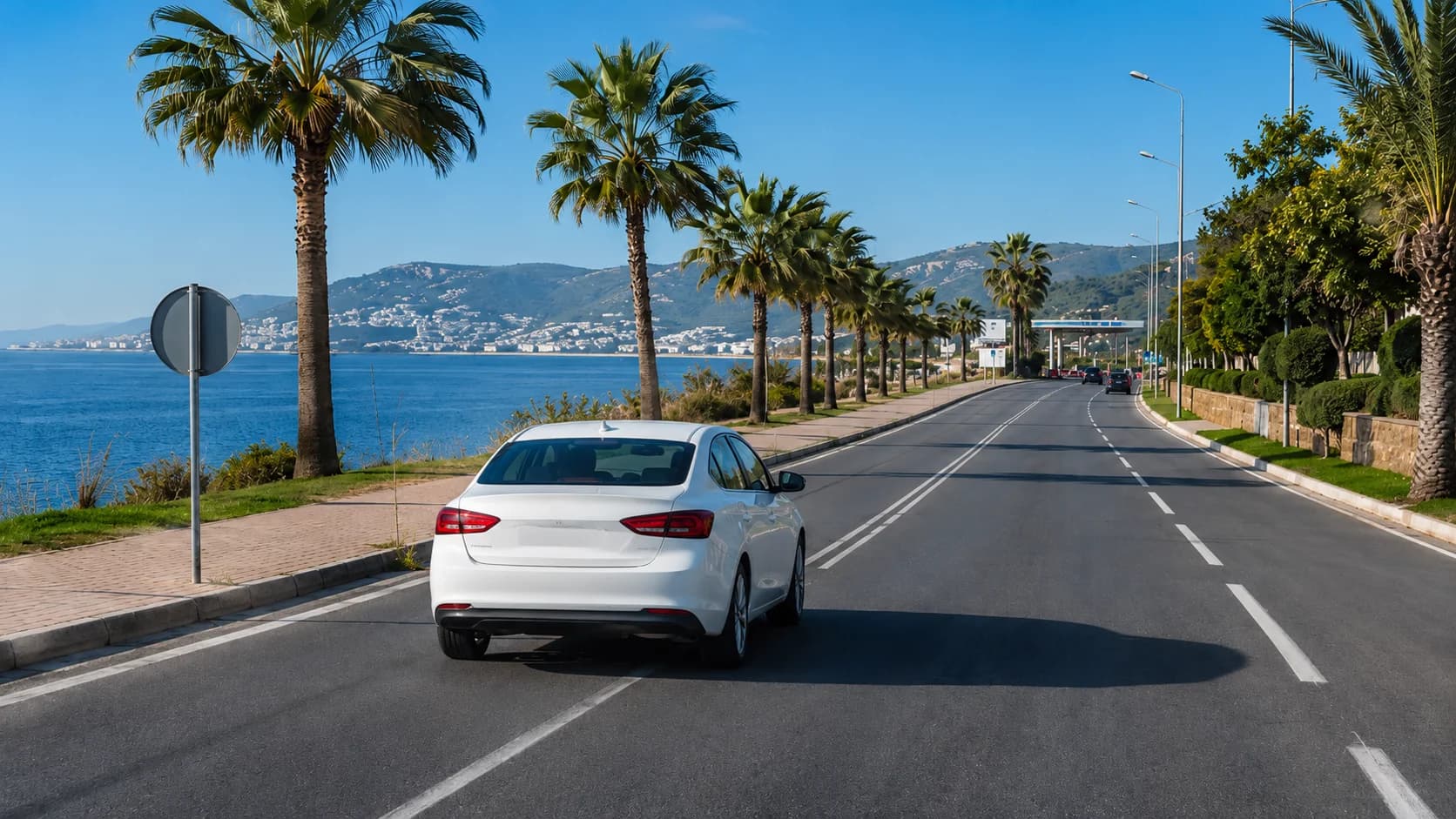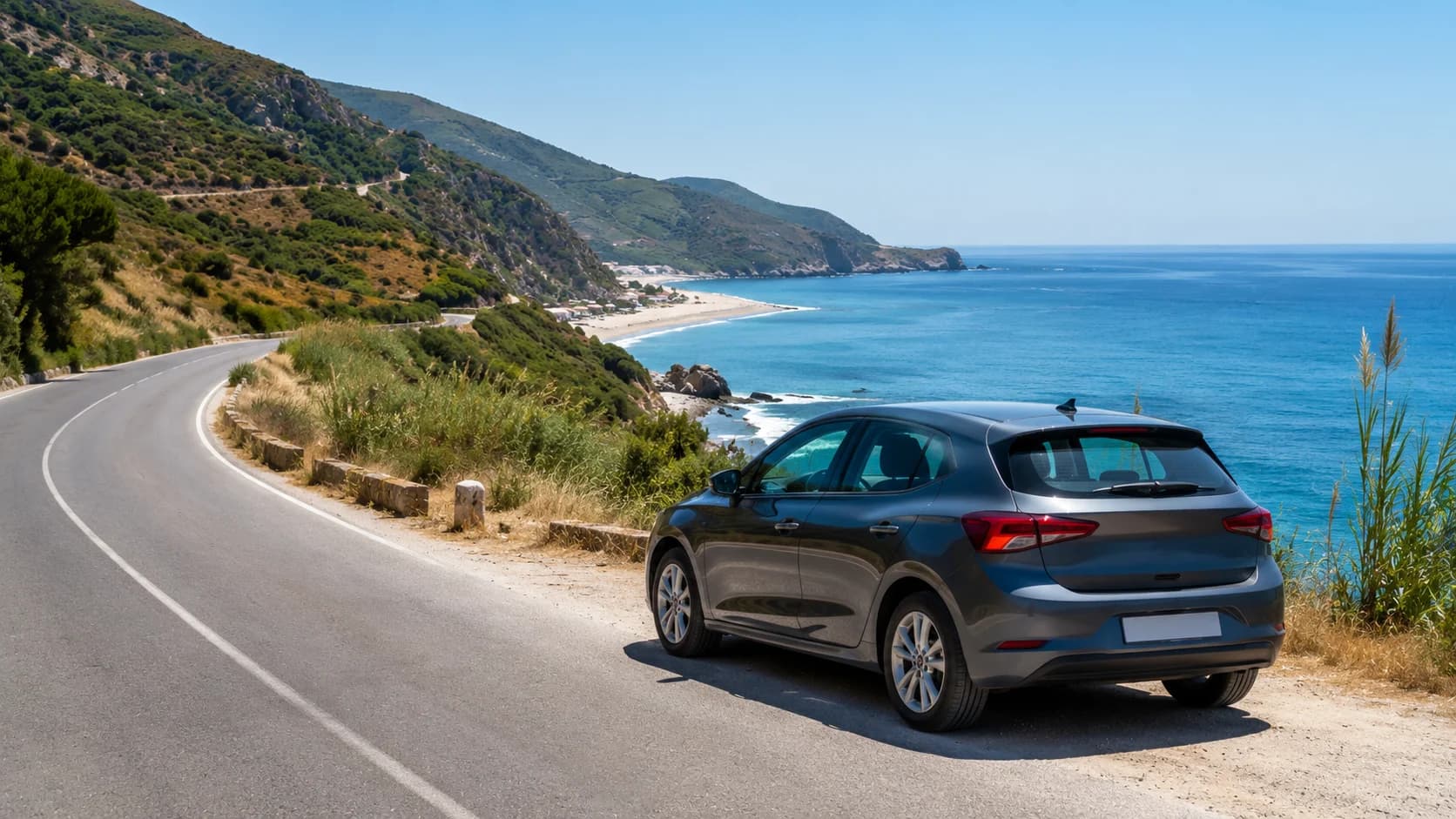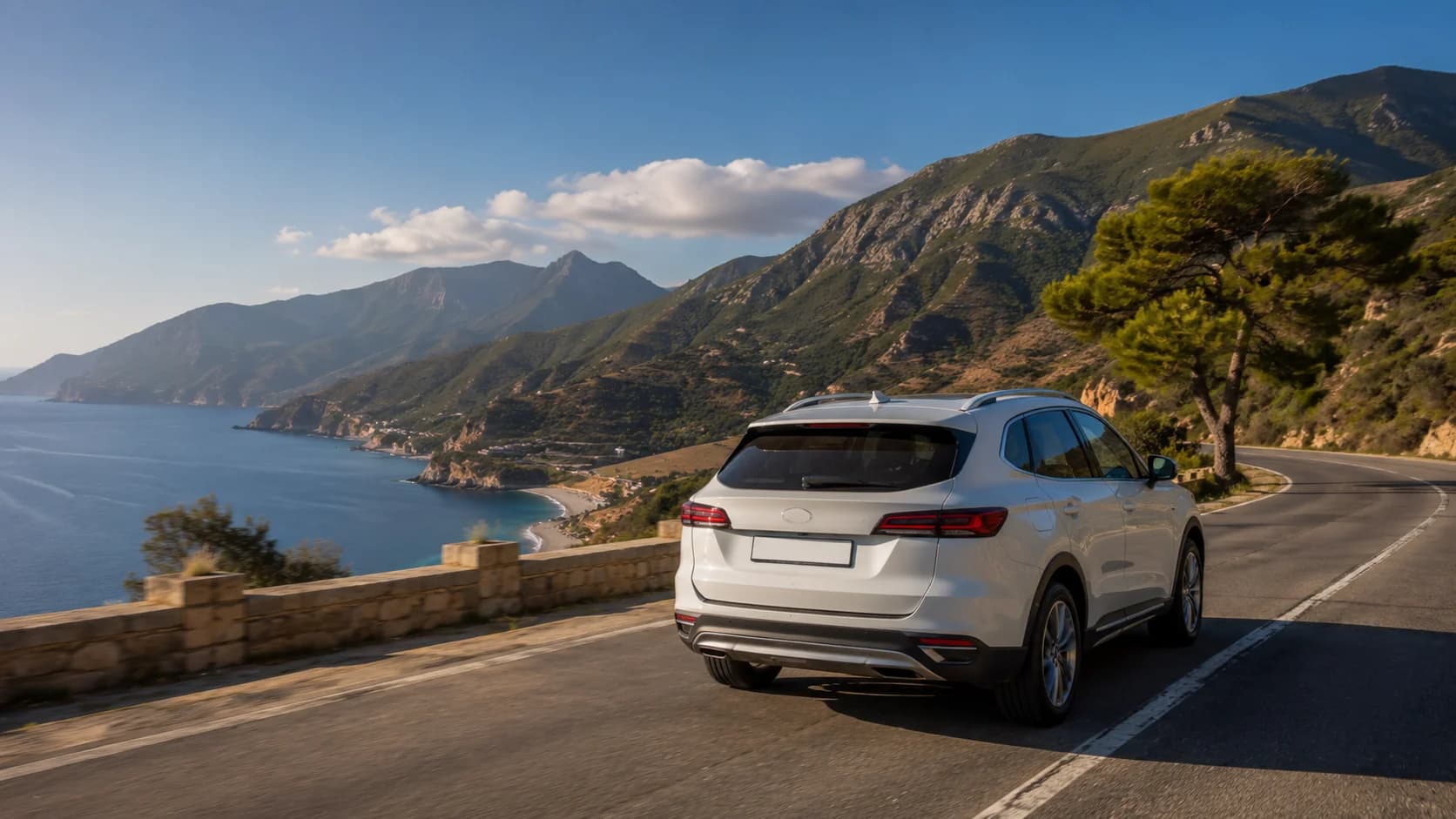









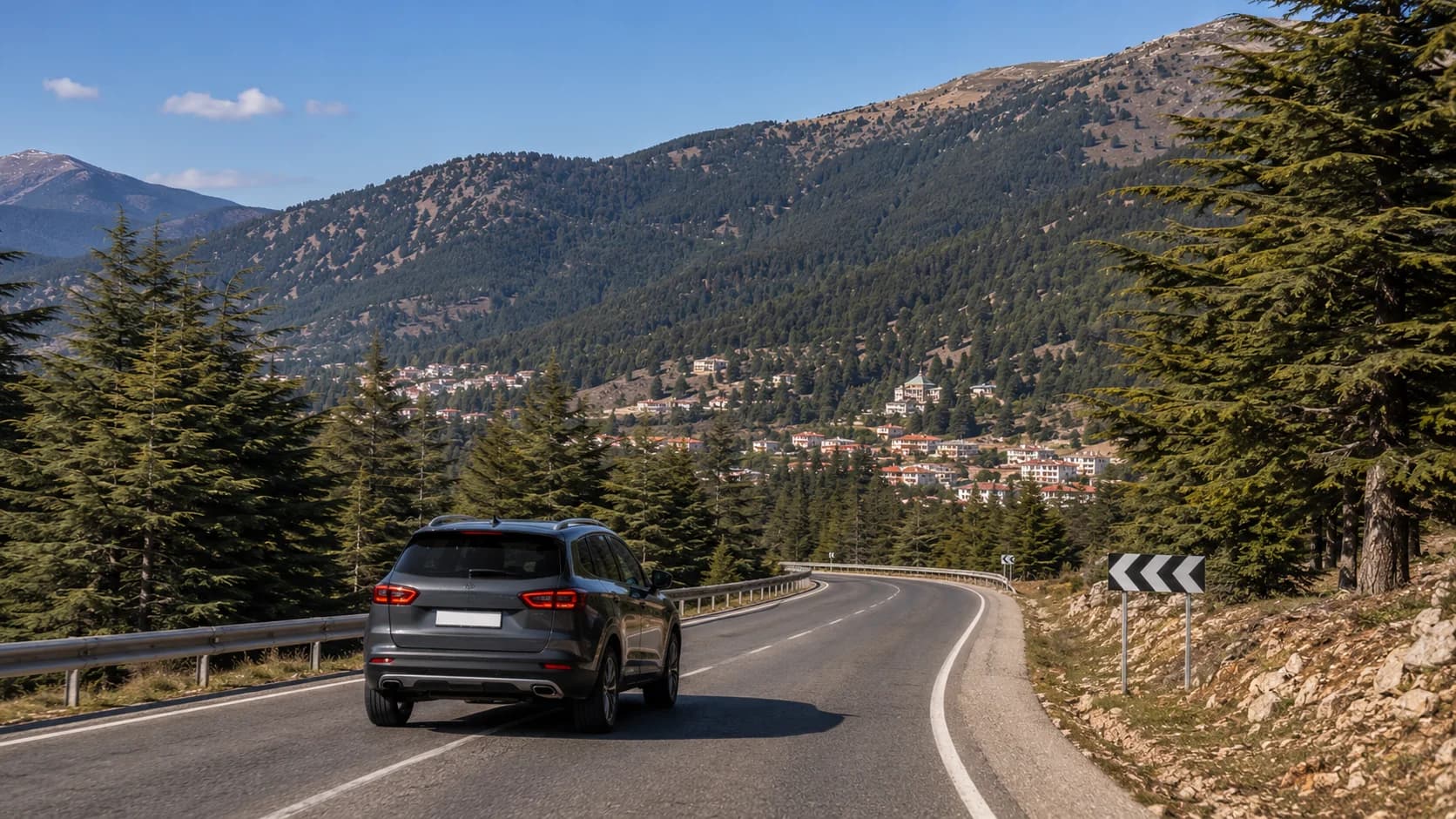
Driving Tangier to Ifrane by car is one of the more varied long-distance journeys you can make in northern Morocco. You leave the Strait of Gibraltar and Atlantic-influenced landscape around Tangier, travel south into Morocco’s interior, and finish in Ifrane at roughly 1,650 metres above sea level in the Middle Atlas.
Depending on the exact route, starting point, traffic and stops, plan for roughly 310–340 km or more and around five hours of actual driving. Route planners give different totals because there are several possible combinations of national roads and motorways, so it is better to treat the figures as planning estimates rather than fixed numbers.
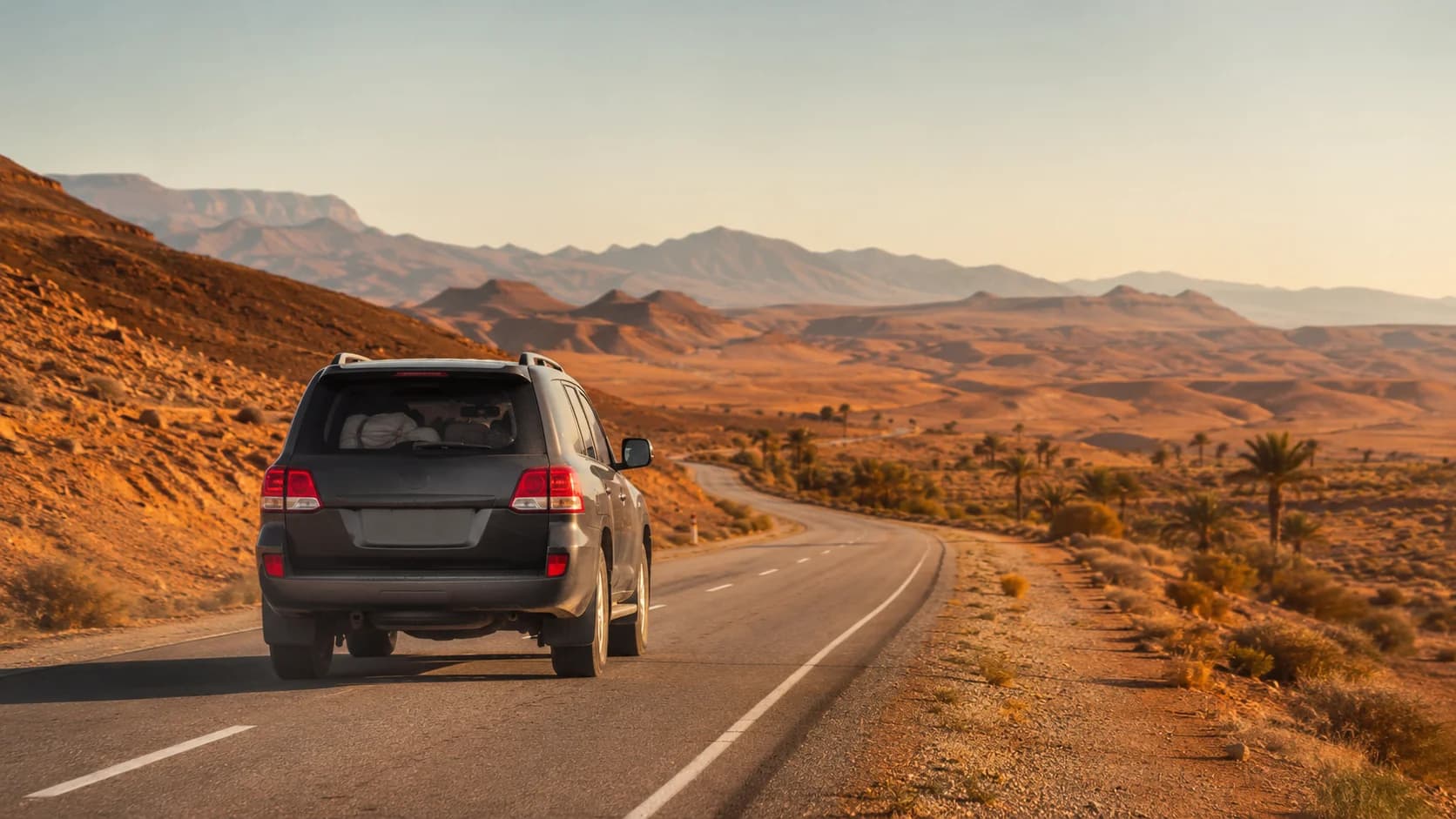
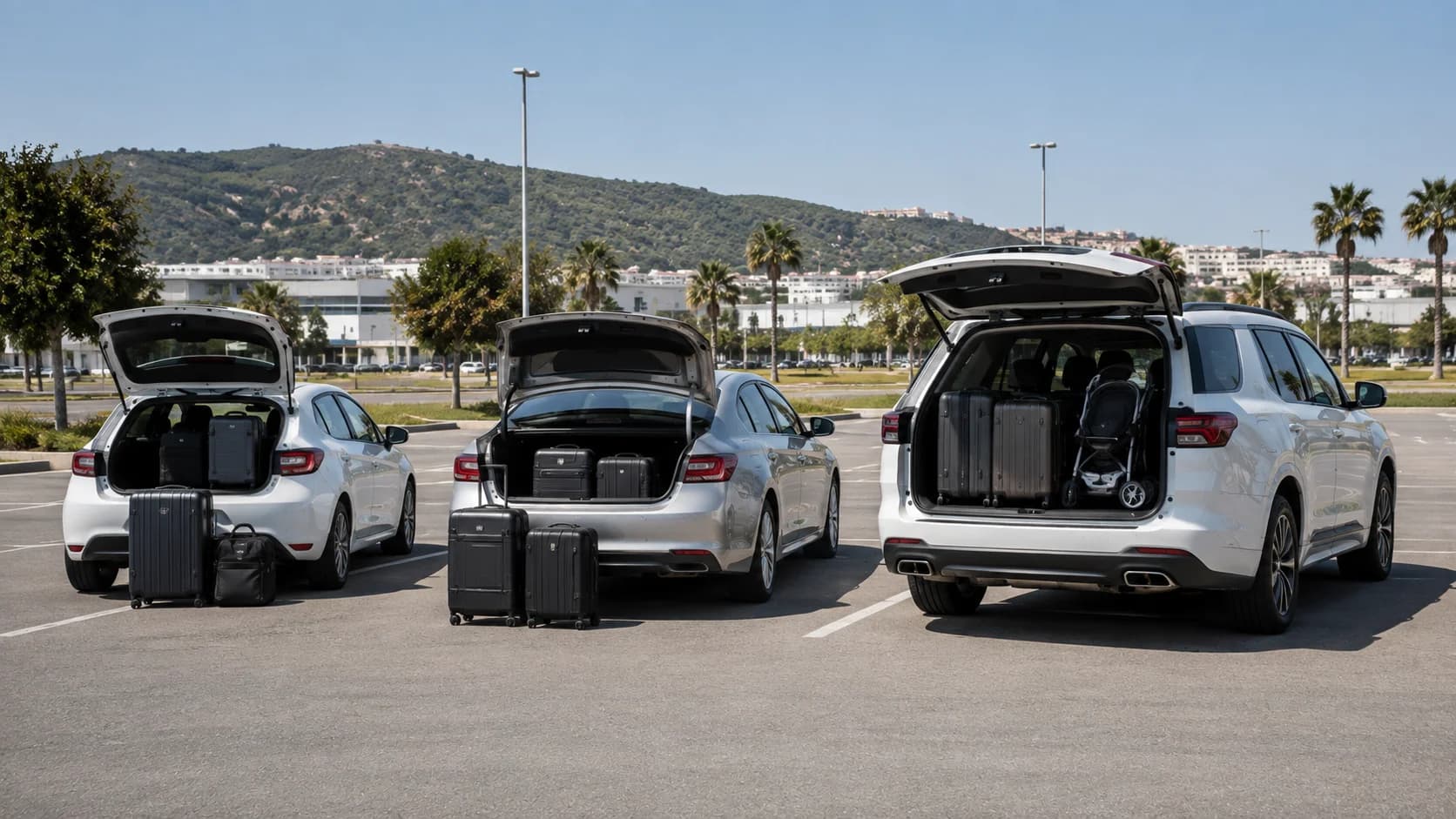
For most travellers, this should be treated as a full travel day rather than a short transfer. A comfortable sedan works well in normal conditions, while an SUV can provide extra luggage space and confidence when travelling during colder Middle Atlas weather.
Tangier to Ifrane by Car
The most practical Tangier to Ifrane route depends on whether you prioritise distance, motorway driving or stops.
A common inland approach is to travel toward Meknes, then continue toward El Hajeb and Ifrane. Meknes to Ifrane is approximately 64 km, with the final approach using the El Hajeb–Ifrane corridor. Another option is to route through Fes, then take the N8 toward Ifrane.
Allow considerably more time than the navigation application's uninterrupted estimate. Fuel stops, coffee, lunch, traffic and rest breaks can easily turn the journey into a six-hour or longer travel day.
Table of Contents
- Tangier to Ifrane at a glance
- Main route options
- Where to stop on a long drive
- Fuel, toll and rest planning
- Seasonal and weather considerations
- Day drive vs overnight stop
- Best rental car for Tangier to Ifrane
- Arrival and onward-trip checklist
- Frequently asked questions
Tangier to Ifrane at a Glance
The Tangier Ifrane drive links two very different parts of Morocco.
Tangier sits in Morocco's far northwest, where the Atlantic Ocean and Mediterranean region meet. Ifrane is inland in the Fes-Meknes region and lies at approximately 1,648 metres elevation.
That geographical change matters for driving. The first part of the journey is relatively low-level northern travel, while the final section climbs into the Middle Atlas.
A practical planning summary is:
-
Distance: roughly 310–340+ km depending on route
-
Pure driving time: approximately five hours in favourable conditions
-
Realistic travel day: around six hours or more once stops are included
-
Best departure: morning
-
Useful stop areas: Larache/Souk El Arbaa depending on route, Meknes or Fes
-
Final approach: Middle Atlas roads toward Ifrane
-
Vehicle: sedan in normal weather; SUV useful for more luggage or winter conditions
The important point is not to build the itinerary around the fastest theoretical time.
Main Route Options
There is more than one reasonable way to organise a road trip from Tangier to Ifrane.
Route Option 1: Tangier to Meknes to El Hajeb to Ifrane
For travellers whose priority is reaching Ifrane without making Fes part of the same day, the Meknes approach is logical.
The broad sequence is:
Tangier → central/northern Morocco → Meknes → El Hajeb → Ifrane
Route estimates place Tangier to Meknes at roughly 250–260 km depending on the road calculation, while Meknes to Ifrane is approximately 64–66 km.
From the Meknes area, drivers travel toward El Hajeb before continuing toward Ifrane. The R707 corridor links El Hajeb with Ifrane and continues across the Middle Atlas.
This is particularly useful if Ifrane itself is your main destination.
Route Option 2: Tangier to Fes to Ifrane
The Fes route makes more sense when Fes is already part of your Morocco itinerary.
The broad sequence is:
Tangier → Fes → N8 toward Ifrane
Fes to Ifrane is normally around 60–65 km, with roughly one hour to one hour twenty minutes of driving in ordinary conditions. The N8 is the principal connection commonly used between Fes and Ifrane.
Choosing Fes may make the total journey slightly longer than going directly toward Meknes, but it has a major itinerary advantage: you can stay overnight in Fes and make the Middle Atlas section the following morning.
Which route is best?
Choose Meknes if:
-
Ifrane is the priority.
-
You want to reduce unnecessary detours.
-
You are happy to visit Fes later.
Choose Fes if:
-
Fes is already on your itinerary.
-
You want an easy overnight break.
-
You prefer to arrive in Ifrane the following morning.
-
You are combining Ifrane with Fes, Sefrou or other destinations in the region.
Before departure, check live navigation because traffic, roadworks and weather can change which option is most practical.
Where to Stop on a Long Drive
Good stops on a Tangier to Ifrane road trip should reduce fatigue without turning a five-hour drive into an entire sightseeing itinerary.
Larache area
Larache can work as an early break when using a western or coastal approach south from Tangier. The N1 connects Tangier southward through the Atlantic side of northern Morocco, including the Larache area.
It is more useful for coffee, fuel or a short break than as a major sightseeing stop when you still intend to reach Ifrane the same day.
Souk El Arbaa
Depending on your selected inland route, Souk El Arbaa can be another practical break point. Larache and Souk El Arbaa are roughly 72 km apart by road.
Again, the purpose should be pacing rather than adding several hours to the itinerary.
Meknes
Meknes is the strongest major stop if you are using the western inland approach.
It gives you the opportunity to:
-
refuel before the final Middle Atlas section;
-
have lunch;
-
take a substantial driving break;
-
stay overnight if you departed Tangier late.
From Meknes, Ifrane is only about 64 km away by road.
Fes
Fes is the better stop if you want to divide the trip into two travel days.
The final Fes to Ifrane drive is approximately 60–65 km, making Ifrane an easy next-morning continuation.
This also creates a natural itinerary:
Tangier → Fes → Ifrane → Azrou → Middle Atlas
rather than trying to combine several major destinations in one day.
Fuel, Toll and Rest Planning
One advantage of this journey is that you are travelling through several populated corridors rather than crossing a remote desert region.
Even so, basic preparation makes a long drive much easier.
Fuel
Start from Tangier with enough fuel for the first major stage instead of planning to refuel immediately after leaving the city.
A practical strategy is:
Tangier: start with a comfortable fuel level.
Mid-route: combine your rest stop with fuel if necessary.
Meknes or Fes: top up again before travelling into the Middle Atlas if your fuel level is low.
There is little advantage in driving until the warning light appears.
Toll roads
Morocco's motorway network includes toll sections, and Autoroutes du Maroc manages the country's motorway system. ADM lists the Rabat–Safi corridor and the motorway extending east from the Rabat junction toward Fes and Oujda among its principal routes.
If your navigation route uses the motorway network, expect toll charges.
The exact amount depends on where you enter and exit, so it is better to check the current route rather than quote one fixed Tangier–Ifrane toll figure.
ADM also provides real-time motorway traffic information through its traffic service.
Rest breaks
A useful rule for this journey is to avoid treating five hours of navigation time as five continuous hours behind the wheel.
Take a proper break when concentration starts falling.
A coffee, short walk and twenty-minute pause can be more valuable than trying to save a few minutes on a long journey.
If there are two licensed drivers on the rental agreement, changing driver during the trip can also reduce fatigue.
Seasonal and Weather Considerations
Season makes a much bigger difference in Ifrane than it does in Tangier.
Ifrane is approximately 1,648 metres above sea level, and the surrounding Middle Atlas can receive winter snow.
Summer
Summer is generally the simplest period for the drive.
The main considerations are:
-
heat during the northern and inland sections;
-
keeping drinking water in the car;
-
checking tyre condition before a long journey;
-
avoiding driver fatigue during the warmest part of the afternoon.
Ifrane itself is usually noticeably cooler than lower-elevation Moroccan cities.
Autumn and spring
Conditions can change considerably during the journey because of the altitude difference.
A warm departure from Tangier does not guarantee similarly warm conditions in Ifrane.
Carry an extra layer, particularly when arriving in the evening.
Winter
Winter requires more planning.
Snow and difficult weather can affect Middle Atlas roads, and past severe-weather periods have caused closures on roads in the Ifrane region, including sections of R707.
That does not mean the road is normally closed. It means winter travellers should check actual conditions before leaving rather than assuming that a route which was clear yesterday will remain unchanged.
If snow is forecast:
-
check road and weather conditions;
-
avoid arriving after dark if possible;
-
allow extra braking distance;
-
use smooth steering and braking;
-
confirm whether your rental vehicle has any winter-specific equipment requirements.
An SUV can be useful in poor conditions, but four-wheel drive does not remove the risks created by ice, snow or poor visibility.
Day Drive vs Overnight Stop
Yes, you can drive from Tangier to Ifrane in one day.
The more important question is whether doing so fits the rest of your schedule.
Drive in one day when:
-
you can leave Tangier in the morning;
-
the weather is good;
-
the driver is comfortable with several hours behind the wheel;
-
you do not plan major sightseeing stops;
-
you expect to reach Ifrane before evening.
A sensible pattern could be:
08:00: leave Tangier
10:00–10:30: coffee/rest break
12:00–13:00: lunch or longer break
Afternoon: continue toward Ifrane
Late afternoon: arrive and check in
Actual times will vary substantially with route and traffic.
Stay overnight when:
-
your flight or ferry reaches Tangier late;
-
you are travelling with young children;
-
you want to visit Meknes or Fes properly;
-
winter weather is uncertain;
-
only one person will be driving;
-
you prefer not to drive mountain roads after dark.
Fes is particularly useful if it is already part of your itinerary.
You could travel:
Day 1: Tangier → Fes
then
Day 2: Fes → Ifrane
This changes the journey from a transfer day into part of a wider Morocco itinerary.
Best Rental Car for Tangier to Ifrane
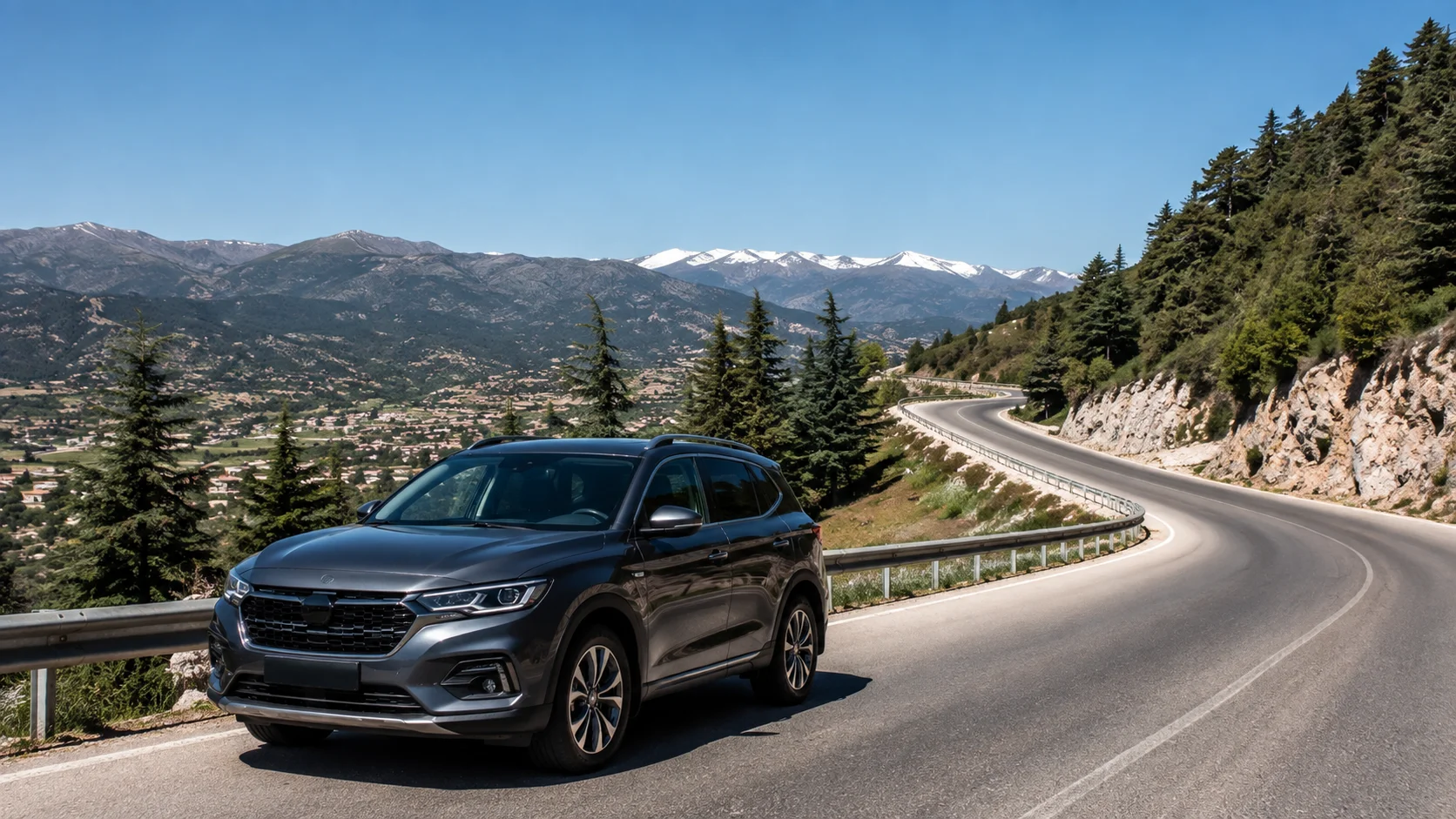
The ideal car rental Tangier to Ifrane choice depends more on passengers, luggage and season than on the distance alone.
Sedan
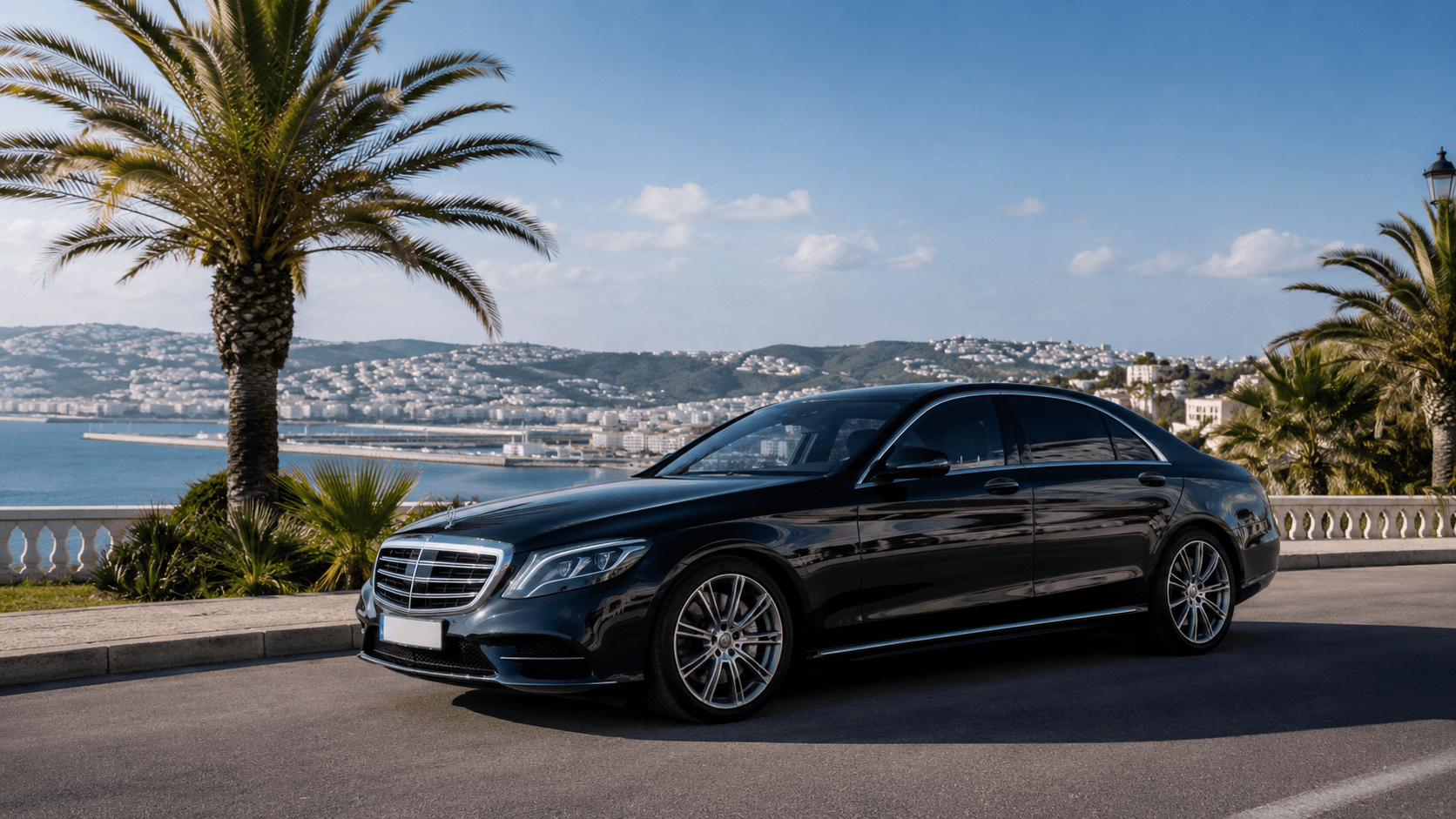
A sedan rental in Tangier is usually the best all-round option.
Choose a sedan when:
-
there are two to four travellers;
-
luggage fits comfortably in the boot;
-
you are travelling outside severe winter weather;
-
most of your itinerary uses paved roads;
-
motorway comfort and fuel efficiency are priorities.
For several hours on the road, a sedan is often more comfortable than choosing the smallest possible hatchback simply to reduce the rental price.
SUV
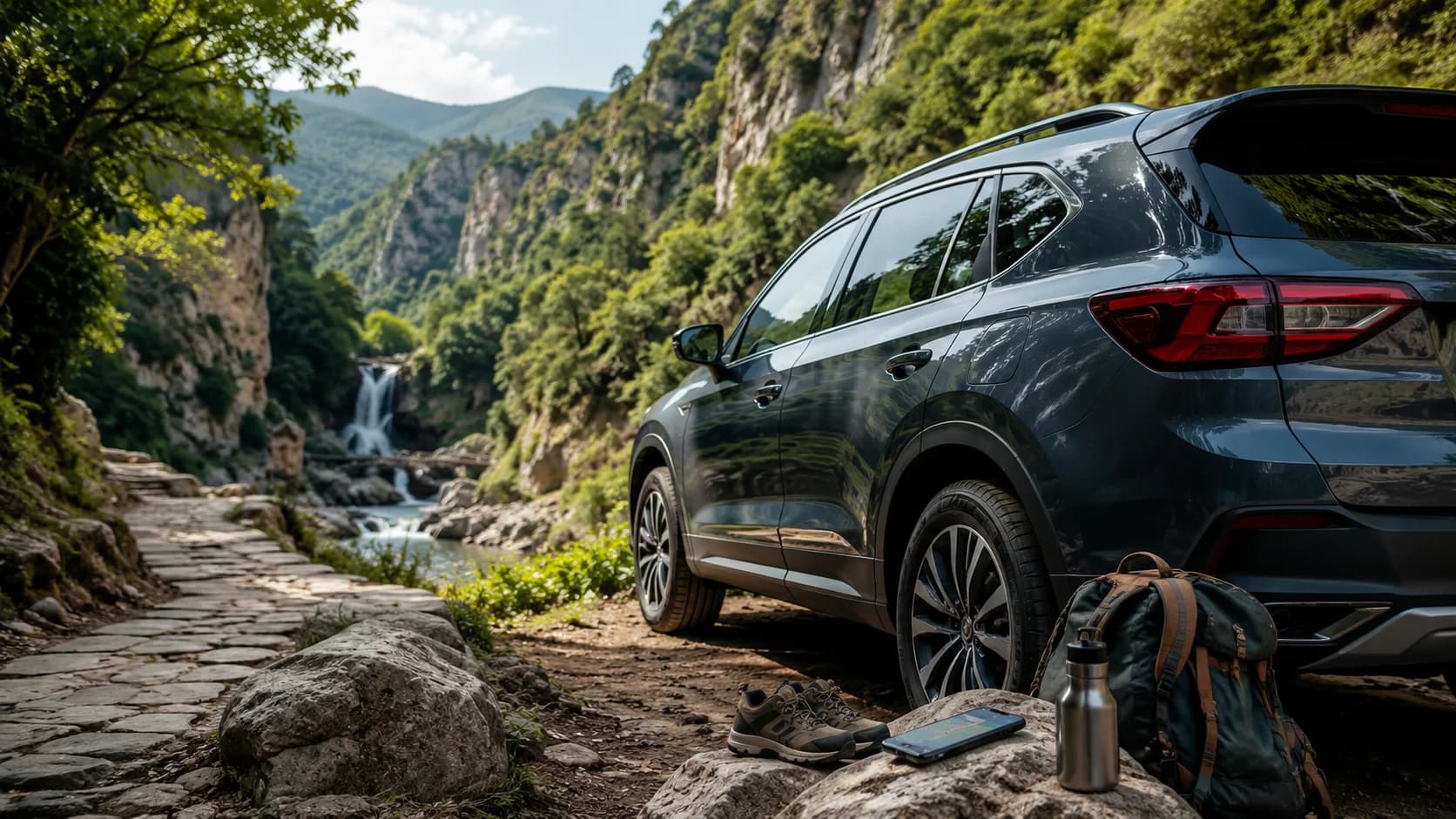
An SUV rental in Tangier becomes useful when:
-
you have several large suitcases;
-
four or five adults are travelling together;
-
Ifrane is only one part of a wider Middle Atlas trip;
-
you are travelling during colder months;
-
you prefer a higher seating position.
An SUV is not compulsory for normal paved-road access to Ifrane.
No-deposit rental
Travellers arranging a longer Moroccan road trip may also want to compare no deposit car rental in Tangier.
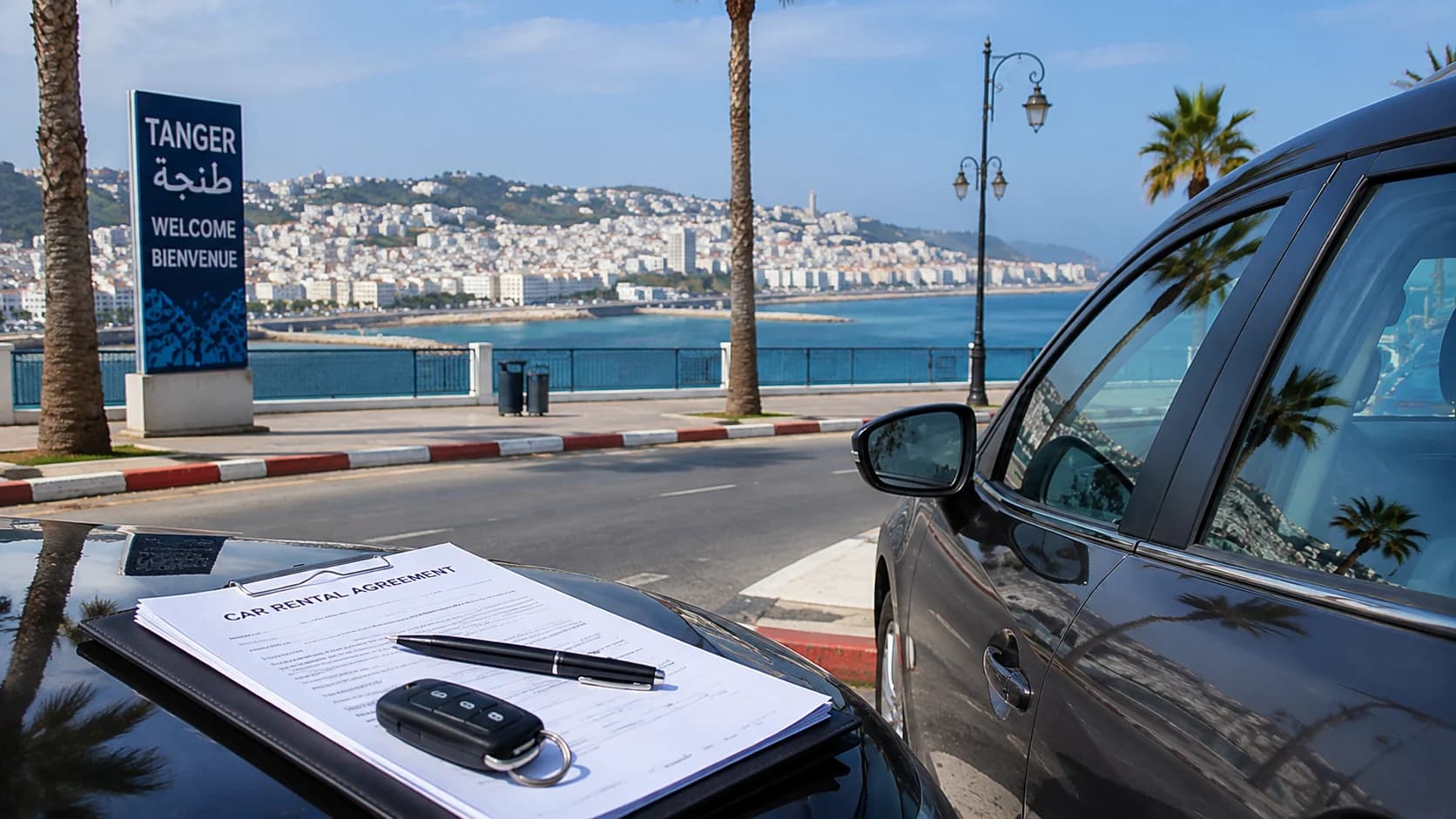
Whatever category you choose, confirm the rental terms before leaving Tangier, especially mileage allowance, insurance conditions, fuel policy and whether your planned itinerary is covered.
Arrival and Onward-Trip Checklist
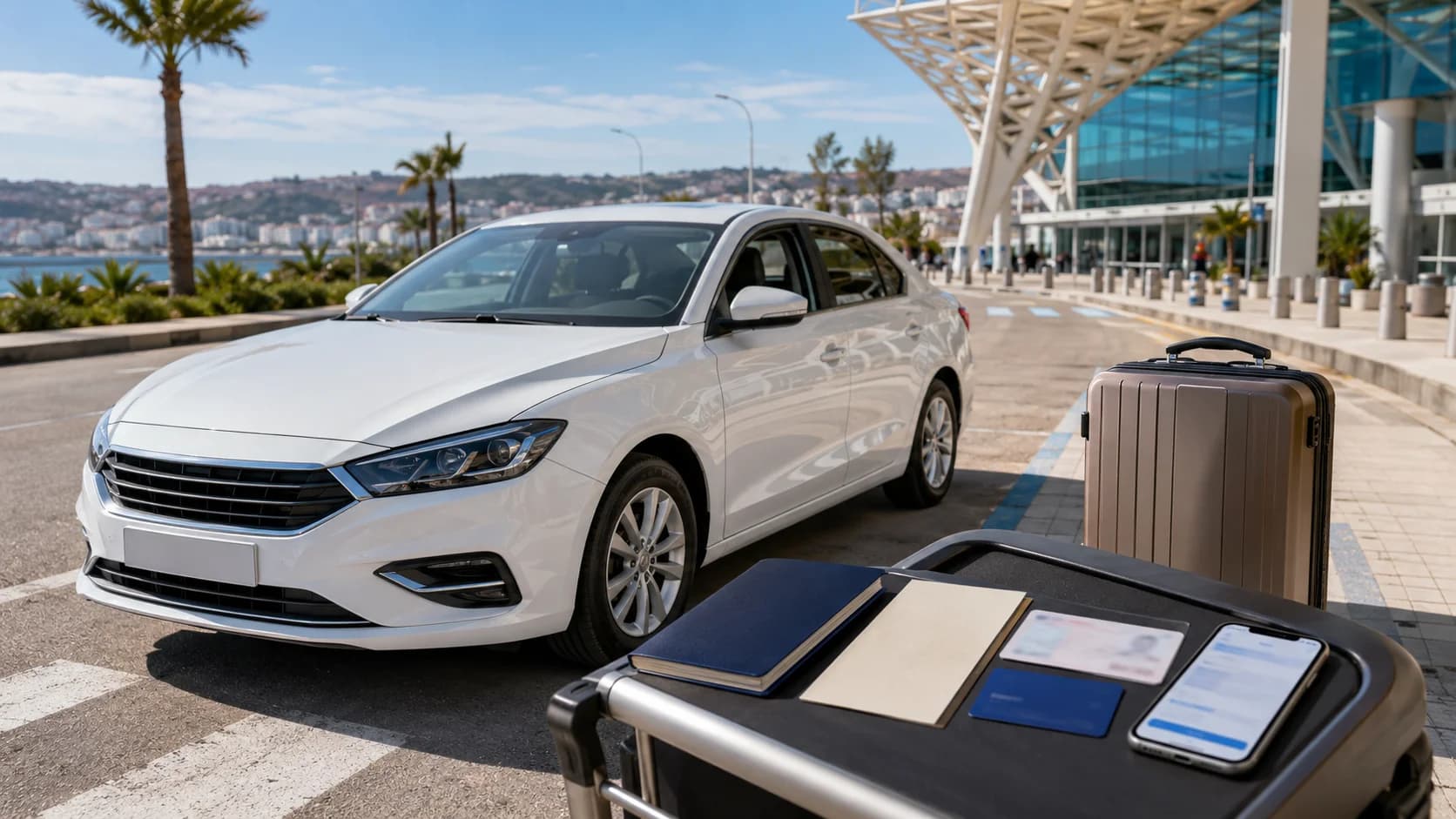
When you arrive in Ifrane, avoid treating the journey as finished until the car is parked and the next day's route is organised.
Check:
-
hotel or accommodation parking;
-
remaining fuel;
-
next-day weather;
-
tyre condition after the long drive;
-
onward navigation;
-
luggage security;
-
expected departure time.
Ifrane also works naturally with a wider Fes-Meknes and Middle Atlas itinerary.
Ifrane to Fes
Fes is roughly 60–65 km away by the normal road route.
This makes:
Tangier → Ifrane → Fes
a practical itinerary if you prefer reaching the mountains before visiting Fes.
Ifrane and Azrou
Travellers continuing deeper into the Middle Atlas can also connect Ifrane with the Azrou area.
That option is especially useful if the trip later continues south toward Midelt and the interior rather than returning directly to Fes.
Frequently Asked Questions
How far is Ifrane from Tangier by car?
Plan for roughly 310–340 km or more, depending on the exact route selected. Different route planners produce different totals because Tangier, Meknes, Fes and Ifrane can be connected using several road combinations.
How long does it take to drive from Tangier to Ifrane?
Approximately five hours of actual driving is a useful minimum planning figure, but a real road-trip day with fuel, food and rest breaks will normally take longer.
What is the best route from Tangier to Ifrane?
For a relatively direct itinerary, travelling toward Meknes, El Hajeb and Ifrane is practical. If Fes is already part of your trip, travelling through Fes and then using the N8 toward Ifrane can make more sense.
Can I drive from Tangier to Ifrane in one day?
Yes. It is a realistic one-day drive if you leave in the morning, take proper breaks and avoid adding several lengthy sightseeing stops.
Do I need an SUV for Ifrane?
Not normally. A sedan is suitable for the main paved approach in ordinary conditions. An SUV becomes more attractive for extra luggage capacity, a wider Middle Atlas itinerary or winter travel.
Where should I stop between Tangier and Ifrane?
Meknes is one of the most practical substantial stops when using the western inland route. Fes is better if you want an overnight break. Larache or Souk El Arbaa can work for shorter breaks depending on the route chosen.
Are there toll roads on the route?
They can be. Morocco's main motorway network is tolled, so a Tangier–Ifrane itinerary using motorway sections will involve toll payments.
Is a rental car practical for a Tangier to Ifrane road trip?
Yes. A rental car is particularly useful when Ifrane is part of a larger itinerary involving Fes, Meknes or the Middle Atlas because you are not restricted to fixed public-transport departure points or timetables.
Plan Your Tangier to Ifrane Road Trip
For a longer inland journey, choose a comfortable MarHire Car Tangier sedan or SUV and confirm your rental terms before departure so the road trip stays predictable from Tangier to Ifrane.
The key is not simply selecting the fastest route. Leave enough time for breaks, choose stops that fit naturally into the journey, check Middle Atlas conditions when travelling in winter, and select a rental car with enough passenger and luggage space for several hours on the road.
With that preparation, Tangier to Ifrane by car can become more than a long transfer. It can form the northern starting point of a wider itinerary linking Tangier with Ifrane, Fes, Meknes and the landscapes of the Middle Atlas.