








Driving from Tangier to Al Hoceima by car is one of northern Morocco’s most rewarding road trips. The journey connects the Atlantic-facing city of Tangier with the Mediterranean landscapes of Tetouan, the Rif Mountains and the beaches surrounding Al Hoceima.
Although the distance is manageable in one day, this is not a route that should be planned using distance alone. Mountain bends, town traffic, viewpoints and rest stops can make the journey considerably longer than a navigation app’s initial estimate. Travellers must also choose between a scenic coastal itinerary and a more direct inland route through the Rif.
This guide explains the main route options, realistic driving times, useful stops, road conditions, fuel planning and the best type of rental car for the trip.
The drive from Tangier to Al Hoceima is approximately 290 kilometres, depending on the route and your exact starting point. A direct journey normally requires around five to six hours of driving, while a scenic coastal itinerary with stops can take seven hours or more. The official Moroccan tourism website presents Tangier, Tetouan, Chefchaouen and Al Hoceima as part of the same northern region, which combines Mediterranean beaches, historic cities and Rif Mountain scenery.
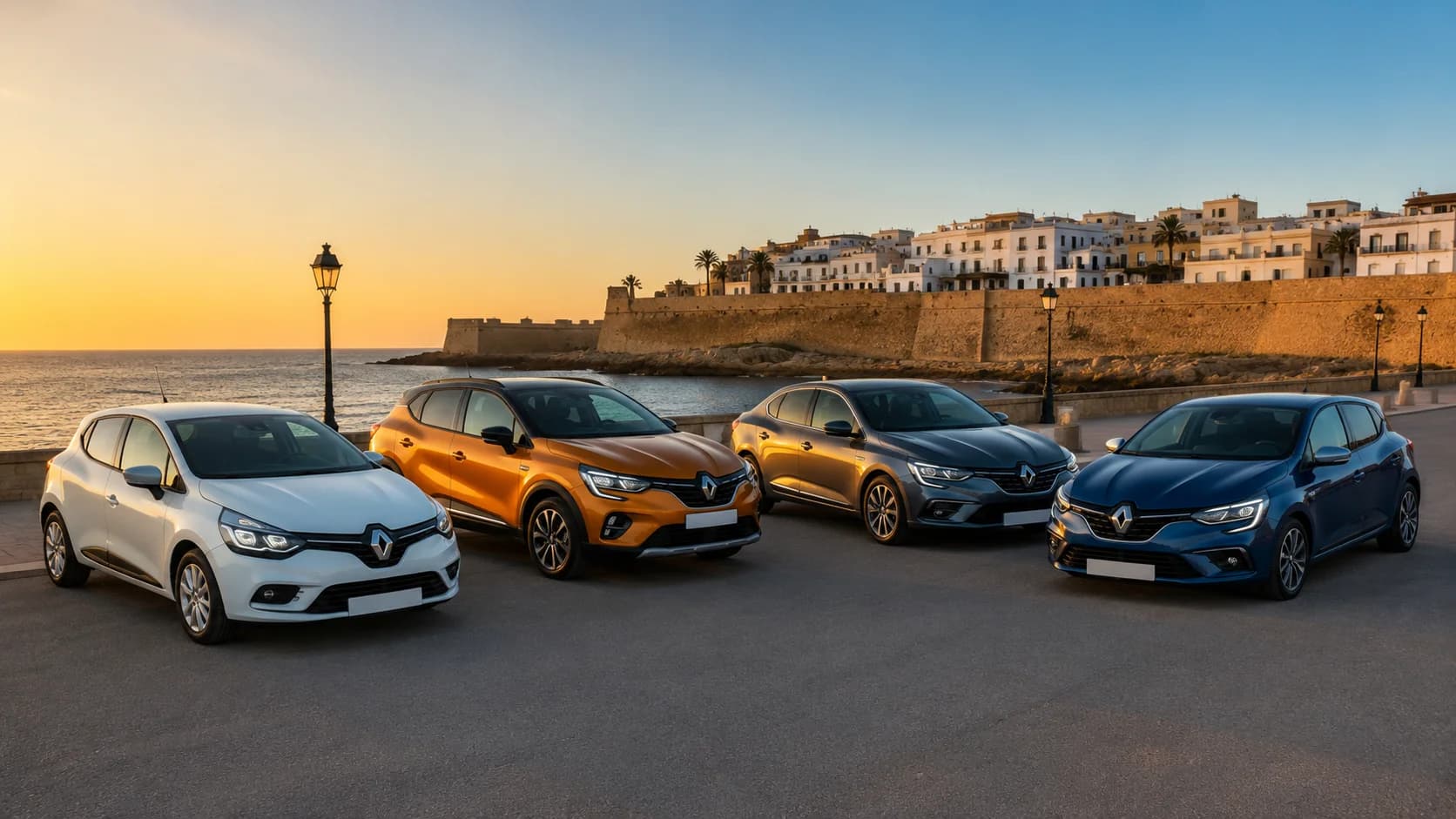
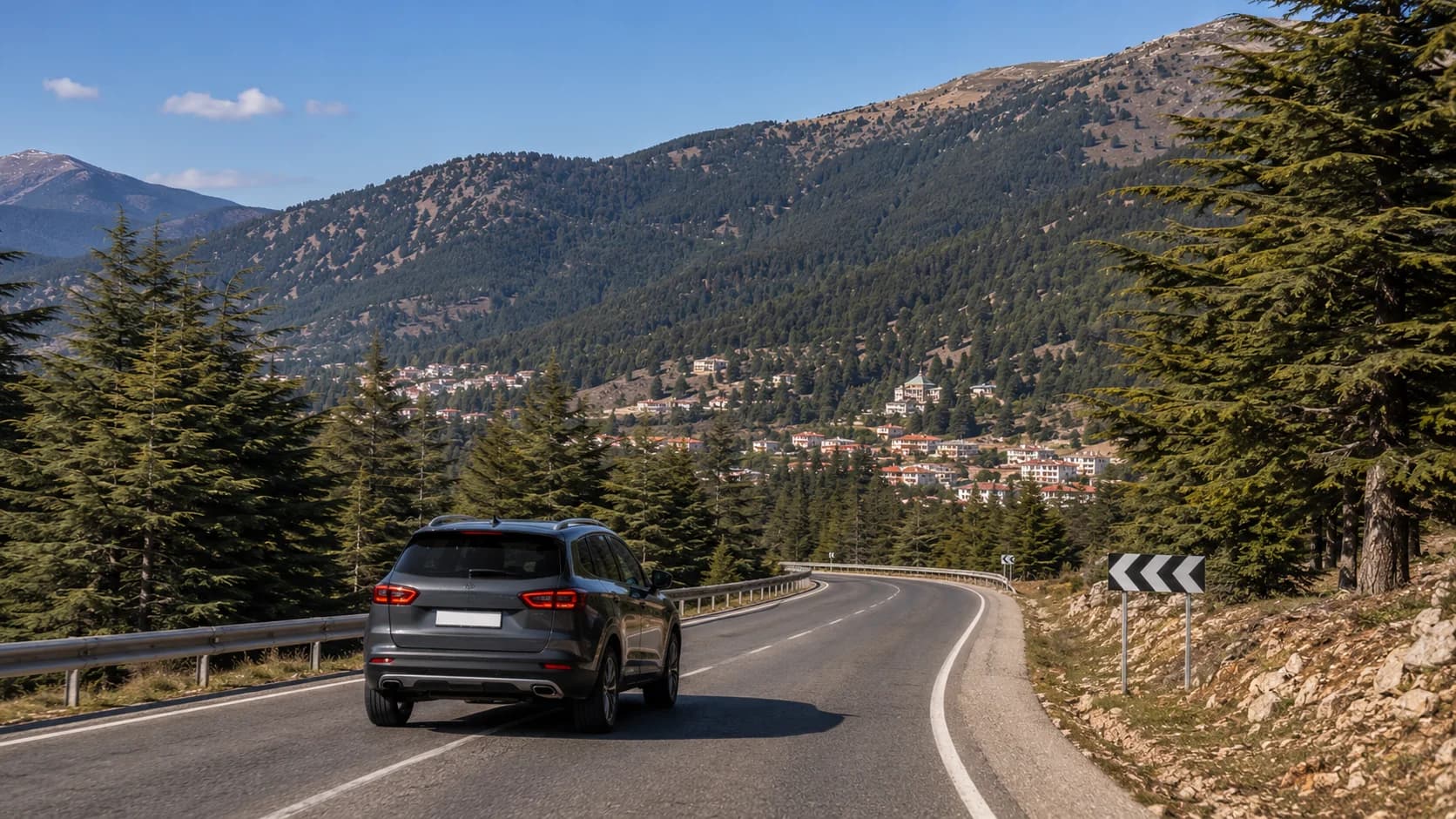
A sedan is suitable when the weather is good and you remain on paved main roads. An SUV can offer additional comfort for families, larger luggage loads and longer days on winding mountain roads.
Table of Contents
- Tangier to Al Hoceima route overview
- How long the drive takes
- Coastal route vs faster inland route
- Best stops along the way
- Road conditions and difficult sections
- Fuel, food and rest-stop planning
- Best rental car for the journey
- Should you drive in one day?
- Suggested overnight plan
- Road-trip checklist
Tangier to Al Hoceima Route Overview
The most suitable route depends on whether your priority is scenery, speed or an overnight visit to Chefchaouen.
The direct road distance is generally estimated at approximately 260 to 290 kilometres. Differences between route planners occur because some calculate the journey through inland roads while others follow longer sections of the Mediterranean coast. One route calculator estimates approximately 259 kilometres, while another gives about 288 kilometres. These figures should therefore be treated as planning ranges rather than exact door-to-door distances.
The two main options are:
Inland route through Tetouan and the Rif
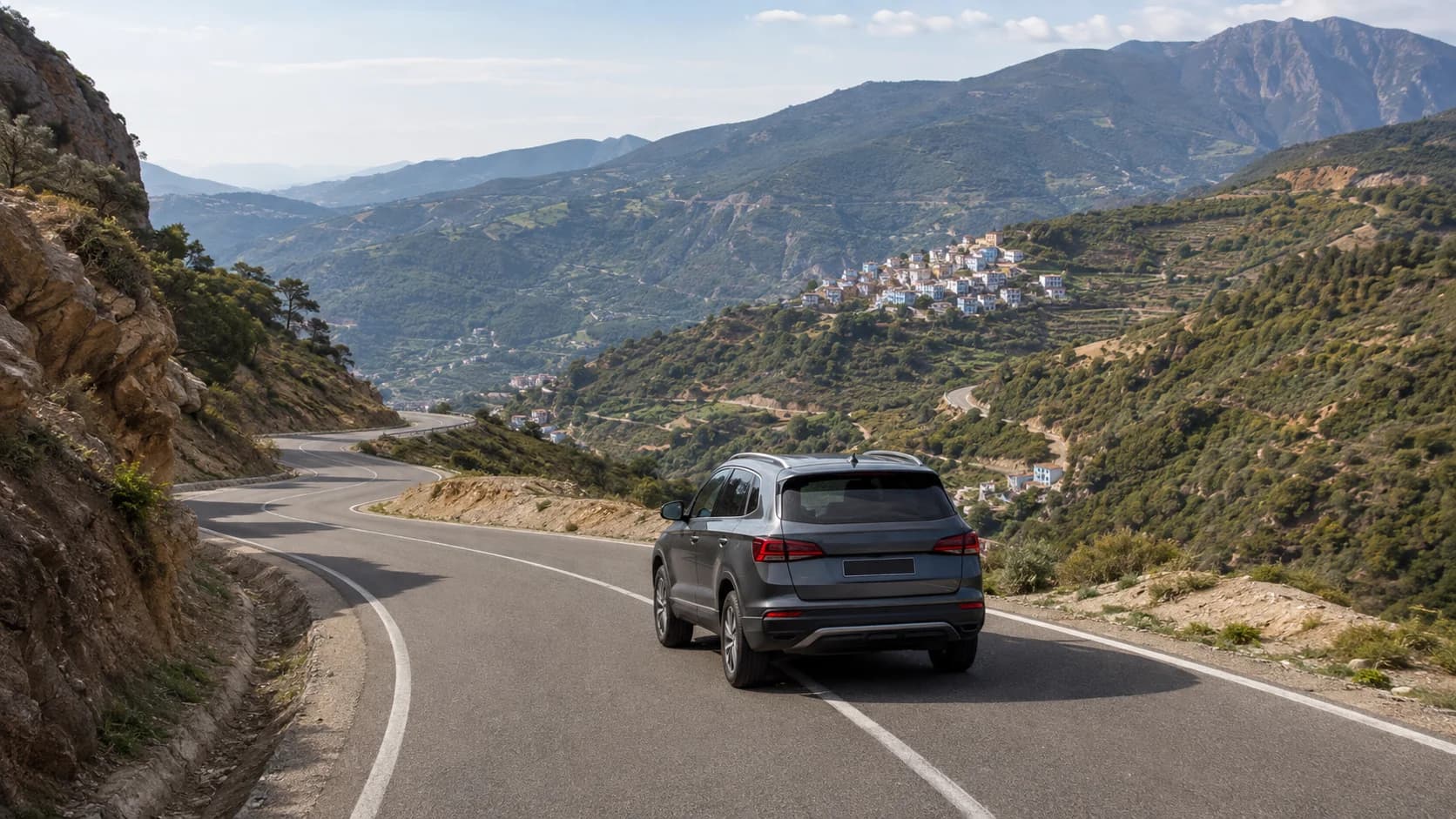
This itinerary normally takes you from Tangier toward Tetouan before continuing southeast through the Rif region. Depending on your navigation settings and current road conditions, the route may connect with roads leading toward Chefchaouen, Bab Taza, Issaguen and Al Hoceima.
It is generally the better choice when you want to complete the journey in one day. It still includes mountain scenery, but it avoids some of the slower coastal sections.
Mediterranean coastal route
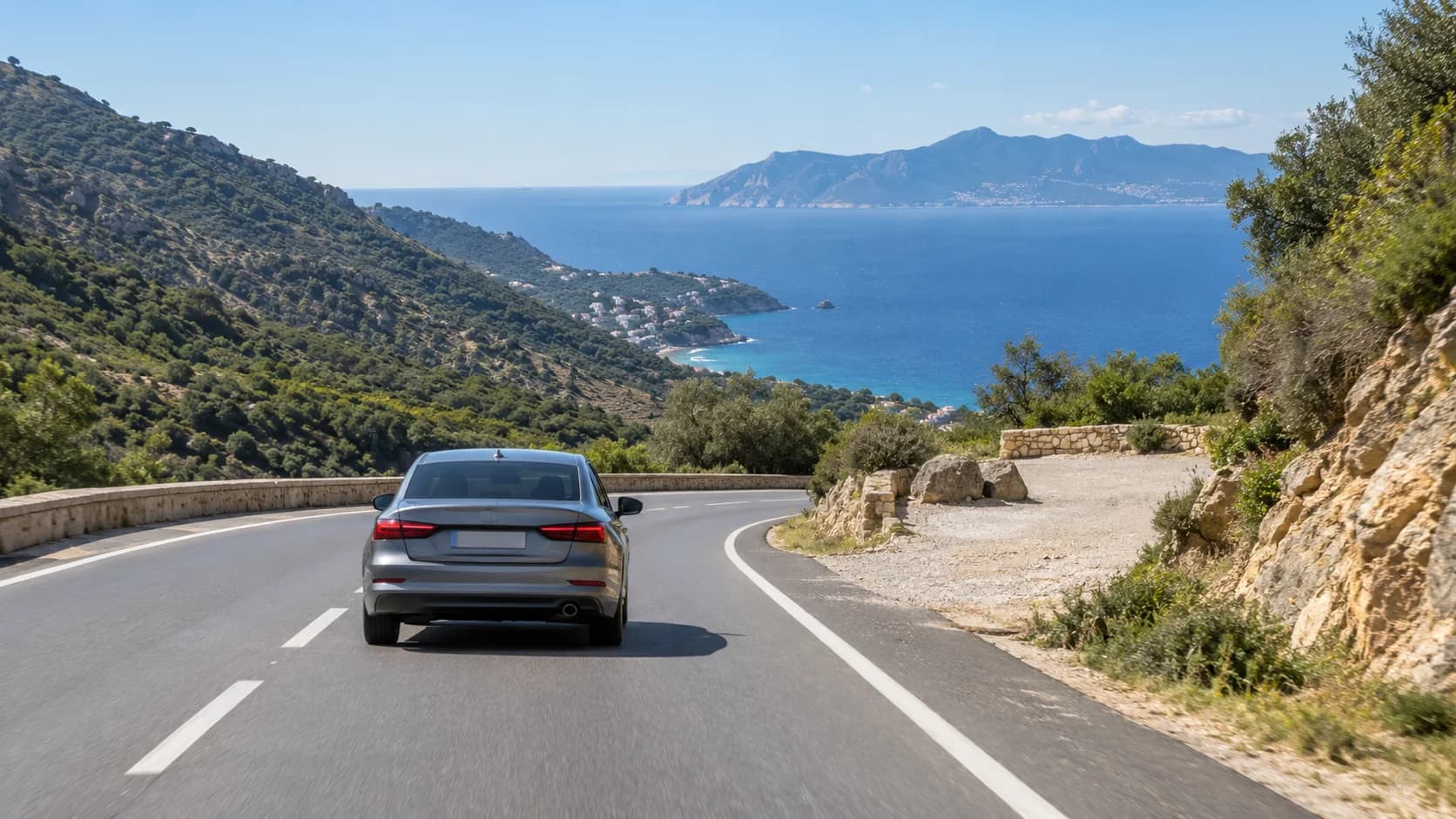
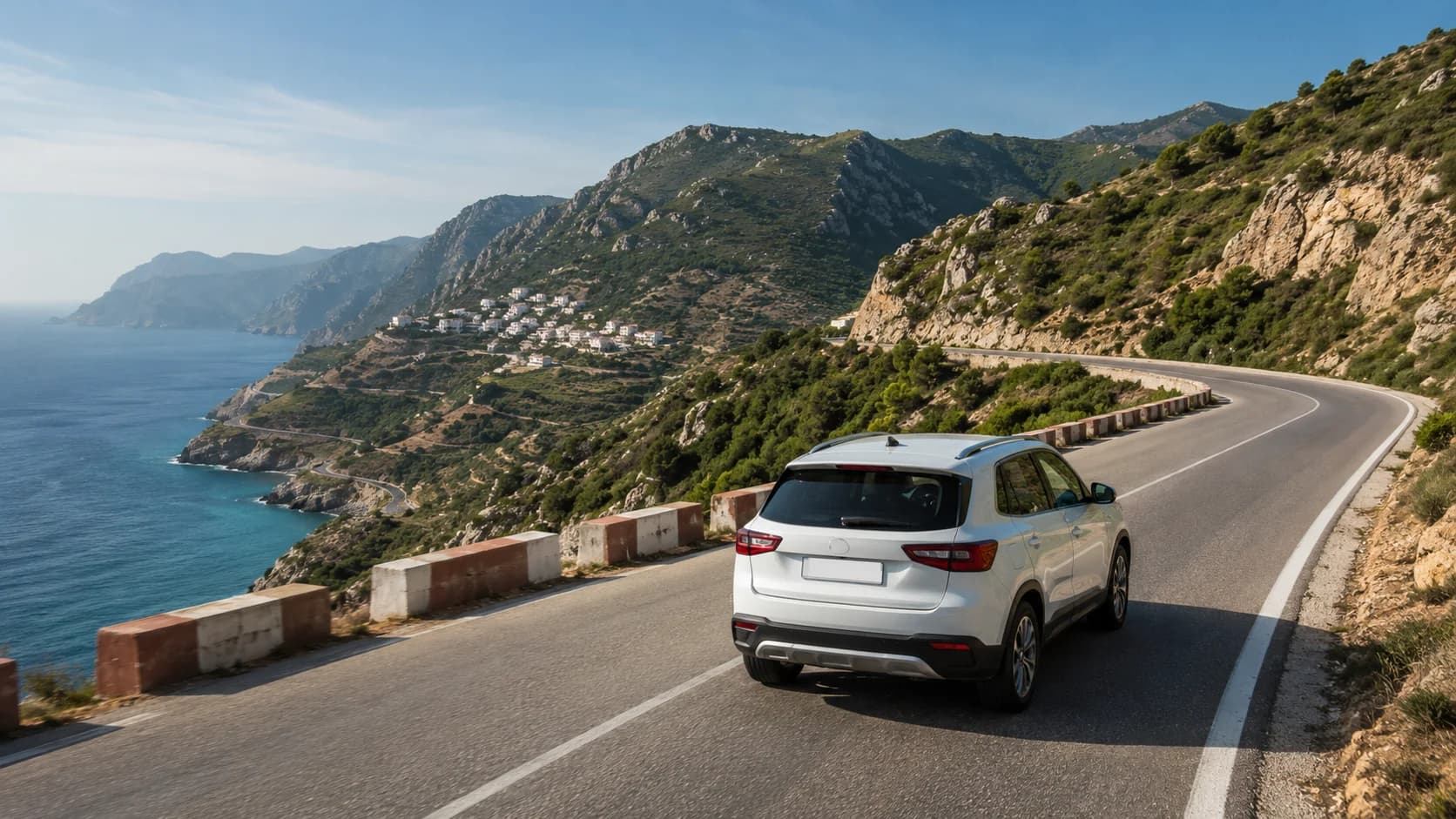
The coastal option follows more of the N16, sometimes called the Mediterranean Bypass or Mediterranean ring road. It passes through or near coastal towns and viewpoints before reaching Al Hoceima.
This is the more scenic choice, but it is not necessarily the easiest or fastest. The road frequently follows the shape of the coast, which means bends, changes in elevation and slower progress through small communities. The N16 connects several northern Mediterranean destinations, and the Tetouan to Al Hoceima section alone is commonly listed at approximately 230 kilometres.
How Long Does the Drive Take?
Plan for approximately five to six hours behind the wheel when taking a relatively direct route in good conditions.
That estimate does not include a long lunch, sightseeing in Tetouan or Chefchaouen, beach stops or delays caused by roadworks. A more realistic door-to-door plan for most visitors is six to seven hours.
The journey can take longer when:
- You leave Tangier during busy morning traffic
- You enter Tetouan at a congested time
- Slow vehicles are travelling through mountain sections
- Visibility is reduced by rain, fog or low cloud
- You stop for photographs or meals
- Seasonal roadworks create alternating traffic
- You follow the full coastal route
The coastal road should be treated as a full-day drive rather than a fast transfer. Travellers who want to stop at several viewpoints or beaches may need eight hours or more from departure to arrival.
Leave Tangier early, ideally after breakfast, so most of the journey can be completed in daylight.
Coastal Route vs Faster Inland Route
Choose the coastal route for scenery
The northern Morocco coastal road is the better choice when the journey itself is part of your holiday.
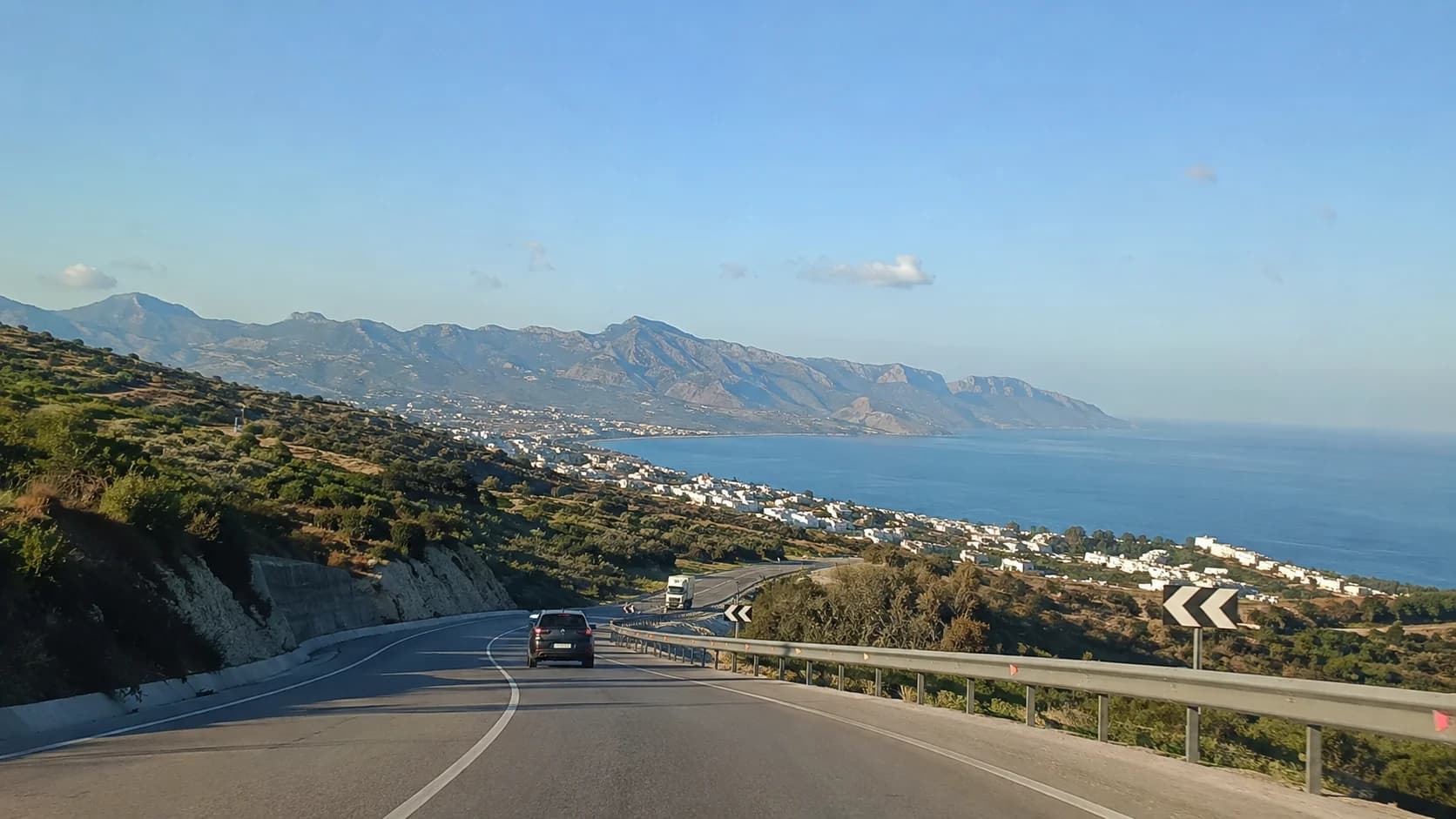
It offers views of the Mediterranean, rocky coves, fishing communities and the steep meeting point between the Rif Mountains and the sea. El Jebha is one of the best-known coastal stops on longer Rif road trips, while the approach to Al Hoceima introduces increasingly dramatic bays and headlands. The region is recognised for its combination of mountain and coastal landscapes.
However, the coastal route requires patience. Average speeds can be low even when the road surface is acceptable. A section that looks short on a map may include repeated bends and limited overtaking opportunities.
Choose the inland route for efficiency
The inland route is usually more practical when:
- You must reach Al Hoceima before evening
- You are travelling with young children
- You have already visited the coast near Tetouan
- The weather near the Mediterranean is poor
- You prefer more frequent town services
- You are not comfortable with extended winding-road driving
The inland road still crosses the Rif region, so it should not be compared with a straight motorway drive. Drivers must remain alert, especially on sections with elevation changes, village traffic and narrow bends.
Can you include Chefchaouen?
Chefchaouen can be included, but it changes the journey from a direct transfer into a sightseeing itinerary.
The town is known for its blue medina, traditional crafts, mountain setting and Ras El Ma area. It is one of northern Morocco’s major visitor destinations.
A short lunch stop may be possible, but entering the town, finding parking, walking through the medina and returning to the road can easily add several hours. An overnight stay is usually the more comfortable option.
Best Stops Between Tangier and Al Hoceima
Tetouan
Tetouan is the easiest major stop near the beginning of the journey. It works well for coffee, breakfast or supplies before entering longer mountain sections.
Its historic medina and Andalusian-influenced architecture deserve more than a quick roadside break, but travellers on a tight schedule can stop outside the busiest centre and continue east.
Martil or M’diq
Travellers choosing an early coastal section can stop near Martil or M’diq for a view of the Mediterranean. These towns are most practical outside the busiest summer periods, when coastal traffic and parking demand can increase.
Keep the stop short when completing the entire journey in one day.
Chefchaouen area
Chefchaouen is a valuable overnight destination and one of the most attractive additions to a northern Morocco road trip.
Even when you do not enter the medina, the surrounding Rif landscape provides scenic viewpoints and places to pause. Avoid trying to combine a complete Chefchaouen visit with the full drive to Al Hoceima unless you leave very early and are comfortable arriving late.
El Jebha
El Jebha is one of the most useful stops on the coastal itinerary. The small Mediterranean town offers a natural place for lunch, fuel planning or a longer rest before continuing toward Al Hoceima.
The surrounding coastline is beautiful, but the road on either side requires concentration. This makes El Jebha a better rest point than an unplanned five-minute stop.
Cala Iris
Cala Iris is known for its quiet Mediterranean setting and can be included when following the coast. Reaching smaller beaches may require leaving the main road, so check both the access road and return time before committing to the detour.
Al Hoceima National Park area
As you approach Al Hoceima, the landscape around the national park becomes one of the highlights of the journey. The area is associated with rugged Mediterranean coastline, beaches and Rif Mountain scenery.
Save enough daylight to enjoy the final approach rather than completing it after dark.
Road Conditions and Difficult Sections
The main roads between Tangier and Al Hoceima are paved, but road quality alone does not determine how easy the journey feels.
The main challenge is the geography. Rif roads can include:
- Continuous bends
- Steep climbs and descents
- Limited visibility around corners
- Slow trucks and local vehicles
- Pedestrians near villages
- Animals close to the road
- Loose material near road edges
- Occasional roadworks
Do not calculate your schedule using the maximum permitted speed. Your average speed through mountain sections may be much lower.
Driving in rain or fog
Rain can reduce grip and visibility, particularly on shaded bends. Low cloud and fog are also possible at elevation, especially outside summer.
Use dipped headlights when visibility is poor, increase the space between vehicles and avoid overtaking unless the road ahead is clearly visible.
Driving after dark
Driving at night is possible, but it is less comfortable for visitors unfamiliar with the route. Unlit bends, pedestrians, bicycles and animals may be harder to see.
Daylight driving also allows you to enjoy the scenery and identify rest areas more easily. Plan to arrive in Al Hoceima before sunset whenever possible.
Seasonal conditions
Spring usually offers green scenery and comfortable daytime temperatures, although rain remains possible. Summer provides longer daylight but may bring more traffic near beaches and coastal towns.
Autumn can be pleasant, but shorter days require an earlier departure. Winter journeys should be planned conservatively because mountain weather and visibility can change quickly.
Check the live forecast and navigation information on the morning of departure. Road conditions can change after rain, maintenance work or local traffic incidents.
Fuel, Food and Rest-Stop Planning
Fill the tank in Tangier or Tetouan rather than waiting until it is nearly empty.
Fuel is available in towns along the broader route, including communities near Al Hoceima, but stations become less frequent outside the main urban areas. A fuel station is listed in Bni Bouayach near the Al Hoceima end of the journey, but operating details and availability should always be checked locally.
A good rule is to refuel when the tank reaches approximately half full, particularly when taking the coastal road. This removes the pressure of finding the next open station late in the day.
Carry:
- Drinking water
- Light snacks
- A phone charger
- Tissues and basic travel supplies
- A small amount of cash
- Any necessary medication
- A warm layer outside summer
Larger towns are the best places for meals and dependable facilities. Small cafés can be found along the route, but their hours and payment options may vary.
Take a proper break every two hours. Stop sooner when you feel tired or when winding roads begin to affect a passenger.
Best Rental Car for Tangier to Al Hoceima
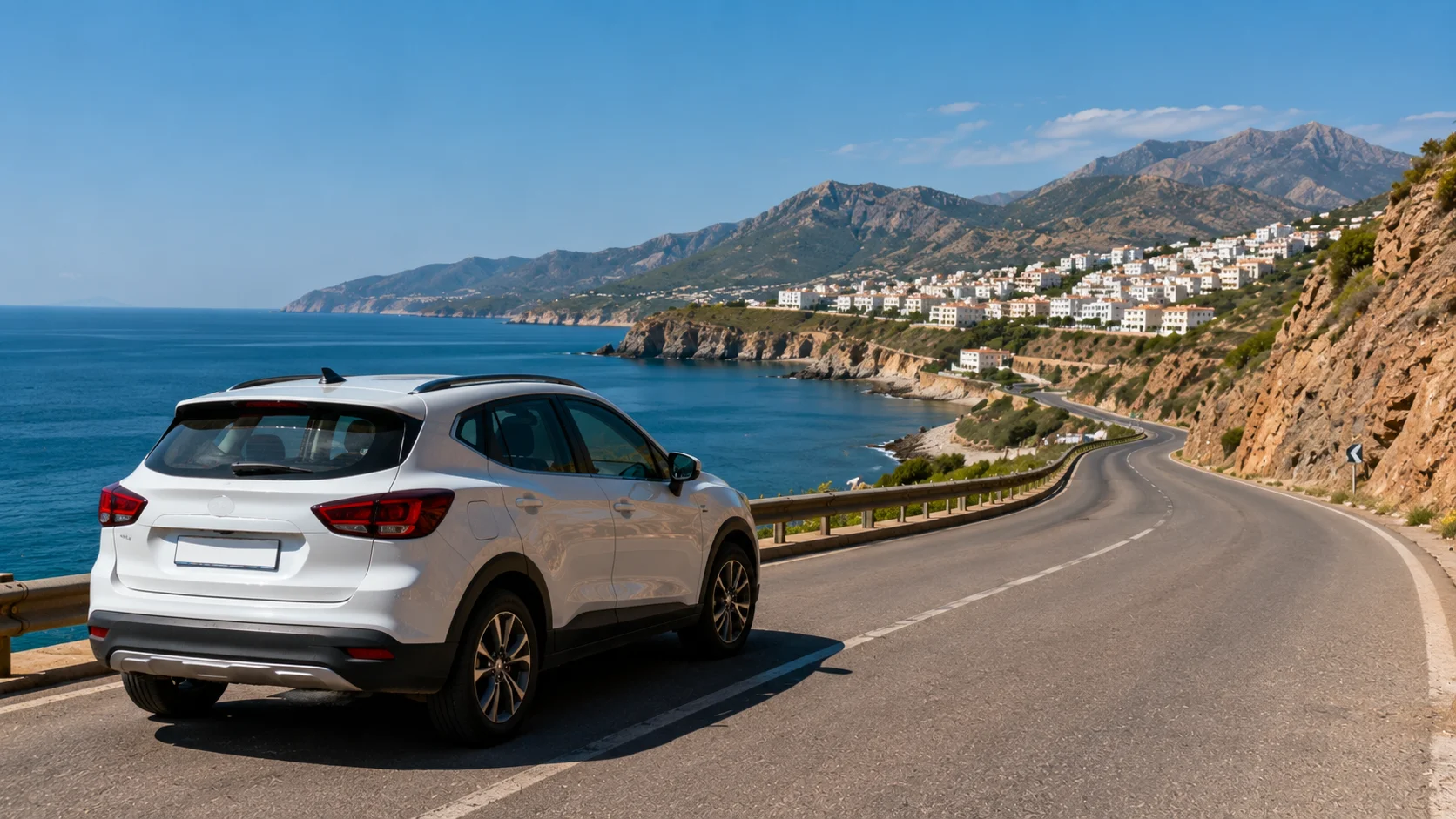
You do not automatically need a four-wheel-drive vehicle for driving from Tangier to Al Hoceima. The main routes are paved, and a well-maintained sedan can complete the journey in normal conditions.
The decision should be based on comfort, passenger numbers, luggage and your planned detours.
Sedan rental
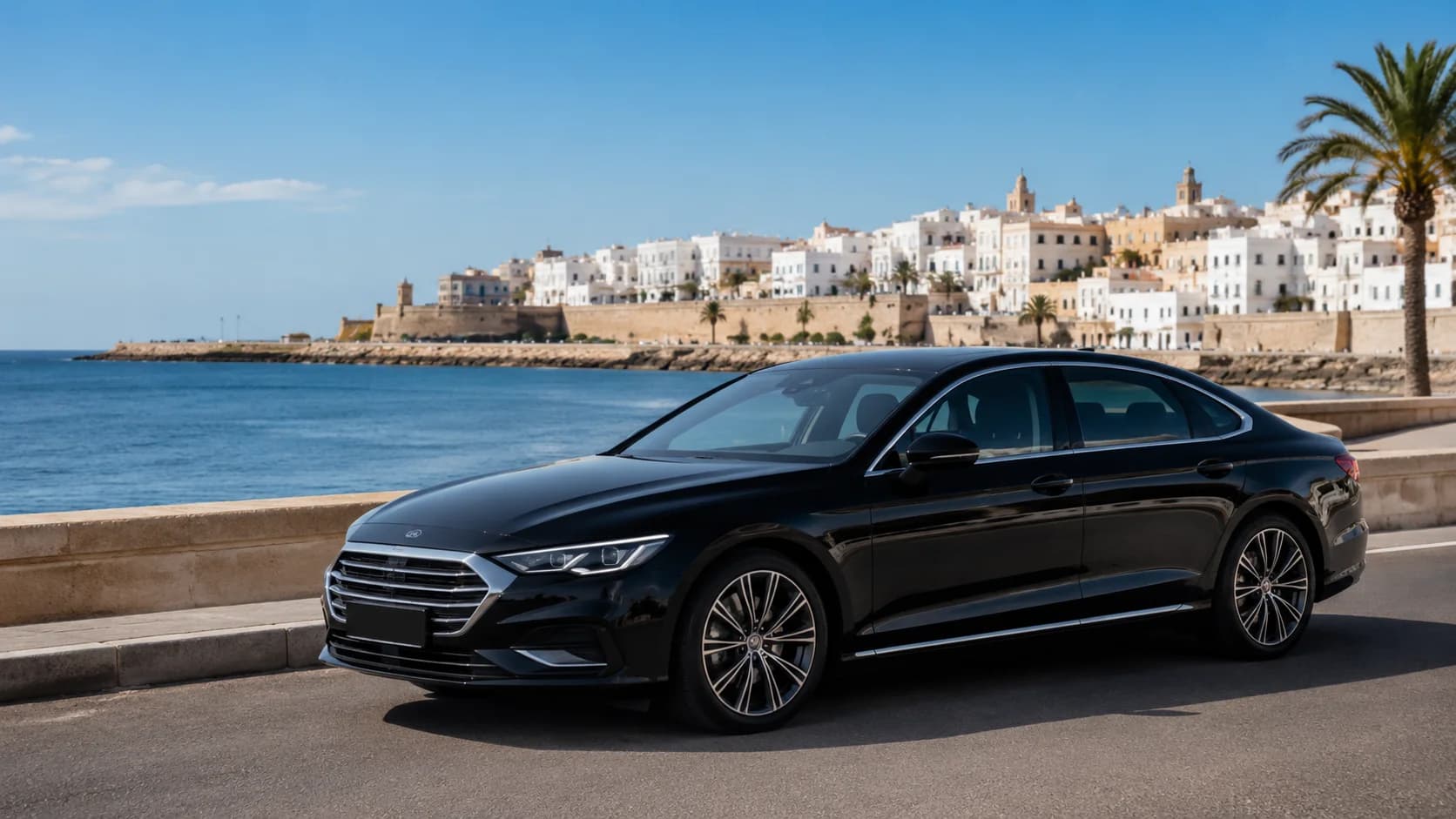
A sedan rental Tangier option is suitable for one to four travellers who plan to remain on the main roads.
Sedans offer stable motorway and main-road driving, good luggage space and efficient fuel consumption. They are a practical choice for couples, business travellers and small families carrying standard suitcases.
Before accepting the car, check the tyre condition, spare wheel or repair kit, lights, air conditioning and windscreen washers.
SUV rental
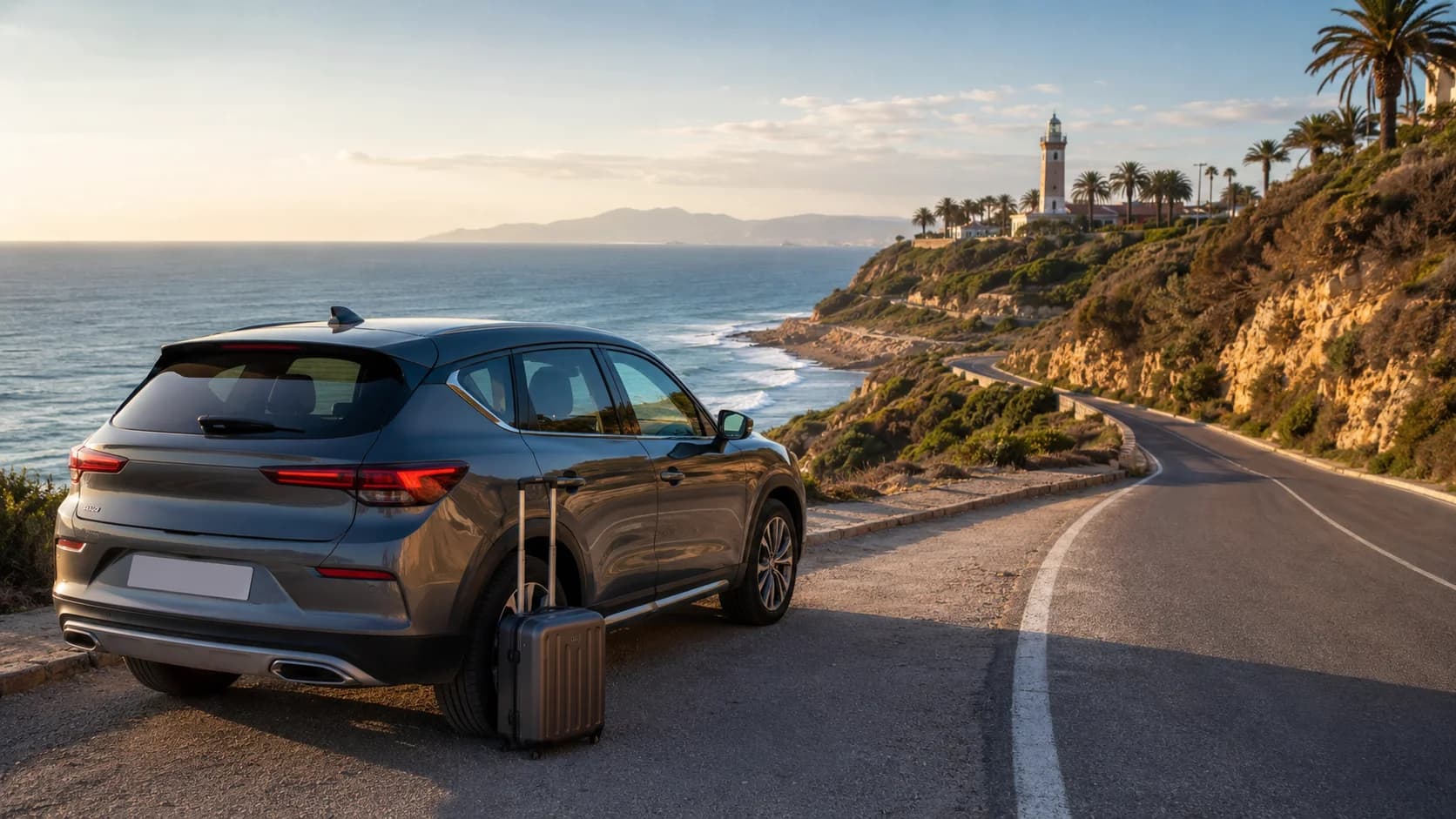
An SUV rental Tangier can make the journey more comfortable when travelling with several passengers or bulky luggage.
The higher seating position can improve forward visibility on winding roads. Additional boot space is useful for families carrying suitcases, a stroller or outdoor equipment.
An SUV may also feel more comfortable on uneven access roads leading to accommodation or viewpoints. However, it does not remove the need to slow down on bends, and it should not be treated as permission to enter unsuitable tracks.
No-deposit options
Travellers who prefer to reduce the amount blocked or paid at pickup can review no deposit car rental Tangier options.
Availability depends on the selected vehicle and rental terms. Confirm the insurance conditions, fuel policy, mileage allowance and required documents before booking.
For a long-distance road trip, unlimited kilometres are particularly useful because they allow you to include coastal stops without worrying about exceeding a daily mileage limit.
Should You Drive from Tangier to Al Hoceima in One Day?
Yes, the journey can be completed in one day.
A one-day drive works best when you:
- Leave Tangier early
- Select one main route in advance
- Limit sightseeing stops
- Share the driving when possible
- Avoid reaching the mountain sections after dark
- Have accommodation confirmed in Al Hoceima
A sample direct schedule could be:
8:00 a.m.: Leave Tangier
9:15 a.m.: Short stop near Tetouan
11:30 a.m.: Rest or early lunch
2:00 p.m.: Second break
3:30 to 5:00 p.m.: Arrive in Al Hoceima
The actual schedule will depend on traffic, weather and the chosen route. Do not treat the arrival time as guaranteed.
Families should add extra time for meals, bathroom breaks and motion discomfort. Anyone who becomes tired on winding roads should stop rather than trying to maintain the original schedule.
Suggested Overnight Plan
An overnight stop makes the trip considerably more relaxed.
Option 1: Overnight in Chefchaouen
Day one can include Tangier, Tetouan and Chefchaouen. You can explore the medina in the afternoon, stay overnight and continue toward Al Hoceima after breakfast.
This option is best for first-time visitors who want to experience one of northern Morocco’s most famous towns.
Option 2: Overnight near the Mediterranean coast
Travellers focused on coastal scenery can stay near M’diq, Oued Laou or another planned stop before continuing along the N16.
This creates more time for beaches and viewpoints, but accommodation should be booked in advance during summer.
Option 3: Overnight around El Jebha
El Jebha divides a longer coastal journey into more manageable sections. It can be a useful choice for travellers who want to explore smaller coastal areas without rushing.
Check accommodation standards, parking availability and arrival instructions before departure.
Tangier to Al Hoceima Road-Trip Checklist
Before leaving Tangier, confirm that you have:
- A valid driving licence and rental documents
- Passports or identification
- Offline maps downloaded
- A full or nearly full fuel tank
- Accommodation location saved
- Emergency and rental-support numbers
- A charging cable or power bank
- Water and snacks
- Enough daylight for the planned route
- Tyres, lights and fluid levels checked
Download the relevant map area before departure. Mobile coverage is available in many towns, but a signal may be less dependable in remote mountain and coastal sections.
Save the accommodation coordinates rather than relying only on the property name. This is especially useful when arriving at a guesthouse outside central Al Hoceima.
Frequently Asked Questions
How far is Al Hoceima from Tangier by car?
The journey is approximately 260 to 290 kilometres, depending on the route and exact departure point. A scenic coastal itinerary may be longer than the more direct inland option.
How long does it take to drive from Tangier to Al Hoceima?
Allow approximately five to six hours of driving without major sightseeing stops. Six to seven hours is a more comfortable real-world estimate with fuel, food and rest breaks.
Is the road from Tangier to Al Hoceima safe?
The main route is regularly used and is generally manageable for a careful driver. The principal challenges are mountain bends, variable visibility, local traffic and driver fatigue. Travel during daylight and adjust your speed to the conditions.
Is the coastal road difficult to drive?
It can be demanding because it includes repeated bends, elevation changes and slower sections. It is best suited to confident drivers who are not rushing.
What are the best stops between Tangier and Al Hoceima?
Tetouan, the Chefchaouen area, M’diq, Oued Laou, El Jebha and selected Mediterranean viewpoints are among the most useful options. Your choices should depend on whether you follow the inland or coastal route.
Do I need an SUV for the Tangier to Al Hoceima route?
No. A sedan is normally sufficient for the paved main roads. An SUV may provide more luggage capacity, a higher seating position and additional passenger comfort.
Can I complete the journey in one day?
Yes. Leave early and limit longer sightseeing stops. An overnight stay is better when you want to visit Chefchaouen or explore the coastal towns.
Are fuel stations available along the route?
Fuel is available in major towns and some smaller communities, but stations are less frequent in remote sections. Start with a full tank and refuel before the level becomes low.
Is the route suitable for families?
Yes, provided the schedule includes regular breaks. Families may prefer an SUV or spacious sedan and should avoid a late arrival after a long day of mountain driving.
What is the best time of year for this road trip?
Spring and early autumn usually provide a good balance of daylight, scenery and moderate temperatures. Summer offers long days but can bring heavier traffic near popular beaches. Winter requires more attention to rain, fog and shorter daylight hours.
Plan Your Northern Morocco Road Trip
Turn northern Morocco into part of the journey rather than treating it only as a transfer between two cities.
Book a comfortable SUV or sedan from MarHire Car Tangier with unlimited kilometres, clear rental terms and no-deposit options on selected cars. Choose the vehicle according to your passengers, luggage and preferred route, then leave enough time to experience the Mediterranean coast and Rif Mountain scenery safely.