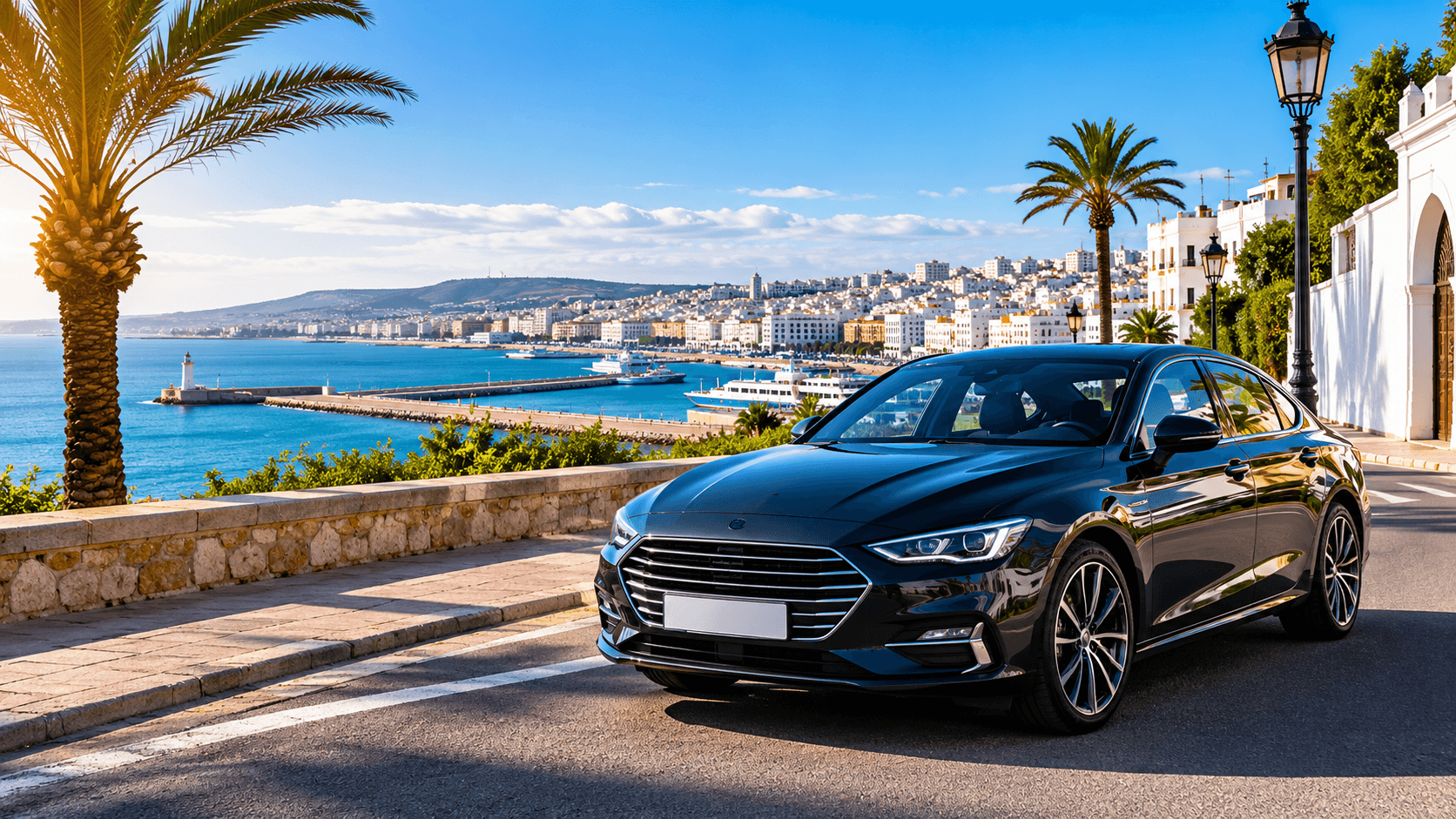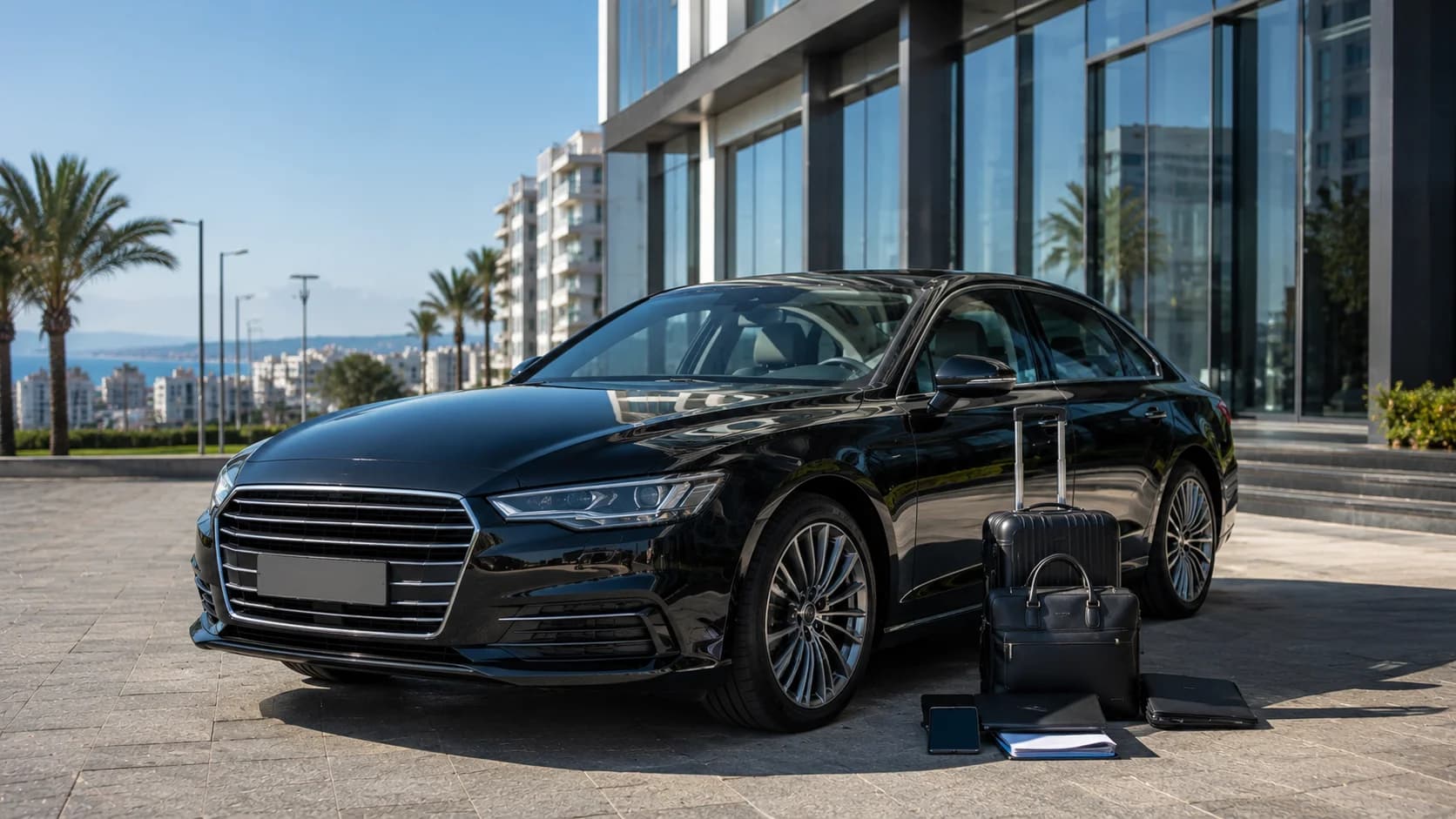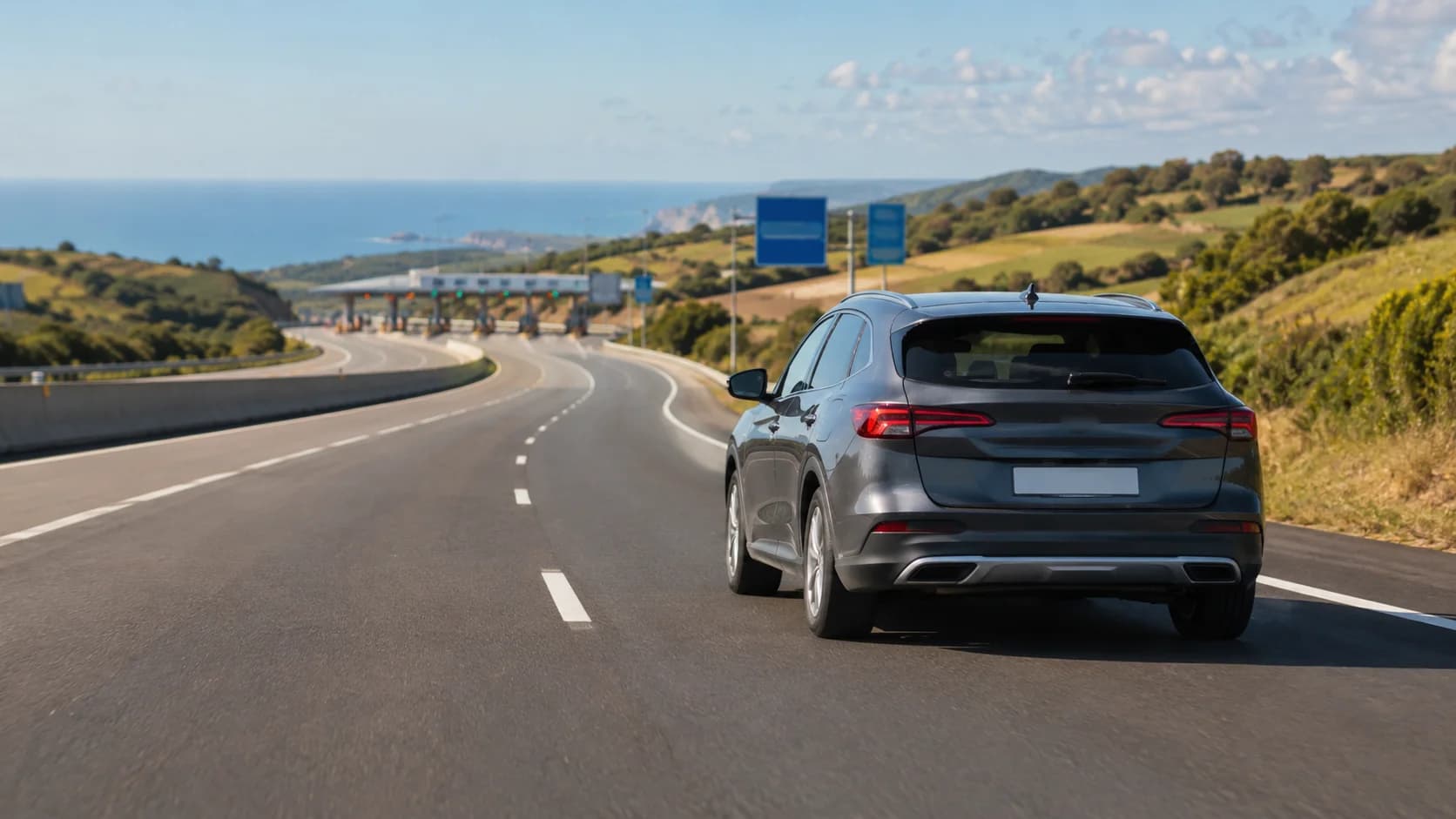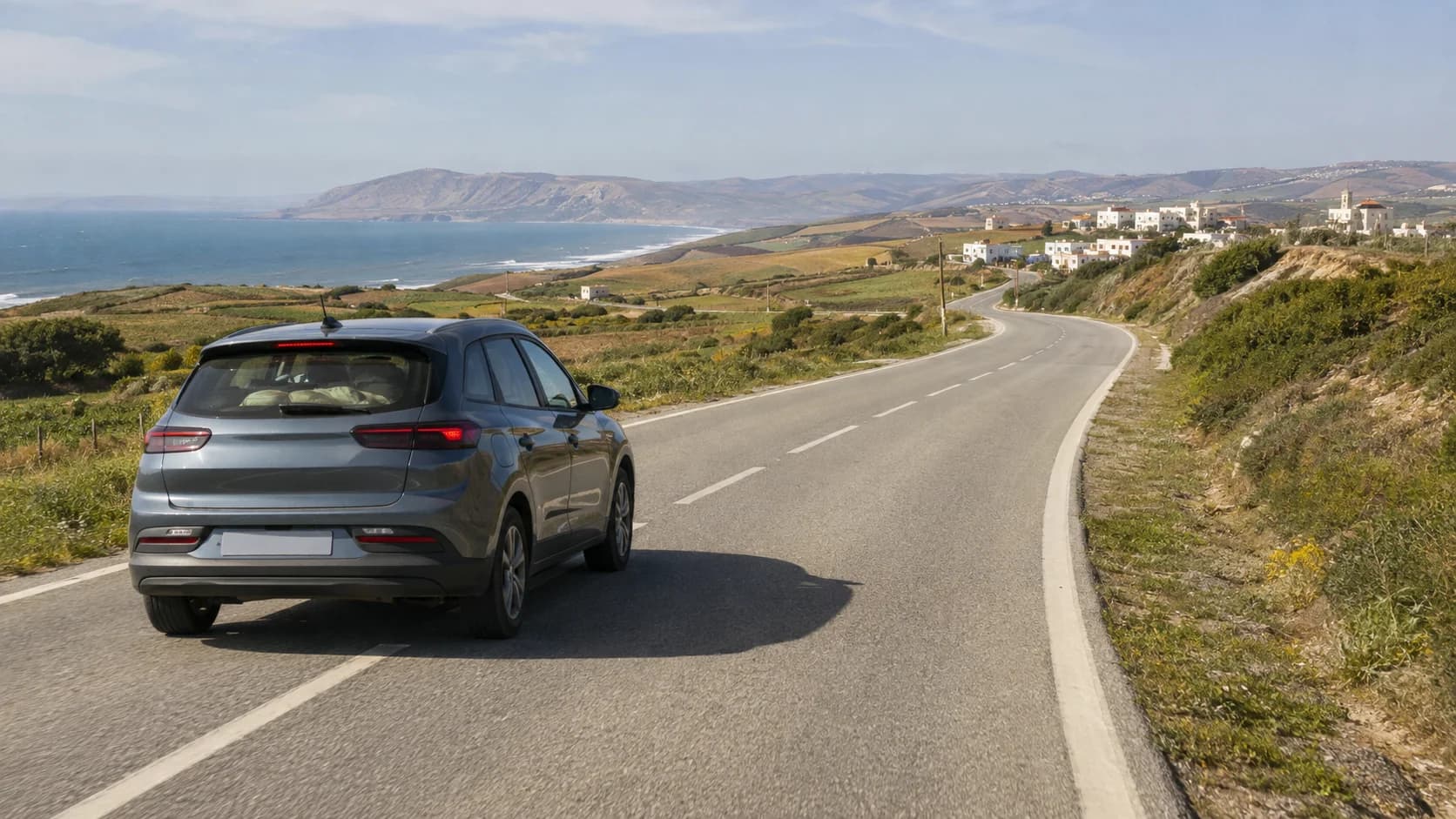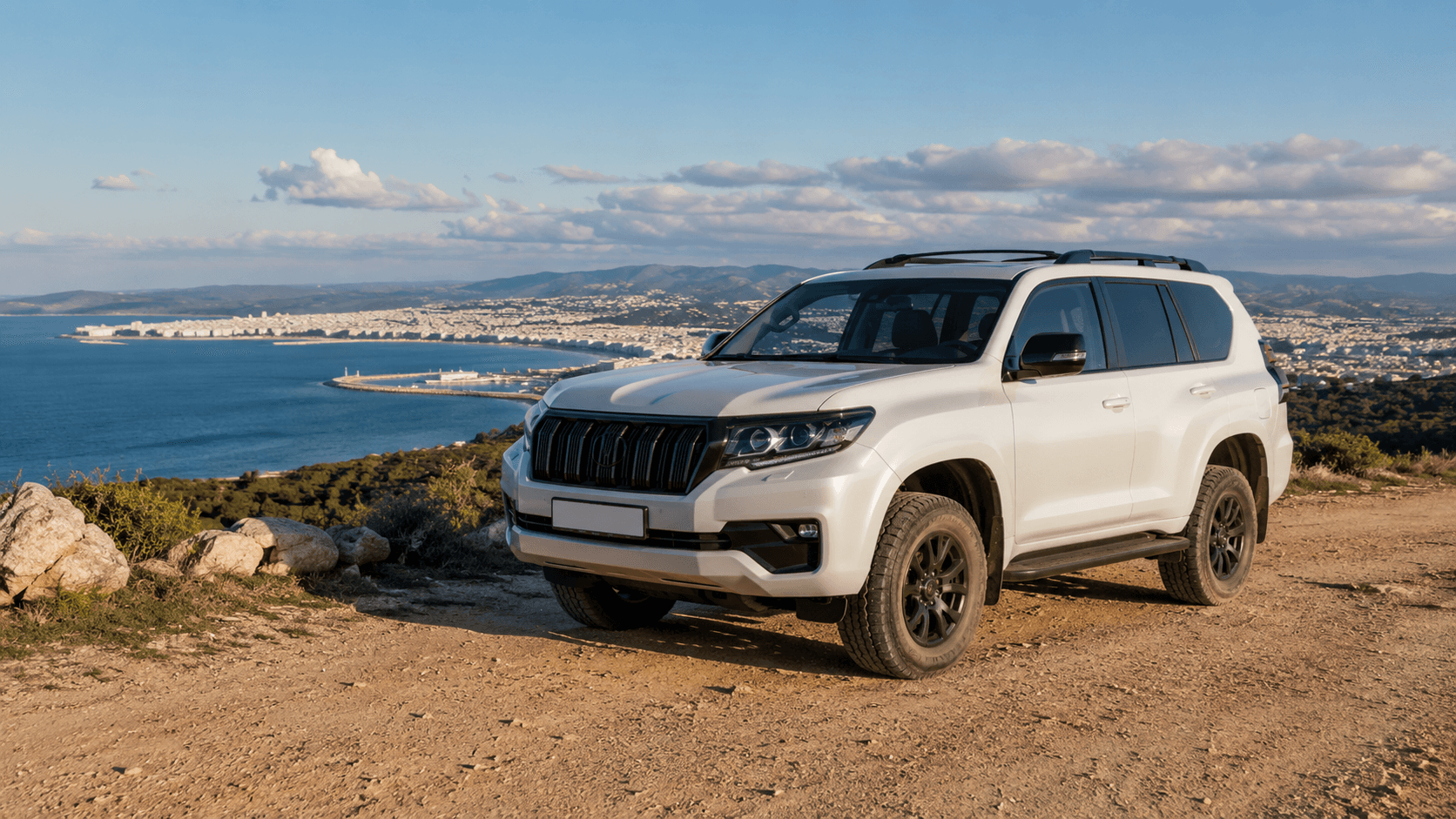









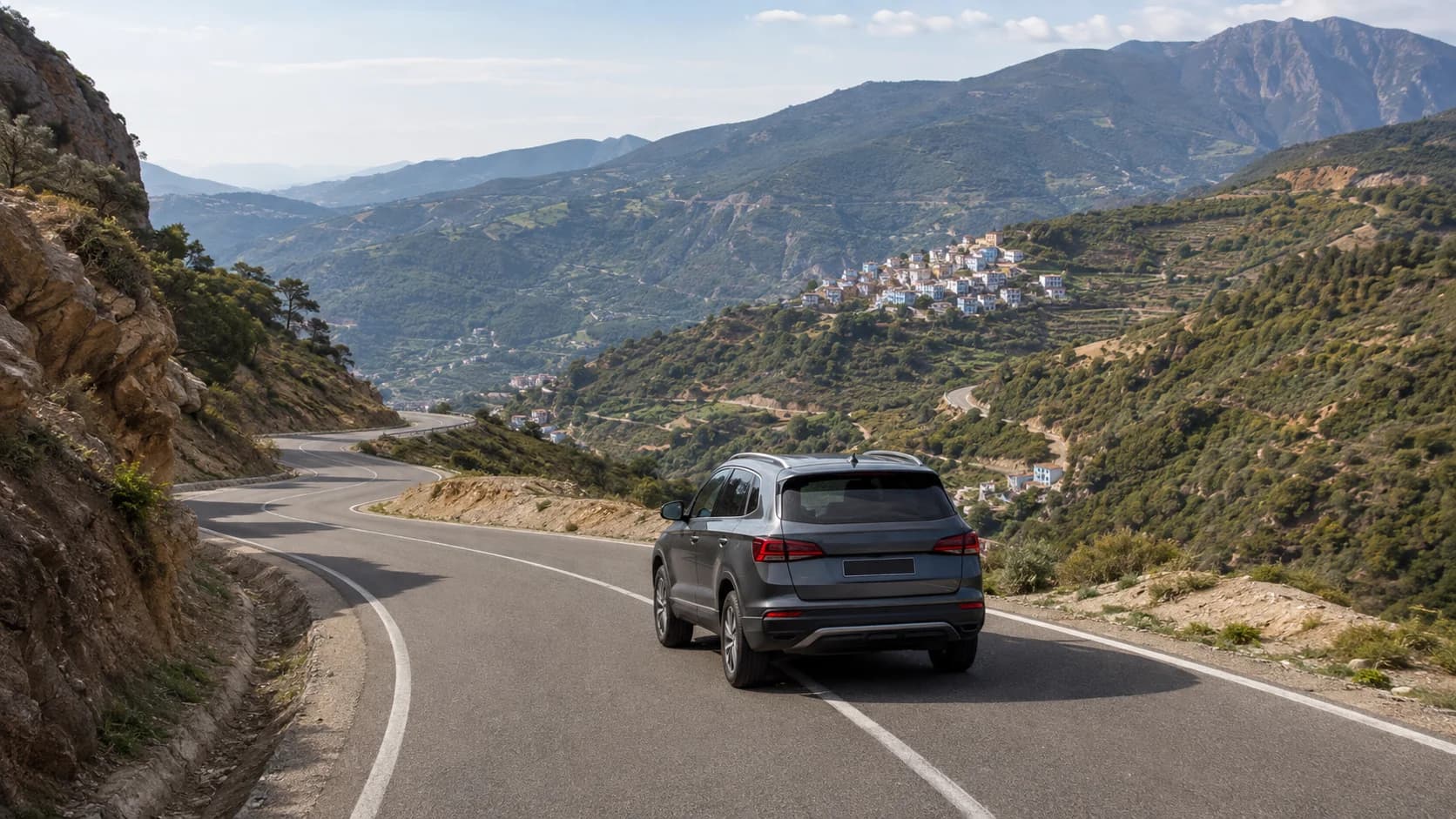
A Rif Mountains road trip from Tangier is one of the most rewarding ways to explore northern Morocco. Within a few hours of leaving Tangier, travelers can reach Chefchaouen, mountain valleys, small Rif villages, hiking areas around Akchour and roads that descend toward the Mediterranean coast.
The important point is that “driving in the Rif” does not describe one type of road. Main routes such as the road from Tangier toward Chefchaouen are paved and can normally be driven with a standard rental car. Smaller mountain access roads can be narrower, steeper or rougher, and a higher-clearance SUV or genuine 4x4 may become useful depending on exactly where you plan to go.
This guide explains how to plan the route realistically, how much distance to cover each day and how to choose a vehicle based on the road rather than simply choosing the largest car available.
What Is the Best Rif Mountains Road Trip from Tangier?
For first-time visitors, an easy two- or three-day route is:
Tangier → Tétouan → Chefchaouen → Akchour → Chefchaouen → Tangier
Tangier to Chefchaouen is approximately 115 km by road and usually requires around two hours or slightly more depending on traffic, stops and mountain conditions. The final sections involve more bends and slower traffic, so planning around distance alone can underestimate the real journey time.
A normal sedan can handle the established paved route to Chefchaouen. An SUV becomes attractive for extra luggage space, ride height and comfort when combining several mountain roads. A 4x4 should be selected because your itinerary genuinely includes rough or unpaved access, not simply because you are visiting the Rif Mountains.
Table of Contents
- Why explore the Rif by rental car
- Easy Rif routes for first-time visitors
- Scenic multi-day route ideas
- Paved roads vs more demanding access roads
- Drive times and daily mileage
- Where to overnight
- SUV vs 4x4 vs sedan
- Mountain-road checklist before departure
- FAQs
Why Explore the Rif by Rental Car?
The Rif is particularly well suited to independent driving because its attractions are spread between cities, villages, valleys, hiking areas and viewpoints rather than concentrated around one transport hub.
Public transport can take you between major towns, but a rental car makes it much easier to:
-
leave Tangier at your preferred time;
-
stop in Tétouan on the way;
-
stay overnight in Chefchaouen;
-
reach the Akchour area independently;
-
explore several mountain settlements during the same trip;
-
adjust your itinerary around weather and daylight;
-
continue toward the Mediterranean coast instead of returning immediately.
The classic Tangier-to-Chefchaouen drive heads southeast toward the Rif. Current route guides place the distance at roughly 115 km, with around two hours or more being a sensible planning figure rather than treating the trip like a fast motorway journey.
The biggest benefit is flexibility. A 120 km mountain journey and a 120 km motorway journey should not be planned in the same way.
Easy Rif Routes for First-Time Visitors
Tangier to Chefchaouen
For most tourists, Chefchaouen is the natural first destination on a Tangier Rif road trip.
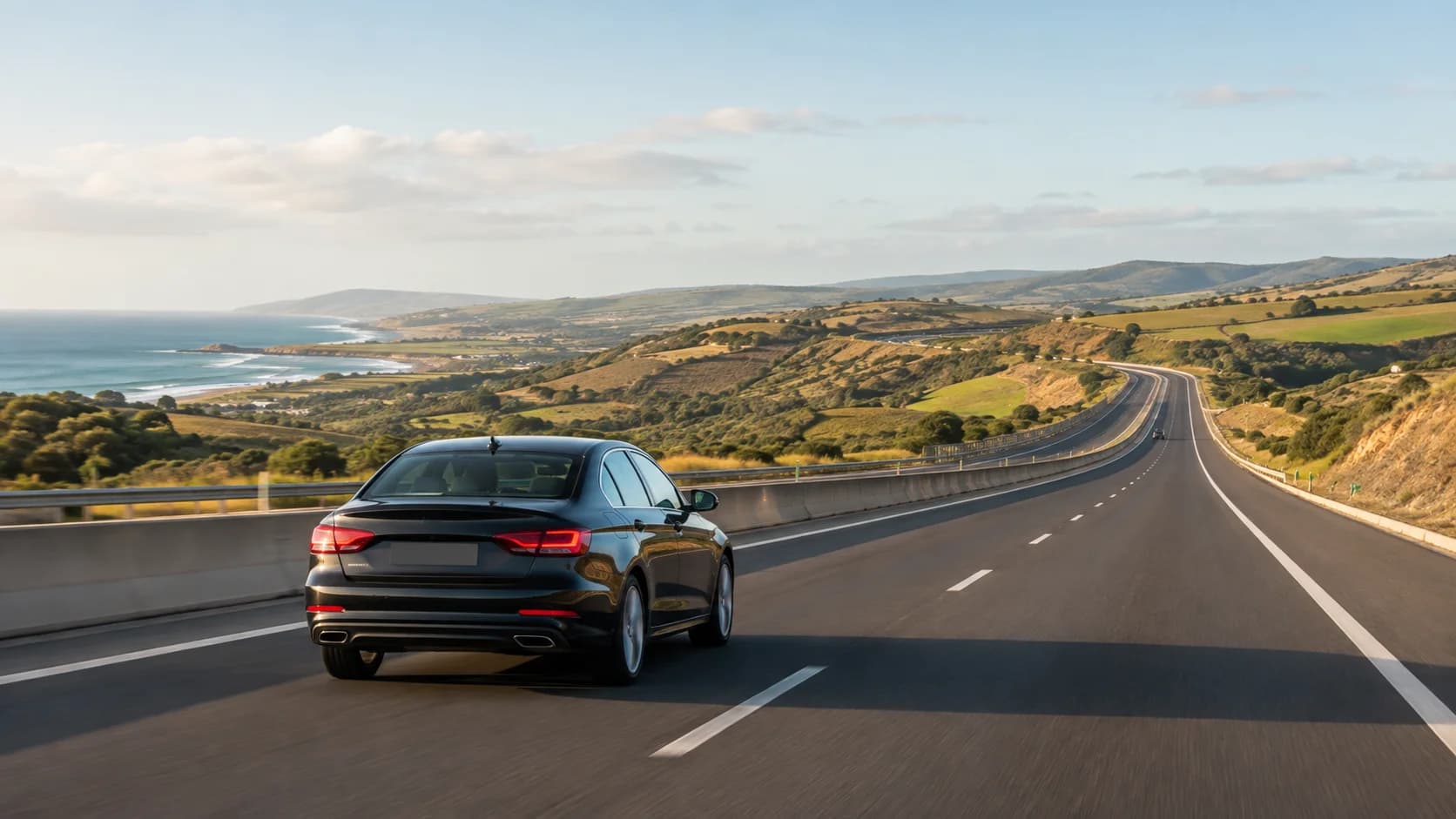
The main journey is on established paved roads and gradually transitions from the Tangier and Tétouan area into more mountainous scenery. As you enter the Rif, expect more curves, gradients and slower vehicles.
A practical schedule is:
Tangier → Tétouan → Chefchaouen
Allow roughly two to two and a half hours for the direct drive, then add whatever time you want for stops.
Tétouan works well as a break because it divides the journey naturally before the more winding mountain section.
Chefchaouen to Akchour
Akchour is one of the most useful spokes from a Chefchaouen base.
Depending on the exact start and end points used by mapping services, the drive is roughly 20–30 km and usually takes around 35–40 minutes. That difference between distance and time demonstrates an important Rif planning rule: short mountain journeys can still take significant time.
Visitors normally come for the valley scenery and hiking routes. If hiking, build the driving time around the walk rather than attempting to fit several additional mountain destinations into the same afternoon.
Chefchaouen and Nearby Rif Villages
One of the advantages of having a car is being able to explore beyond Chefchaouen itself.
Small settlements and roadside viewpoints can make the drive interesting, but travelers should distinguish between:
-
a destination served by a normal paved road;
-
a narrow local road;
-
an unpaved track;
-
a walking trail that should not be attempted by rental car.
Do not assume that a road shown on a map is suitable for every vehicle.
Scenic Multi-Day Route Ideas
Two-Day Rif Road Trip
Day 1: Tangier → Tétouan → Chefchaouen
Leave Tangier in the morning, stop in Tétouan if desired and continue into the Rif. Spend the afternoon and evening in Chefchaouen.
Day 2: Chefchaouen → Akchour → Tangier
Visit Akchour early, then return toward Tangier with sufficient daylight for the mountain drive.
This is the easiest option for travelers with limited time.
Three-Day Rif Road Trip
Day 1: Tangier → Tétouan → Chefchaouen
Day 2: Chefchaouen → Akchour → Chefchaouen
Day 3: Explore another Rif route or return to Tangier
This itinerary is considerably more relaxed because Akchour gets its own day.
Longer Northern Morocco Mountain Road Trip
With four or more days, travelers can combine Chefchaouen with additional inland or Mediterranean routes.
Possible directions include:
Tangier → Tétouan → Chefchaouen → Akchour → Oued Laou → Tétouan → Tangier
or a longer journey continuing farther east through northern Morocco.
These routes require more careful planning because road geometry, village traffic and coastal mountain sections can increase journey times substantially.
The objective should not be to collect as many destinations as possible. In the Rif, fewer stops with more time at each generally produces a better road trip.
Paved Roads vs More Demanding Access Roads
One of the biggest misconceptions about a Rif Mountains road trip from Tangier is that mountain travel automatically requires a 4x4.
It does not.
Normal Paved Roads
The principal roads connecting Tangier, Tétouan and Chefchaouen are conventional paved roads. Current route descriptions characterize the main Tangier-Chefchaouen corridor as asphalted while noting the tighter curves and gradients in the mountain sections.
For these routes, a well-maintained sedan or hatchback is normally adequate.
Narrower Mountain Roads
Roads toward valleys and smaller settlements may still be paved but can become:
-
narrower;
-
more curved;
-
steeper;
-
slower;
-
less forgiving when two vehicles meet;
-
more exposed to loose stones or roadside debris after bad weather.
An SUV may feel more comfortable here even though four-wheel drive is not technically required.
Rough Access Roads and Tracks
A 4x4 becomes relevant when your itinerary includes roads that are genuinely rough, damaged, steep or unpaved.
Before leaving a normal road, check whether your rental agreement allows the vehicle to be driven on unpaved tracks. A vehicle having four-wheel drive does not automatically mean every off-road route is permitted.
When uncertain, stay on established public roads and continue on foot where appropriate.
Drive Times and Daily Mileage in the Rif
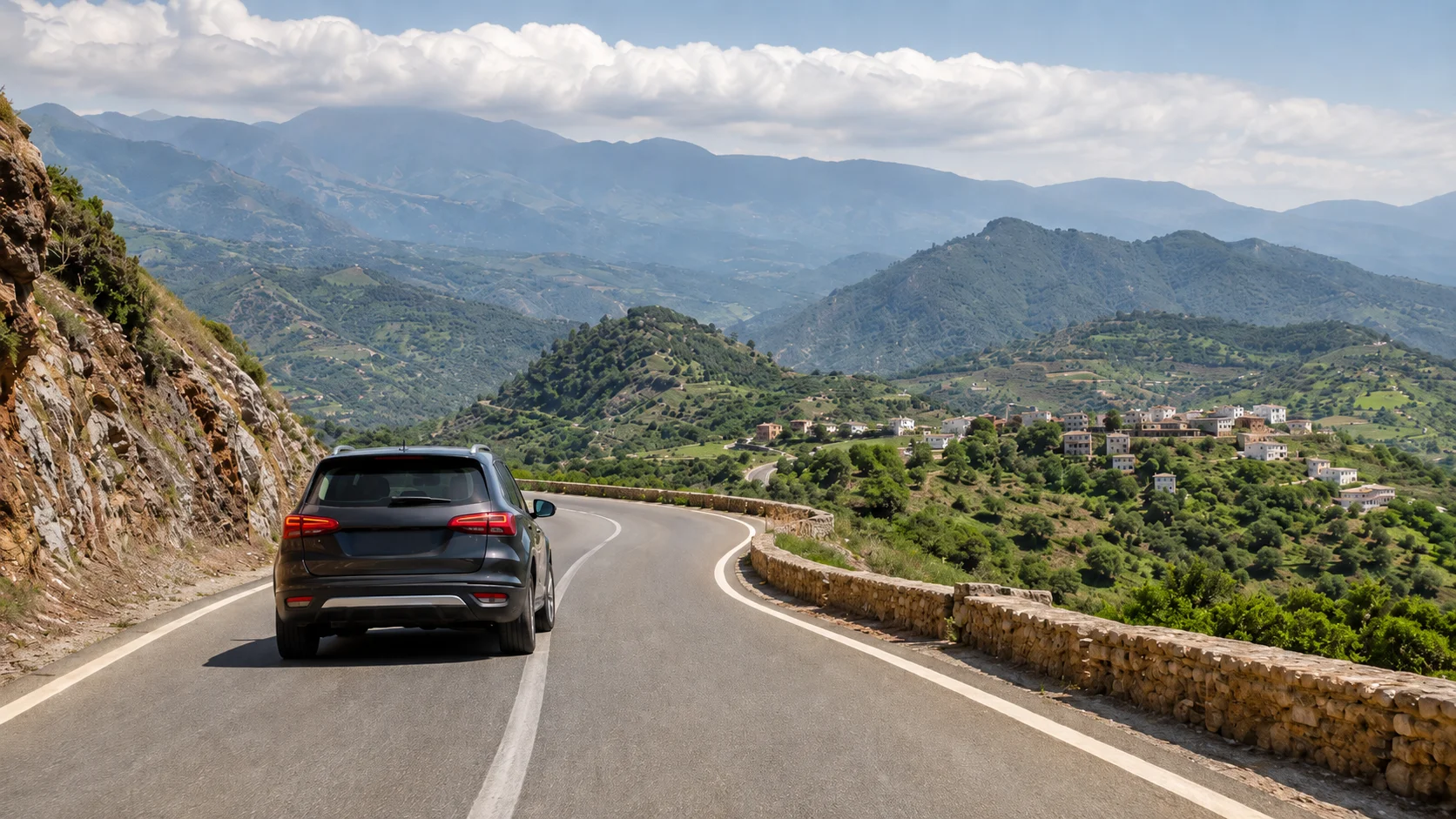
Mountain driving rewards conservative planning.
A traveler might comfortably cover hundreds of kilometers on Morocco's motorways in one day. The same mileage can become exhausting in the Rif because average speeds are reduced by curves, villages, gradients and slower traffic.
Practical Planning Times
| Route | Approximate Distance | Sensible Driving Allowance |
|---|---|---|
| Tangier → Chefchaouen | ~115 km | ~2–2.5 hours |
| Chefchaouen → Akchour | ~20–30 km | ~35–45 minutes |
| Tangier → Chefchaouen → Tangier | ~230 km | Full-day trip once stops are added |
Route times are approximate and should be checked again immediately before departure. Tangier-Chefchaouen sources consistently place the journey around 115 km while real-world estimates vary from approximately two hours to a little over two hours.
Avoid Planning by Kilometers Alone
A useful rule is to ask:
How many hours will I actually spend behind the wheel?
rather than:
How many kilometers can I cover?
For a relaxed mountain trip, 100–200 km in a day can already create a full itinerary once sightseeing, lunch, photography and hikes are included.
Where to Overnight
Chefchaouen
Chefchaouen is the obvious base for a first Rif road trip.
Staying overnight gives you time to explore after many day-trip visitors have departed and makes Akchour easier to visit the following morning.
Because much of the historic center is best explored on foot, confirm parking arrangements with your accommodation before arrival rather than assuming you can drive directly to the door.
Tétouan
Tétouan can work well if your itinerary focuses on the western Rif or combines mountain travel with the Mediterranean side of northern Morocco.
It is also a useful overnight point before returning to Tangier.
Rural Guesthouses
A rural guesthouse can create a more immersive Rif experience, but verify:
-
the final road surface;
-
parking access;
-
whether the accommodation can be reached by normal car;
-
the final few kilometers of directions;
-
expected arrival time.
Ask the property specifically whether a standard sedan can reach it. This question is more useful than simply asking whether there is “road access.”
SUV vs 4x4 vs Sedan: What Should You Rent?
Vehicle selection should follow your route.
Sedan
Choose a sedan when:
-
your itinerary stays on main paved roads;
-
you are driving Tangier to Chefchaouen;
-
you are mainly visiting established towns;
-
luggage requirements are modest.
A sedan is perfectly reasonable for many first-time Rif itineraries.
SUV
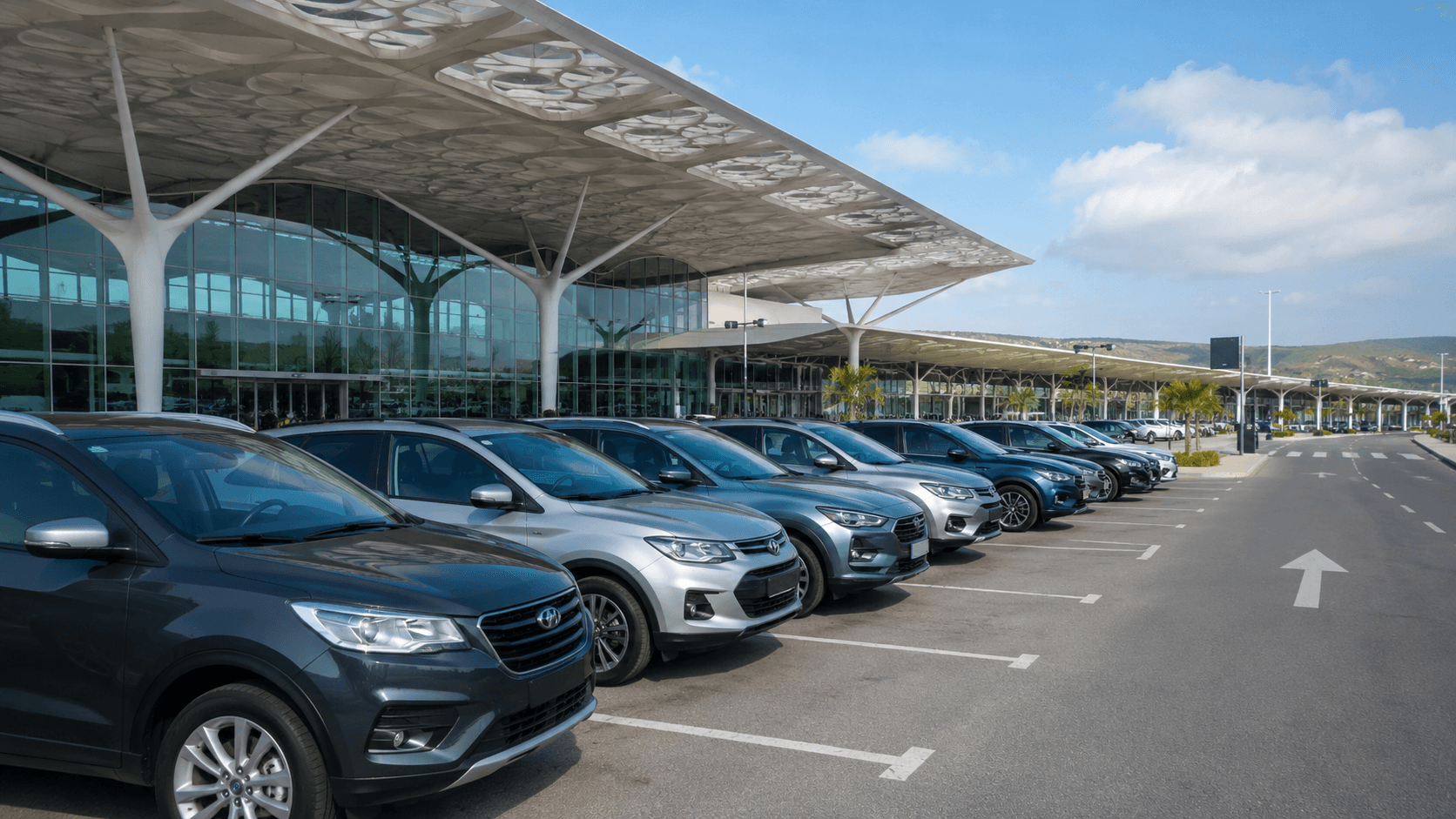
An SUV rental in Tangier can make sense when:
-
several people are traveling together;
-
you have more luggage;
-
you prefer a higher seating position;
-
your trip includes multiple secondary mountain roads;
-
you want extra ground clearance without planning genuine off-road driving.
An SUV should be viewed primarily as a comfort and clearance choice, not proof that a route is difficult.
4x4
Consider a 4x4 rental in Tangier if your confirmed itinerary genuinely involves rougher access roads where extra traction or clearance is appropriate.
Do not choose a 4x4 simply because “Rif Mountains” appears in the itinerary.
For Tangier, Tétouan, Chefchaouen and the main surrounding paved-road network, four-wheel drive is generally unnecessary.
What About a No-Deposit Rental?
Travelers who prefer to reduce the amount tied up at pickup can compare no deposit car rental in Tangier options.
Deposit policy and vehicle capability are separate questions. Choose the vehicle for the route first, then compare rental terms within that category.
Mountain-Road Checklist Before Departure
Check Fuel
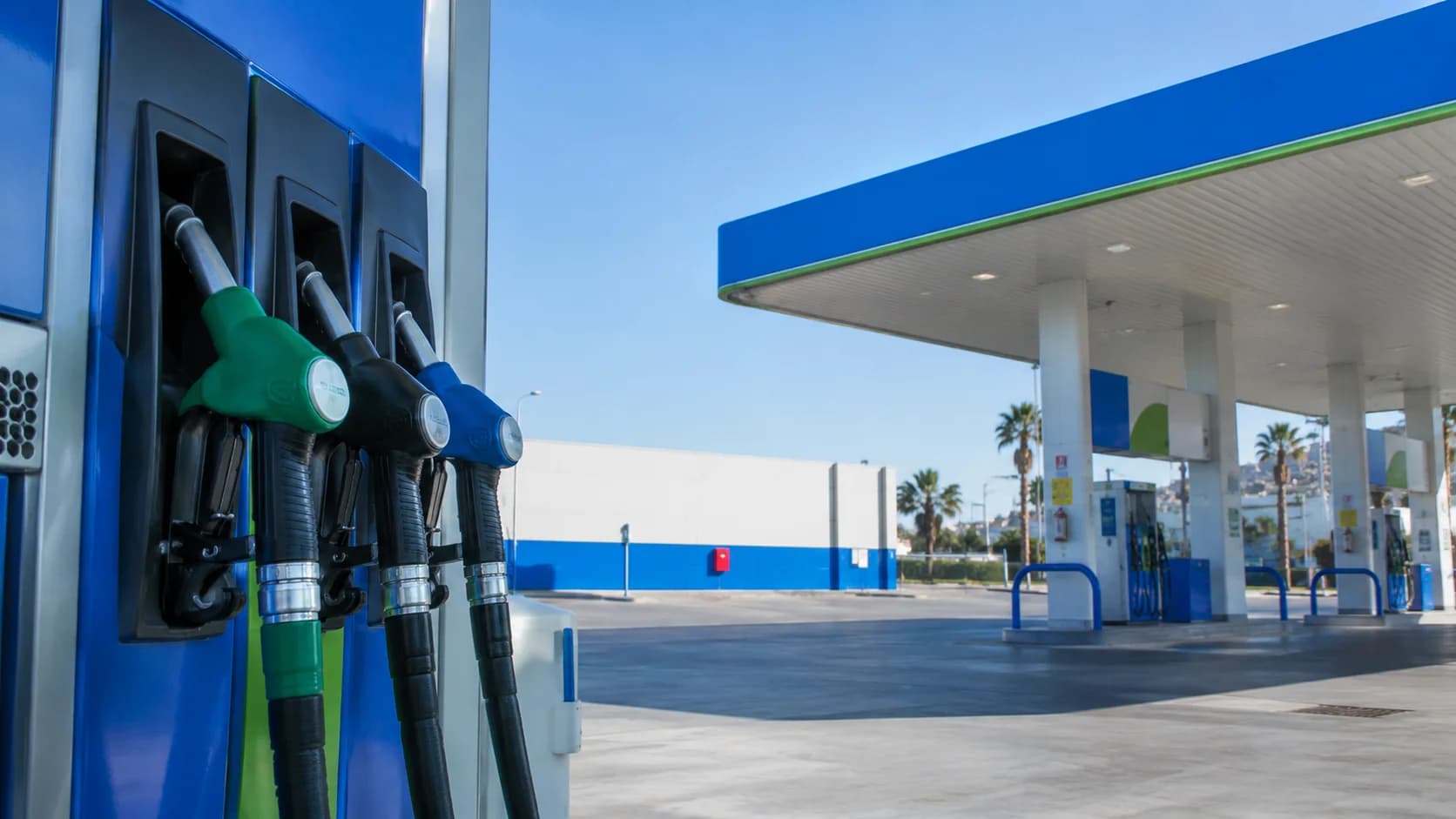
Start longer Rif sections with sufficient fuel instead of expecting a station exactly when you need one.
Fuel is available around major towns and along established routes, but filling up before entering a longer mountain section removes unnecessary stress.
Download Navigation Offline
Mobile coverage can vary in mountainous terrain.
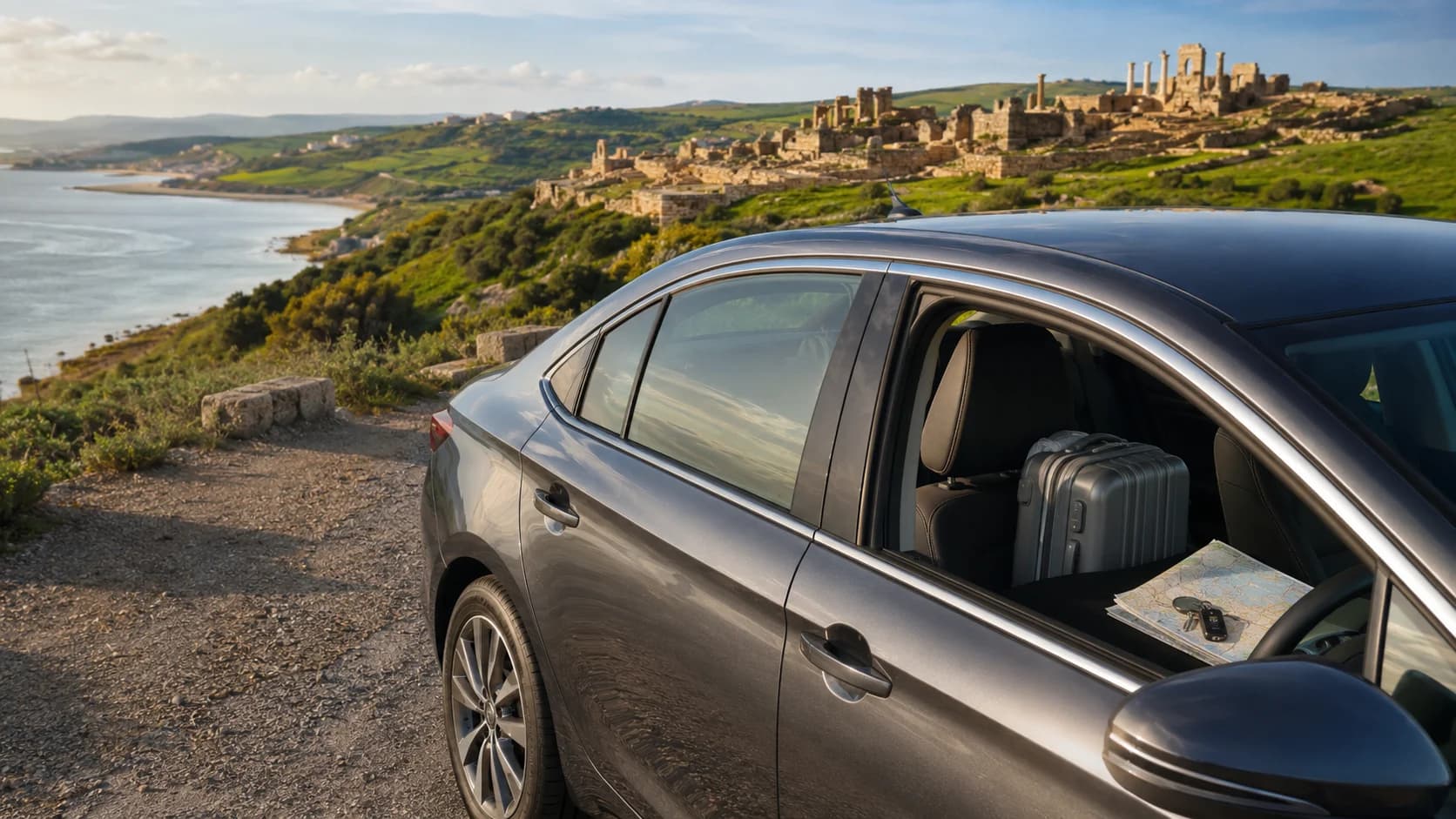
Save your route offline and keep the accommodation address or coordinates available separately.
Check Weather
Rain, fog and low cloud can completely change a familiar-looking mountain road.
After heavy rain, be especially cautious around:
-
loose stones;
-
roadside runoff;
-
reduced visibility;
-
wet bends;
-
damaged road edges.
Protect Your Daylight
Avoid deliberately scheduling unfamiliar mountain roads after dark.
Daylight makes it easier to see curves, road edges, pedestrians, animals and changes in the surface.
Drive Defensively
Mountain-road driving is not about maintaining the speed limit at all times.
Reduce speed before bends, maintain extra following distance and expect:
-
trucks climbing slowly;
-
local vehicles stopping unexpectedly;
-
cyclists;
-
pedestrians;
-
livestock;
-
vehicles partially crossing the center line on tight bends.
Never overtake unless you have a clear view far enough ahead to complete the maneuver safely.
Inspect the Rental Car
Before leaving Tangier, check:
-
tires;
-
spare wheel or puncture kit;
-
lights;
-
windshield wipers;
-
brakes;
-
fuel level;
-
warning lights;
-
mirrors;
-
air conditioning;
-
emergency equipment supplied with the vehicle.
For a mountain road trip, tire condition matters more than whether the car looks premium.
Weather and Seasonal Awareness
The Rif can look very different depending on the season.
Winter and wet-weather travel may bring low clouds, rain and reduced visibility. Spring can produce green landscapes and excellent scenery but changing weather remains possible. Summer generally offers longer daylight, although heat and holiday traffic can affect travel.
Do not treat an itinerary written for dry summer weather as automatically appropriate after significant rainfall.
Check the weather forecast and live navigation conditions on the morning of departure.
Is a Rental Car the Best Way to Explore the Rif from Tangier?
For travelers who want to visit only Chefchaouen, buses, shared taxis and private transfers are alternatives.
A rental car becomes particularly useful when the trip includes multiple stops.
For example:
Tangier → Tétouan → Chefchaouen → Akchour → another village → Tangier
is far easier to organize independently with your own vehicle than by connecting several separate transport services.
The benefit is not simply getting from Tangier to Chefchaouen faster. It is being able to build a northern Morocco itinerary around your own schedule.
FAQs
What is the best Rif Mountains road trip from Tangier?
For first-time visitors, Tangier → Tétouan → Chefchaouen → Akchour → Tangier is one of the easiest combinations. Two days is possible, while three days provides a more relaxed itinerary.
How many days do I need to explore the Rif by car?
Two days is enough for a basic Tangier-Chefchaouen trip. Three to four days is better if you want Akchour, additional villages or a Mediterranean extension without spending most of the trip driving.
Do I need a 4x4 in the Rif Mountains?
Not for the main paved routes between Tangier, Tétouan and Chefchaouen. A 4x4 becomes useful only when a confirmed itinerary includes genuinely rough or unpaved access roads and the rental terms allow that use.
Can I drive a sedan from Tangier to Chefchaouen and nearby areas?
Yes. The established Tangier-Chefchaouen route is paved, so a normal rental sedan is suitable in ordinary conditions.
Are Rif mountain roads difficult for tourists?
The main routes are manageable for experienced drivers, but mountain sections involve curves, gradients and slower traffic. Defensive driving and realistic journey times are more important than choosing an oversized vehicle.
Where should I stay overnight in the Rif?
Chefchaouen is the most practical first base. Tétouan works well for western Rif and Mediterranean itineraries, while rural guesthouses can be excellent if you verify road access and parking beforehand.
What should I check before driving into the mountains?
Check tires, fuel, lights, weather, navigation, daylight remaining and the condition of any secondary road you intend to use.
Is a rental car the best way to explore the Rif from Tangier?
It is one of the most flexible options when visiting several locations. If you only want a direct Tangier-Chefchaouen journey, public transport or a private transfer may be sufficient.
Plan the Vehicle Around the Rif Route
A successful Rif road trip starts with the itinerary, not the vehicle.
For straightforward paved routes through Tétouan and Chefchaouen, a sedan may be all you need. An SUV can provide more space and comfort for a longer northern Morocco mountain road trip, while a 4x4 is best reserved for itineraries that genuinely justify the additional capability.
MarHire Car Tangier offers SUVs, 4x4s and other self-drive options for northern Morocco, allowing travelers to choose a vehicle around the roads they actually intend to drive rather than paying for capability they will never use.
Plan conservatively, leave room for unexpected stops and remember that the Rif is best experienced slowly. The distances may look short on a map, but the curves, villages, valleys and viewpoints are exactly why the journey is worth taking.