
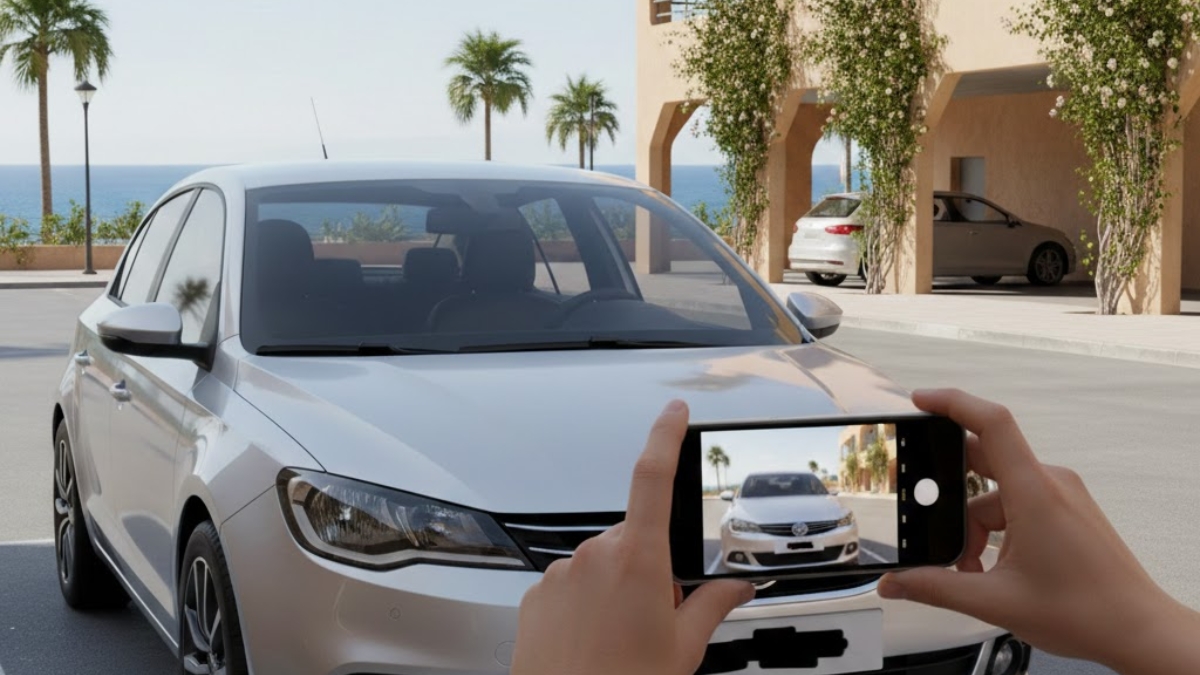
Rental car disputes are rarely about big accidents. They are usually about small marks, an old bumper scuff, a windshield chip, a rim scratch, that were already there, but not documented clearly at pickup. In Tangier, this risk is slightly higher because many rentals start at high-traffic points (airport, port, train station, hotel curbside) where people feel rushed.
This checklist gives you a simple, repeatable photo routine that creates strong proof, without turning pickup into a 30-minute project.
Table of Contents
Quick Answer
The “Damage-Proof” Photo Principles
The 3-Minute Walkaround (Exterior)
The 2-Minute Close-Up Set (High-Dispute Areas)
The 2-Minute Interior Set
The 60-Second Dashboard Proof Shots
Video vs Photos: What Works Best
Tangier-Specific Risk Notes
What to Do If You Find Damage
Practical Checklist
FAQ
Conclusion
Quick Answer
Take two layers of proof at pickup: (1) wide shots of all sides (so the car is identifiable), and (2) close-ups of the most disputed areas (windshield, rims, bumpers, mirrors). Make sure you also capture odometer + fuel level, and one photo that shows the license plate. Save your photos for at least a few weeks after the rental ends.
The “Damage-Proof” Photo Principles
Sequence beats perfection. A consistent routine is more valuable than “better” photos taken randomly.
Context + detail. You need wide shots to prove it is the same vehicle, and close-ups to prove specific damage.
Light matters. If you are under poor lighting (underground parking, night pickup), use flash or a short video with steady movement.
Do not rush the windshield and rims. These are the two most common “new damage” claims.
Get the paper aligned. If the agent has a damage diagram or checklist, make sure every mark is written in before you leave.
If you want an objective baseline for what “good documentation” looks like, follow a simple car rental inspection checklist mindset: capture the whole vehicle first, then capture the dispute-prone details second.
The 3-Minute Walkaround (Exterior)
Do this first. It creates identity proof and full-body context.
Take 8 wide photos:
Front-left corner (include bumper, headlight, fender, wheel)
Front-right corner
Rear-left corner
Rear-right corner
Driver-side full profile
Passenger-side full profile
Front straight-on (plate visible)
Rear straight-on (plate visible)
Tip: step back far enough to capture the entire side in one frame. If you cannot, take two overlapping shots.
The 2-Minute Close-Up Set (High-Dispute Areas)
These are the areas that create the most return-time arguments. Take close-ups even if nothing looks wrong.
A) Windshield and glass
Windshield: lower edge + driver view area
Any chips/cracks: close-up + one wider shot showing location
Front windows + rear windows: quick angles to capture scratches
B) Rims and tires (all four)
For each wheel:
Rim face close-up (scratches, curb rash)
Tire sidewall close-up (cuts/bulges)
Optional: tread photo if you see uneven wear
If there is rim damage, take one photo that includes the rim and a nearby body panel so it is clearly the same car.
C) Bumpers and lower edges
Front bumper lower lip (scrapes from curbs/ramps)
Rear bumper lower edge
Under-front area (quick angle—especially if the car sits low)
D) Mirrors and door edges
Mirror housings (scratches/cracks)
Door edges (chips)
Door handles (often scuffed)
E) Roof (if possible)
One quick roof shot (hail marks, scratches)
If you cannot reach, record a slow video pass that includes roof reflections.
The 2-Minute Interior Set
Interior disputes happen, especially with stains, burns, missing accessories, or missing equipment.
Take 8 interior photos:
Driver seat and dashboard wide
Front passenger seat wide
Rear seats wide
Trunk open (wide)
Any stains/tears (close-up)
Ceiling/roof liner (quick wide)
Center console + gear area (scratches)
Door panels (driver + passenger) if visibly marked
If provided: photograph child seat, spare tire kit, triangle, jack, and anything listed as “included.” If something is missing, document it before leaving.
The 60-Second Dashboard Proof Shots
These images prevent disputes about mileage, fuel, and warning lights.
Take these photos with the car powered on:
Odometer clearly readable
Fuel gauge clearly readable
Any warning lights visible (even if you believe they are “normal”)
If your phone struggles to focus, record a short video panning from odometer to fuel gauge.
Video vs Photos: What Works Best
Best practice is both, but if you must choose:
Photos are best for close-up proof (chips, rim scratches).
Video is best for continuity (one unbroken walkaround), especially in low light.
A strong minimal combo:
8 wide photos (walkaround)
12 close-ups (windshield + 4 rims + bumpers)
20–40 second exterior video (slow, steady)
Tangier-Specific Risk Notes
Port/airport pickups feel rushed. Do not let urgency cut your inspection routine.
Coastal sand and wind can hide fine scratches on dark paint until sunlight hits it—check paint at an angle.
Tight parking and curbs near busy areas increase rim scuffs—photograph rims carefully.
Short “agent handoffs” (hotel curb delivery) can mean fewer formal checklists; your photos become the primary evidence.
What to Do If You Find Damage
Photograph it clearly (close-up + context).
Ask the agent to mark it on the damage diagram/checklist before you leave.
Send one message (WhatsApp/email) with 2–3 key photos attached and a simple note: “Pre-existing damage noted at pickup.”
Do not accept “it’s fine, don’t worry” without written notation.
If there is any disagreement later, handle it like a process rather than an argument: keep your evidence set, keep everything in writing, and follow a structured car rental damage checklist approach for documenting and disputing charges.
Practical Checklist
Wide photos: 8 angles (all sides + front + rear with plate)
Close-ups: windshield, all 4 rims/tires, front and rear bumpers, mirrors
Interior: seats, trunk, console, visible stains/tears
Dashboard: odometer, fuel gauge, warning lights
Paperwork: damage marks recorded + photo of the marked diagram
Storage: keep photos until well after the rental closes
FAQ
Q: How many photos are enough to protect me?
A: A solid minimum is 20–30 photos (wide + close-ups) plus one short exterior video. More is fine if the car has many marks.
Q: Should I photograph the car at drop-off too?
A: Yes. Repeat the same quick routine at return, especially wide shots, fuel gauge, and any areas that were previously marked.
Q: What is the single most important photo?
A: Windshield close-ups and rim close-ups. These are the most common dispute points.
Q: What if it is dark when I pick up the car in Tangier?
A: Use flash, add video, and take extra close-ups of glass and rims. If possible, do a second quick check the next morning in daylight and message any newly visible pre-existing marks immediately.
Q: What if the agent refuses to mark damage on the form?
A: Photograph the damage, record a short video, and send a timestamped message with the evidence before you drive away.
Q: Should I take photos of the contract?
A: Yes photograph the signed condition report/damage diagram and the fuel/mileage terms page if available.
Conclusion
A damage-proof pickup in Tangier is not about being suspicious—it is about being systematic. If you consistently capture identity proof (wide shots), dispute-proof detail (windshield and rims), and objective metrics (odometer and fuel), you sharply reduce the risk of unfair damage claims and save time if any questions arise later.
