
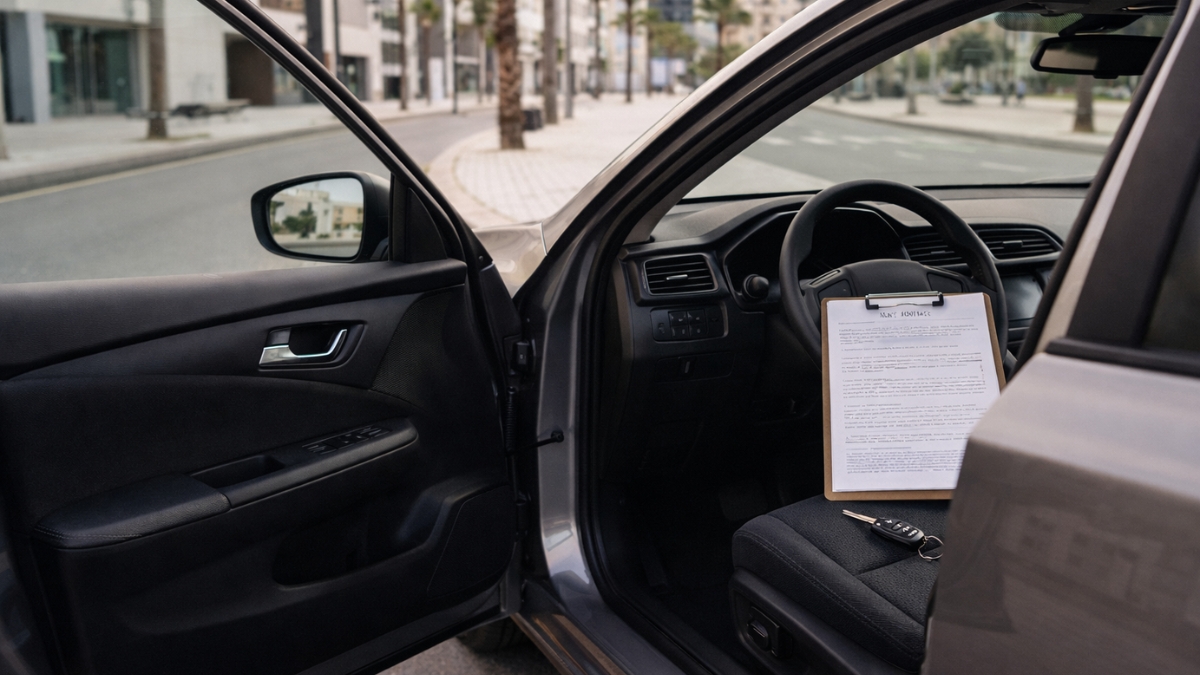
Tangier is an easy city to rent a car in, until a rental agreement line you didn’t notice turns into a surprise charge later. Most rental contracts look “standard,” but the risk is always in the clauses: deposit rules, what insurance really covers, how damage is judged, and what happens if your return is late.
This guide translates the typical Tangier rental agreement into plain language: 15 clauses you should understand before you sign, plus quick tips to protect yourself without making pickup slow or stressful.
Table of Contents
Before you read clauses: confirm the basics
The 15 clauses explained (what they mean + what to check)
The 3-minute “safe signing” routine
Quick FAQ
1) Before you read clauses: confirm the basics
Do this first, because it’s where confusion starts:
Correct driver name + passport/ID
Correct vehicle plate (matches the car you’re taking)
Correct pickup/return date + time (late policy depends on this)
Correct pickup/return location (wrong drop-off can trigger fees)
Correct car category (automatic/manual, SUV, 7-seater, etc.)
If the “basic box” at the top is wrong, the rest of the contract becomes a problem.
2) The 15 clauses explained (what they mean + what to check)
Clause 1: Total price and what’s included
What it means: the full amount you’re agreeing to pay (plus any extras).
What to check: Airport delivery, second driver, child seat, full cover, Wi-Fi, anything promised should appear as a line item (even if it’s “0”).
Clause 2: Deposit / pre-authorization hold
What it means: money blocked on your card (or cash deposit) as security.
What to check: exact amount, accepted card type, and when it’s released.
Tip: If release timing is not written, ask for it to be added.
For a clear consumer overview of common car rental disputes (including deposits, damage, and add-ons), this guidance is useful: https://www.eccnet.eu/consumer-rights/what-are-my-consumer-rights/travel-and-passenger-rights/road-travel-rights/car
Clause 3: Driver eligibility (age + license rules)
What it means: who is allowed to drive.
What to check: minimum age, minimum license holding period, and whether an “additional driver” must be registered on the contract.
If someone drives who isn’t listed, you can lose coverage.
Clause 4: Vehicle condition report (damage checklist)
What it means: the official record of scratches, dents, wheel marks, interior stains.
What to check: make sure existing damage is written and marked (not just “noted verbally”).
Pro move: short walkaround video + photos of wheels and bumpers.
Clause 5: Fuel policy
What it means: how fuel is handled at pickup/return.
What to check: Full-to-Full is usually the cleanest. If it’s “prepaid” or “full-to-empty,” ask what fees apply and how it’s calculated.
Clause 6: Mileage / kilometer limit
What it means: how far you can drive before extra fees.
What to check: “Unlimited km” vs a daily/total cap + cost per extra kilometer.
Tangier day trips (Asilah, Cap Spartel area, Tetouan direction) add distance quickly.
Clause 7: Insurance type (TP, CDW/LDW) and what it covers
What it means: the insurance/waiver included in your base rate.
What to check: the exact coverage name and whether it’s included or optional.
If you paid for “full cover,” it should appear clearly as an added package.
Clause 8: Excess / deductible (the amount you still pay)
What it means: even with a damage waiver, you may still pay the first part of a claim.
What to check: the exact number and whether it changes by category.
This is the clause tourists miss most, and it’s often the biggest number on the page.
Clause 9: Exclusions (what coverage does NOT pay for)
What it means: damage types you must pay for, even if you think you’re covered.
Common exclusions include:
tires and wheels
glass/windshield
underbody damage
roof damage
lost keys
clutch misuse claims
What to check: read the exclusions paragraph slowly. If you drive mountain routes or rough roads, this clause matters a lot.
Clause 10: Accident and breakdown procedure
What it means: what you must do if there’s an accident or the car breaks down.
What to check: required steps (call number, police report requirement, timing).
If a police report is required for claims, it should be written clearly.
Clause 11: Traffic fines and admin fees
What it means: you pay fines/tickets, and the rental company may charge an admin fee for processing.
What to check: whether the admin fee amount is stated.
Even if the fine is small, admin fees can surprise you.
Clause 12: Geographic restrictions (where you can drive)
What it means: limits on crossing borders, driving off-road, or certain zones.
What to check: whether you’re allowed to drive into rural areas or on unpaved roads.
If you plan coastal viewpoints or countryside detours, confirm you’re still covered.
Clause 13: Cleaning and interior condition fees
What it means: extra fees for heavy sand, stains, smoke smell, pet hair, or “excessive dirt.”
What to check: what triggers a fee and whether smoking is an automatic penalty.
Beach day tip: shake sand out before you return.
Clause 14: Late return policy (grace period + charges)
What it means: what happens if you return late.
What to check: grace period and whether they charge hourly or a full extra day.
If your return is at Tangier airport, build in buffer time, traffic + parking can eat minutes.
Clause 15: Dispute process and evidence rules
What it means: how disagreements are handled (damage claims, fuel claims, timing claims).
What to check: whether you can receive photos/invoices for a claim and how you can contest it.
A useful reference on what “fair transparency” looks like in rental pricing and add-ons is the UK CMA’s car rental guidance work (helpful as a benchmark for what you should expect to be clearly disclosed): https://competitionandmarkets.blog.gov.uk/2015/10/08/putting-car-rental-customers-in-the-driving-seat/
3) The 3-minute “safe signing” routine
This keeps pickup smooth and prevents most disputes:
Photograph the lines for deposit, fuel policy, mileage, excess, late return.
Walkaround video (20–30 seconds): bumpers, doors, wheels, windshield.
Dashboard photo: fuel level + mileage.
Keys + accessories check: spare tire/kit (if listed), warning triangle (if listed).
Get a copy of the agreement before you leave (paper or digital).
4) Quick FAQ
What’s the most important clause in a Tangier rental agreement?
The excess/deductible and the deposit/hold, they decide your maximum surprise cost.
If the agent promised something verbally, is it valid?
Only if it’s written on the contract (or attached in writing). If it matters, get it added.
What clause causes the most “hidden fee” feelings?
Fuel policy + cleaning fees + late return policy, because they trigger after the trip.
Should I sign if I don’t understand a clause?
No. Ask for a simple explanation and request a written note on the agreement.
