
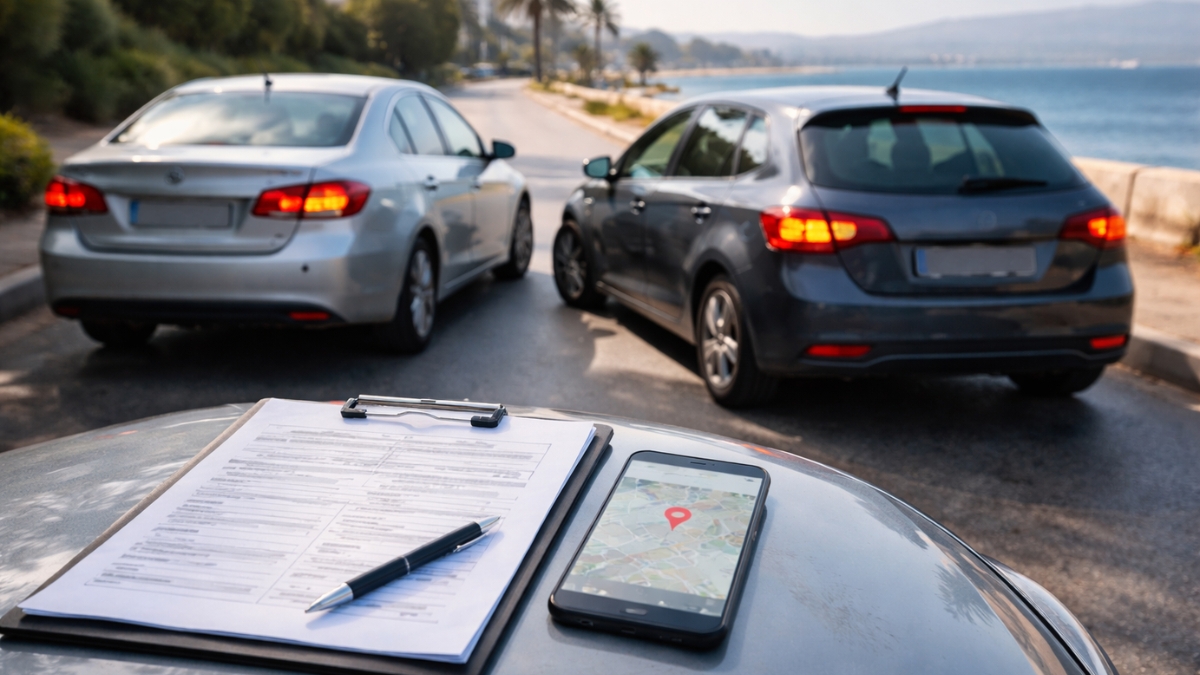
A small bump in Tangier can turn into a long, confusing day, mostly because visitors don’t know who to call, what to write down, and which paper proves what. The goal isn’t to be dramatic. It’s to stay calm, keep everyone safe, and create the clean documentation that insurance (and car rental deposit checks) depend on.
This guide gives you the practical “accident routine” tourists need in Tangier: what to do first, who to contact, and what documents you’ll be asked for.
Table of Contents
First 2 minutes: safety + scene control
Who to call in Tangier (the simple rule)
The 3 accident situations and what report you need
The paperwork checklist (what to show + what to keep)
Photos that actually help (and the ones people forget)
Rental-car specific tips (deposit + damage disputes)
Quick FAQ
1) First 2 minutes: safety + scene control
Do these in order:
Stop safely and switch on hazard lights.
Check people first (even minor pain matters).
If safe, move out of traffic to the nearest shoulder/parking pocket.
Do not argue about fault. Keep it simple: “Let’s document and report.”
If anyone is injured, treat it as an emergency and call immediately.
2) Who to call in Tangier (the simple rule)
Use this as your no-stress shortcut:
If there are injuries, heavy damage, or a dispute: call emergency services immediately.
If it’s only minor damage and both drivers agree: you may be able to document it with an amicable accident form (explained below), but calling for guidance is still fine.
For up-to-date emergency numbers for Morocco (including police, ambulance, and gendarmerie), rely on an official travel guidance page like Emergency services in Morocco.
Pro tip: If you’re unsure which service to call, say clearly:
your location (share a map pin)
“car accident”
whether anyone is hurt
how many vehicles are involved
3) The 3 accident situations and what report you need
Most Tangier accidents fall into one of these:
Situation A: Minor damage, both drivers agree, no one is injured
This is where the amicable accident statement is usually used (often called “constat amiable” in French-speaking contexts). It’s designed for quick, structured reporting of material damage.
A practical “how it works” reference (including timelines and what to submit) is the Moroccan insurance regulator’s step-by-step guide: Step-by-step: accident with material damage
Key rule: Only sign what you agree with. If you disagree on the sketch or circumstances, don’t sign a version that misrepresents what happened.
Situation B: Dispute, unclear fault, hit-and-run, or multiple vehicles
You need official involvement. Call the appropriate service and ask how to obtain the report/record needed for insurance and your rental file.
Situation C: Any injuries (even if cars look fine)
Call emergency services first. Health comes before paperwork. You can document the accident after help is on the way.
4) The paperwork checklist
Here’s what visitors should be ready to provide or photograph.
Must-have info (write it down or photograph it)
Driver full name + phone number
License number + country
Vehicle plate number
Insurance company + policy number (if shown)
Date, time, and exact location (a map pin is best)
Documents you’ll typically need (rental car)
Keep these handy:
Your passport/ID
Your driver’s license (and International Driving Permit if you’re using one)
Your rental agreement/contract
Any insurance coverage details you purchased (waiver/excess terms)
If using the amicable form
Fill it clearly:
both drivers’ details
vehicle info
a simple sketch (arrows + lanes + point of impact)
checkboxes for circumstances (don’t guess, choose only what matches)
Important: Take a photo of the completed form before anyone leaves.
5) Photos that actually help
Take these in this order (it’s fast):
Wide shots showing both cars and the road context (lane markings, roundabout/exit, curb).
Plate numbers of both vehicles.
Close-ups of each damage point (2 angles).
Tire/wheel area if there’s curb or rim contact.
Dashboard photo in your rental car showing time/fuel/mileage if visible.
Road features that explain the story (yield sign, lane arrow, stop line).
Avoid “art photos.” You want boring, clear evidence.
6) Rental-car specific tips (deposit + damage disputes)
These reduce headaches with deposits and claims:
Notify the rental company immediately (WhatsApp/message is fine).
Ask them: “Do you want a police report for this, or is the amicable form enough?”
Don’t authorize repairs yourself unless the rental company instructs you to.
If the other driver pressures you to “settle cash,” be careful. Without paperwork, you can still face a claim later.
Best protection: photos + a signed document (amicable form or official report) + a written message to the rental provider describing what happened.
7) Quick FAQ
Do I always need police for a small accident in Tangier?
Not always. If it’s minor damage and both parties agree, the amicable accident form may be sufficient. If there’s a dispute or injuries, call emergency services.
What’s the most important paper for insurance?
A properly completed and signed accident statement (amicable form) for minor damage, or an official report for disputes/injuries.
What should I never do at the scene?
Don’t sign a statement you don’t agree with, don’t argue about fault, and don’t leave without photographing plates and damage.
Will a missing report delay my deposit release?
It can. Rental companies often need clear documentation before closing a damage file.
