
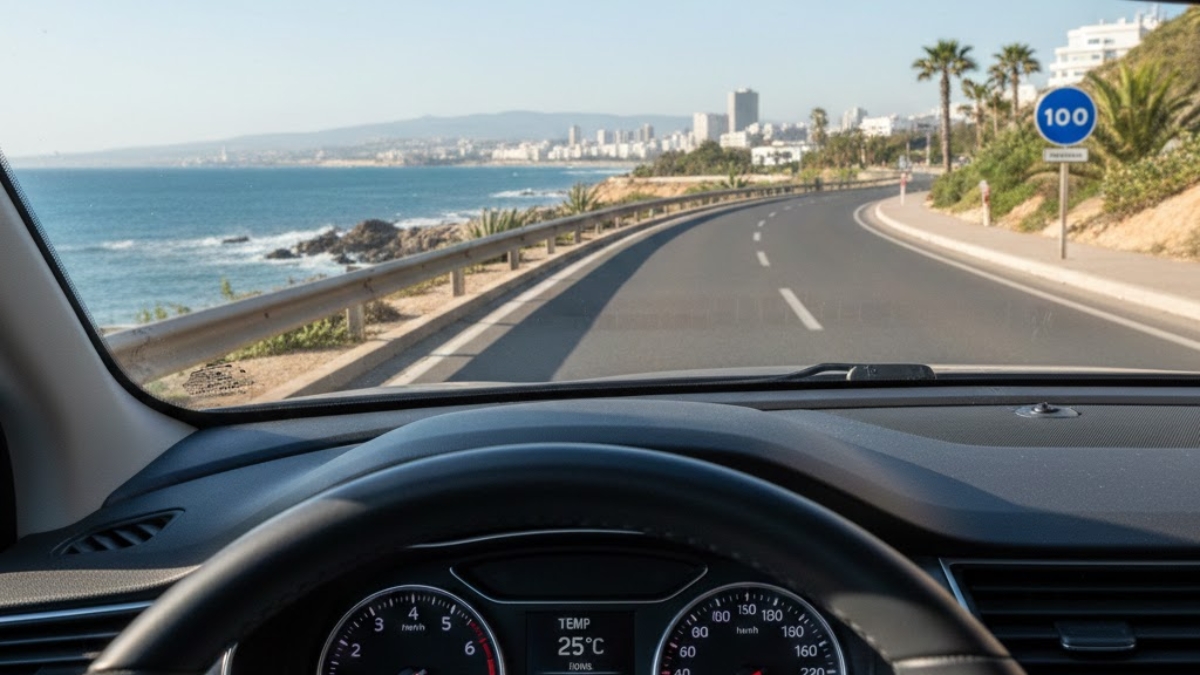
Driving around Tangier is thrilling, scenic coastal views, vibrant city streets, and smooth highway connections to Tetouan and the port crossings. But with that excitement comes a serious need to obey speed limits. Speed cameras are widespread, and drivers unfamiliar with their locations can easily end up with fines.
This guide explains where speed cameras are most commonly enforced around Tangier, how local speed control works, and what you can do to avoid fines while driving safely and legally.
Table of Contents
How Speed Enforcement Works in Morocco
Common Speed Camera Locations Around Tangier
Urban Tangier: City Cameras & Traffic Light Enforcement
N1 Highway Approaches & Exits
Coastal Roads & Fixed Radar Zones
Mobile Speed Units & Police Checkpoints
Speeding Fines and Legal Consequences
Tips to Avoid Speeding Tickets
What to Do If You Receive a Fine
FAQs About Speed Cameras in Tangier
Final Thoughts
How Speed Enforcement Works in Morocco
In Morocco, speed enforcement is implemented through a mix of:
Fixed speed cameras
Mobile radar units
Police checkpoints
Traffic light cameras
These systems are part of Morocco’s broader road safety strategy, which aligns with internationally recommended approaches to reducing road collisions and fatalities. For general global context on road safety principles, refer to the World Health Organization (WHO).
https://www.who.int/
Morocco’s traffic code sets clear speed limits for urban areas, intercity roads, and highways, and enforcement has increased substantially in recent years.
Common Speed Camera Locations Around Tangier
The most commonly enforced speed camera zones around Tangier include a blend of:
Major urban arteries
Highway approaches
Key intersections
School zones
Bridges and tunnels
Note that not all cameras are well signed, and some mobile units operate without prior notification, so caution is crucial at all times.
Urban Tangier: City Cameras & Traffic Light Enforcement
Within Tangier city limits, speed cameras are commonly placed:
Near city center boulevards
Adjacent to major roundabouts
Along long straight segments where speeding is frequent
Close to traffic lights that also monitor red light violations
Urban zones often have lower limits ( typically 40–60 km/h ) and violations here are a frequent cause of fines for tourists and locals alike.
N1 Highway Approaches & Exits
The N1 highway around Tangier, especially near:
Tangier Beni Makada
Tangier Med port access
Interchanges toward Tetouan, is where many speed cameras are placed due to high vehicle flow and accident risk.
Highways outside urban zones typically have limits of:
100–120 km/h on open sections
Reduced limits near exits and built-up areas
Southbound on N1 toward Tetouan is a common location where speed enforcement cameras are clustered.
Coastal Roads & Fixed Radar Zones
Coastal roads linking Tangier with areas like M’diq, Martil, and Assilah have a mix of fixed radars and police mobile cameras. These scenic routes can lull drivers into higher speeds, so enforcement is frequent, especially near:
Sharp bends
Tourist access points
Narrow sections where accidents spike
Always anticipate speed checks near popular beaches and weekend traffic hotspots.
Mobile Speed Units & Police Checkpoints
Not all speed enforcement is automated. Tangier traffic police and gendarmerie frequently operate:
Mobile radar vans
Temporary checkpoints
Random patrol stops
These mobile units may operate without fixed signage and are especially common:
On weekends
During peak holiday periods
Near construction zones
Mobile enforcement enhances unpredictability, which is intentional to reduce habitual speeding.
Speeding Fines and Legal Consequences
Speeding penalties in Morocco vary depending on:
How much you exceed the limit
Whether the violation occurs inside or outside urban zones
Possible aggravating factors (nighttime, weather, school zone)
Fines can range from modest local penalties for minor excess to larger fines and potential license issues for serious violations.
Morocco’s overall road safety strategy emphasizes compliance to reduce casualties and align with global best practices, as supported by international frameworks like the International Road Federation, which promotes general road safety and enforcement approaches worldwide.
https://www.irf.global/
Receiving a fine typically involves:
Written notice (if available)
Registration details checked by radar unit
Payment instructions at local traffic offices or online
Always confirm fine procedures with the rental agency if you’re using a rental car.
Tips to Avoid Speeding Tickets
Set your cruise control where available
Stay under the limit, a few km/h slower is safer
Watch for sudden limit changes near towns and junctions
Use GPS apps with live speed alerts
Plan extra travel time so speed isn’t tempting
Speed cameras are often placed right where drivers are most likely to push the limit, such as at transitions between rural and urban zones.
What to Do If You Receive a Fine
If notified of a fine:
Confirm the issuing authority
Ask your rental agency for assistance (many handle fines on your behalf)
Pay fines promptly to avoid escalation
Ask for official documentation of settlement
Rental agencies often provide guidance or pay fines for you and bill you afterward, but ask in advance whether they charge administrative fees for this service.
FAQs About Speed Cameras in Tangier
Are speed cameras well signposted?
Some are visible; others, especially mobile units, may not be.
Will a rental company notify me of a fine?
Often yes, but policies vary, always confirm with your rental provider.
Can I pay fines online from abroad?
Some administrations allow this; check fine notice instructions.
Do police checkpoints do speed enforcement?
Yes, often with portable radar devices.
Are fines higher on highways?
Penalties may increase if limits are exceeded by large amounts.
Final Thoughts
Speed cameras around Tangier are active and enforced on both urban and intercity routes. The best way to avoid fines, is to respect posted limits, watch for transition zones, and use tools that assist with speed awareness.
Whether you’re driving toward Tetouan, coastal roads, or city streets near the medina, understanding where speed enforcement is most common helps you stay compliant and enjoy your journey with peace of mind.
