
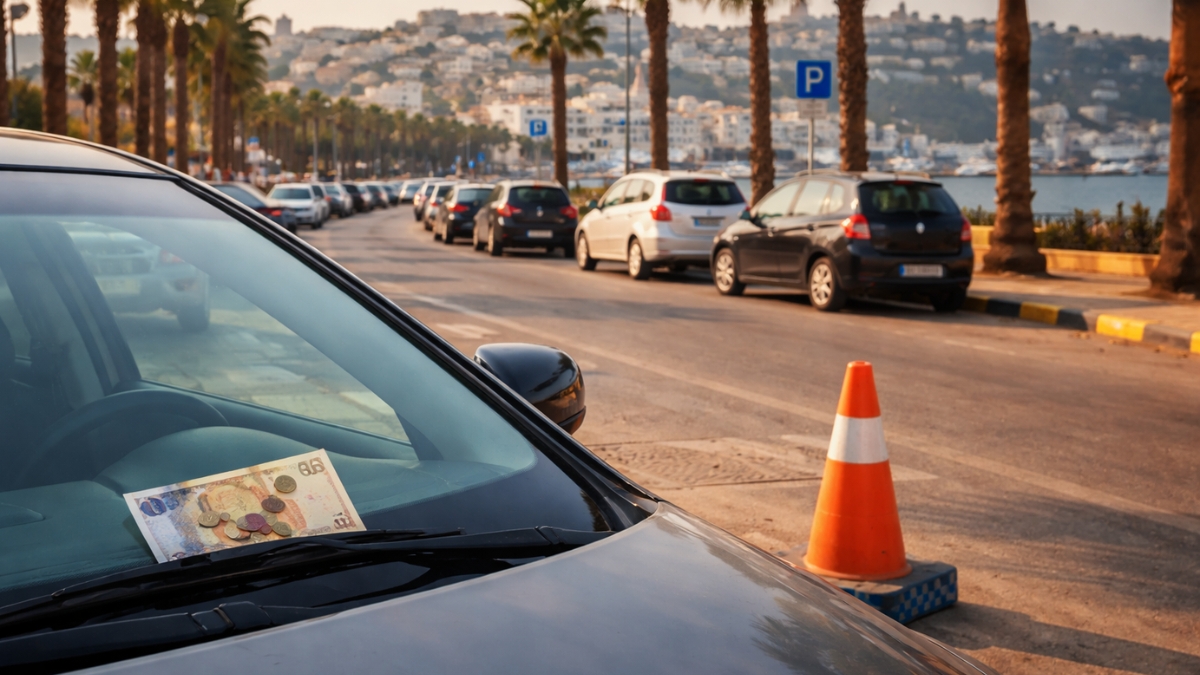
If you drive in Tangier, you’ll quickly meet the local “parking guard” (often called a gardien). Sometimes they’re genuinely helpful, guiding you into a tight space, watching your car, helping you reverse out. Other times it feels unclear: Is this official? Is it a tip? Is it a fee? And what’s a normal amount without getting overcharged?
This guide gives you a simple, street-smart way to handle parking guards in Tangier: what to pay, when to pay, how to keep it polite, and the warning signs that mean you should park somewhere else.
Table of contents
Who parking guards are (and why they exist)
What’s normal to pay in Tangier
When to pay and how to do it smoothly
The “too much” line and common pressure tactics
Smart negotiation phrases and body language
Best practices for different parking situations
What to do if there’s damage or a dispute
FAQ
1) Who parking guards are (and why they exist)
In many Moroccan cities, parking guards are part of how street parking works. Some are informally recognized by the neighborhood, some are linked to a nearby lot, and some are simply individuals who “manage” a stretch of curb. In Tangier, especially near busy areas, viewpoints, and shopping streets, guards appear because demand is high and spaces are tight.
Think of it this way: you’re not paying for a “parking ticket.” You’re usually paying for help + informal watch. That’s why the amount can feel flexible.
A practical detail that helps: carry small coins and notes so you can pay the normal amount without pulling out a big bill. If you want to know what coins are commonly in circulation (so you’re not guessing), you can see an official example on Bank Al-Maghrib’s coin pages like this one: 1 dirham coin (Bank Al-Maghrib).
2) What’s normal to pay in Tangier
There isn’t one fixed rule everywhere, but you can keep it simple by thinking in “tiers”:
Quick stop (10–20 minutes), normal street: a small coin tip is normal.
Standard parking (30–90 minutes), busy area: a modest amount is normal.
Premium spots (waterfront, viewpoints, high-demand streets) or longer parking: a higher amount can be normal.
What matters most is consistency: if you pay a fair amount confidently, most interactions stay calm. Problems usually start when you look unsure, pull out a large note, or ask “how much?” before you’ve even parked.
3) When to pay and how to do it smoothly
Timing can prevent awkwardness.
Best timing (most stress-free):
After you park and lock the car, before you walk away.
This signals: “I’m acknowledging you, I’m paying fairly, and I’m not negotiating forever.”
Also good timing:
When you return to the car (especially for longer parking).
If the guard actively helped you reverse or watched the space in a busy flow, paying at the end can feel more “earned” and reduces the chance of being asked twice.
How to do it:
Keep the amount ready in your hand.
Make eye contact, a brief nod, friendly “salam,” pay, and leave.
Don’t open your wallet wide; don’t display multiple notes.
That’s it. Short and normal beats long and complicated.
4) The “too much” line and common pressure tactics
You’ll occasionally meet someone who tries to turn a small tip into a big “fee.” The most common pressure tactics are:
Demanding payment before you even park (especially if you didn’t ask for help)
Claiming the spot is “reserved” unless you pay more
Quoting a high number immediately to see if you’ll accept
Creating urgency (“hurry, police, tow, no stop”) when nothing is happening
Asking for money twice (once when you arrive, once when you leave)
A simple rule:
If the amount feels like it’s turning into a negotiation you didn’t agree to, it’s usually better to move the car. Tangier has enough alternative streets and paid lots that you don’t need to “win” every curbside argument.
5) Smart negotiation phrases and body language
You don’t need perfect French or Arabic. You need calm confidence.
Useful approach:
Smile, stay polite, keep your voice low, and don’t argue.
Offer a fair amount once.
If they push hard, repeat once, then leave or move the car.
Simple phrases that work (choose what fits you):
“This is what I pay normally.”
“No problem, thank you.” (while handing a fair amount)
“I’m just stopping quickly.”
“Okay, I’ll park somewhere else.” (then actually move)
Body language matters more than words: don’t look rushed, don’t look guilty, and don’t keep bargaining back and forth.
6) Best practices for different parking situations
Busy curb near cafés or shopping
Park cleanly, don’t block driveways.
Pay once, confidently.
Avoid showing large notes.
Viewpoints and waterfront areas
These spots attract “premium” pricing attempts. If someone quotes a high amount:
Decide fast: accept (if it feels fair) or leave.
Don’t turn it into a long debate.
Paid lots and barriers
If there’s a barrier, printed pricing, or a booth, that’s different: you’re paying a clear parking fee. A guard inside a paid lot may still expect a small tip for extra help, but the main price should be visible and consistent.
Night parking
If you’re leaving the car overnight, choose a safer option:
A proper paid lot, hotel parking, or a well-lit street with consistent activity.
For overnight, it’s normal to confirm the expectation once, before leaving the car.
7) What to do if there’s damage or a dispute
Most parking interactions are fine. But if you return and notice a scratch or an issue:
Stay calm and take photos immediately (car + surroundings).
Don’t accuse loudly in the street.
If the guard is present, ask calmly what happened.
If it escalates, leave and handle it through the proper channel (rental paperwork/insurance, or local authorities if needed).
Arguing on the curb rarely fixes anything and can make the situation worse.
FAQ
1) Are parking guards official in Tangier?
Sometimes they’re linked to a lot or informally recognized on a street, but it varies. Treat it like a tip-for-help situation unless you’re clearly in a paid lot with posted pricing.
2) Should I pay before or after I park?
Usually after you park and lock the car. Paying at the end also works if you’re staying longer or the guard actively helps you leave.
3) What if someone demands a high amount?
Offer a fair amount once. If they insist aggressively, the easiest win is moving the car to another spot or a paid lot.
4) Can I refuse to pay?
You can, but it may create tension. If you truly didn’t receive help and the demand feels unreasonable, it’s often smarter to park elsewhere.
5) Do I pay again when I leave?
Normally, no unless the guard gave meaningful extra help (guiding you out of tight traffic, preventing a block, etc.). One payment is the norm.
6) What’s the easiest way to avoid awkward moments?
Carry small coins/notes, pay once confidently, keep it short, and avoid pulling out large bills.
