
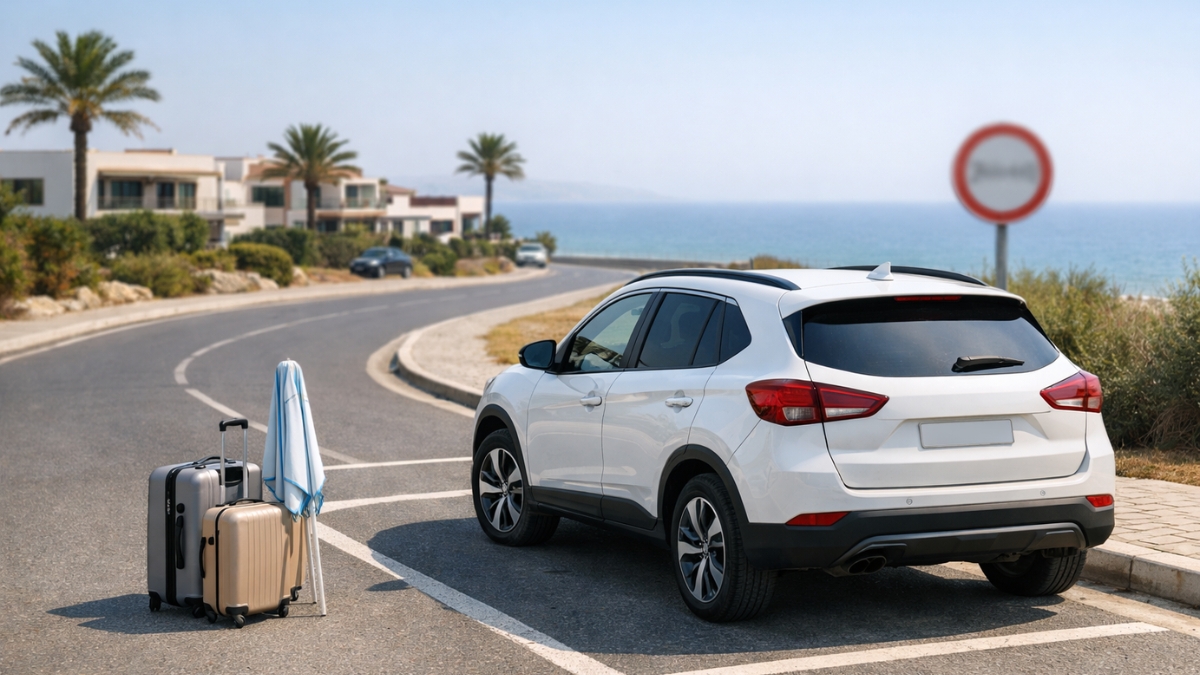
Cabo Negro is one of the easiest beach escapes from Tangier: close enough for a day trip, calm enough for a weekend, and simple to reach if you know which roads feel smooth and which spots tend to slow drivers down. The drive is not long, but the last part around Tétouan–M’diq can change your experience depending on the time of day, season, and where you plan to park.
This guide covers what matters most on the road: surface quality, where drivers typically get caught by speed checks, and how to park without wasting your first hour circling.
Table of contents
-
Best route from Tangier to Cabo Negro
-
Road quality: what to expect by segment
-
Speed traps and enforcement patterns
-
Parking in Cabo Negro: beach, resorts, and busy weekends
-
When a driver is the better choice
-
Quick checklist before you leave
-
FAQ
1) Best route from Tangier to Cabo Negro
Most drivers go via the motorway network toward Tétouan, then continue to the Cabo Negro area (near M’diq). The easiest approach is to set your destination and let live traffic guide the final turns, because small roundabouts and resort entrances are easy to miss at speed.
Use this route link to get the cleanest directions and live ETA: Tangier to Cabo Negro on Google Maps.
How long does it take?
On a normal day, it’s roughly about an hour-plus of driving depending on where you start in Tangier (Medina vs. Malabata vs. highway side) and where exactly you’re staying in Cabo Negro.
2) Road quality: what to expect by segment
Tangier exits and early motorway minutes
Leaving Tangier can be the “messiest” part simply because of city traffic, merges, and impatient lane changes. Once you’re fully on the faster road, the drive becomes more relaxed and predictable.
Road feel: generally smooth, with the usual motorway expansion joints and occasional rough patches near busy interchanges.
Motorway stretch toward the Tétouan area
This is the “easy miles” section: steady pace, limited surprises, and fewer slow vehicles than national roads. If you’re traveling with family or luggage, this part will feel comfortable.
Road feel: consistently good, with clear signage.
The last stretch toward Cabo Negro (resort zone roads)
The final approach is where the drive becomes more “local”: roundabouts, resort entrances, short lanes, and occasional roadside parking that narrows the road. In peak season, this is also where you’ll notice stop-and-go congestion.
Road feel: mostly fine, but expect more speed changes and short sudden stops near roundabouts and resort gates.
Practical tip: When you get within the Cabo Negro/M’diq area, reduce speed earlier than you think you need to, many small speed-limit changes happen right before roundabouts and entry zones.
3) Speed traps and enforcement patterns
If you’re used to wide-open motorway driving, the north coast area can catch you out because enforcement often appears where drivers “naturally” speed up: long straight approaches, downhill runs, and the exits leading into towns and resort corridors.
Where drivers commonly get caught
-
Motorway exits (speed drops quickly as you leave faster lanes)
-
Approaches to roundabouts (especially after a long straight)
-
Town edges (the “last fast moment” before the first buildings)
-
Downhill sections (where your speed creeps up quietly)
What to do so you don’t get surprised
-
Treat every exit like a speed-change zone: start easing off before the sign, not after it.
-
Use cruise control on long steady sections if you’re comfortable with it.
-
Don’t “follow the fast car” through the last 10–15 minutes; that’s where speed checks often pay off.
Typical posted limits to keep in mind (general rule of thumb in Morocco):
-
Urban areas often around 60 km/h
-
National roads often around 100 km/h
-
Motorways often around 120 km/h
(Always follow posted signs on the day, limits can change quickly near towns and resort corridors.)
4) Parking in Cabo Negro: beach, resorts, and busy weekends
Parking is the main difference between a relaxing arrival and a frustrating one. Cabo Negro has resort-style layouts: some areas are easy (private lots), and some become chaotic (beach access points on weekends).
Resort and residence parking (easiest option)
If you’re staying at a residence, hotel, or gated complex, parking is often the simplest: a designated spot, guarded entry, or a private lot. Confirm with your host whether it’s inside the gate and whether you need a code or security check-in.
Beach and public access parking (weekend reality)
On Saturdays, Sundays, and summer evenings, the “closest-to-the-water” parking fills first. After that, drivers circle, double-park briefly, and create small bottlenecks. The trick is to choose convenience over perfection:
Better strategy:
-
Park slightly farther back where the road is wider and walking is easier
-
Avoid blocking gates and entrances (towing or fines are not worth it)
-
If you’re arriving at peak time, aim for a clean, legal spot, even if it’s a 6–10 minute walk
ViaMichelin’s Cabo Negro parking map can help you identify parking zones and lots before you arrive:royaume du maroc/tanger tetouan al hoceima
Simple “parking rules” that save you stress
-
Don’t leave valuables visible (even in a quiet resort area).
-
If you’re unsure whether a spot is okay, choose a different one.
-
At night, prefer well-lit areas near entrances rather than isolated corners.
5) When a driver is the better choice
Even though the route is short, hiring a driver can make more sense in a few common situations:
-
You’re arriving late and don’t want to deal with roundabouts, resort entrances, and parking decisions in the dark.
-
You’re traveling as a group (kids, older relatives, lots of bags).
-
You’re going for a day trip and want maximum beach time with minimum logistics.
-
You expect heavy weekend traffic and don’t want the “parking hunt” to start the day.
A driver turns the trip into a drop-off experience: you arrive, step out, and start your day, no mental load.
6) Quick checklist before you leave
-
Open your route on your phone before starting (so it doesn’t load slowly mid-drive).
-
Keep small cash handy (for small stops or quick needs).
-
Sunglasses for coastal glare, especially late afternoon.
-
Water in the car (short drive, but it helps).
-
Decide your “parking plan” in advance: private lot vs. beach access area.
7) FAQ
How far is Cabo Negro from Tangier by road?
Roughly around 70–75 km depending on your exact start point and the entrance you take into Cabo Negro.
Is the road safe for first-time drivers in Morocco?
Yes, especially if you stay calm on city exits and slow down early near roundabouts and resort corridors.
Are speed checks common on this route?
They can be, especially near exits, town edges, and roundabout approaches. The safest plan is to follow posted signs and ease off early.
What time should I leave Tangier to avoid congestion?
Weekdays late morning or early afternoon are often smoother. Weekends can get busy near coastal access points.
Is parking easy in Cabo Negro?
It depends. Resort complexes are usually easier; beach access parking gets crowded on weekends and summer evenings.
Can I do Tangier to Cabo Negro as a day trip?
Yes—many people do. The drive is short enough that your main time risk is weekend congestion and parking, not distance.
