
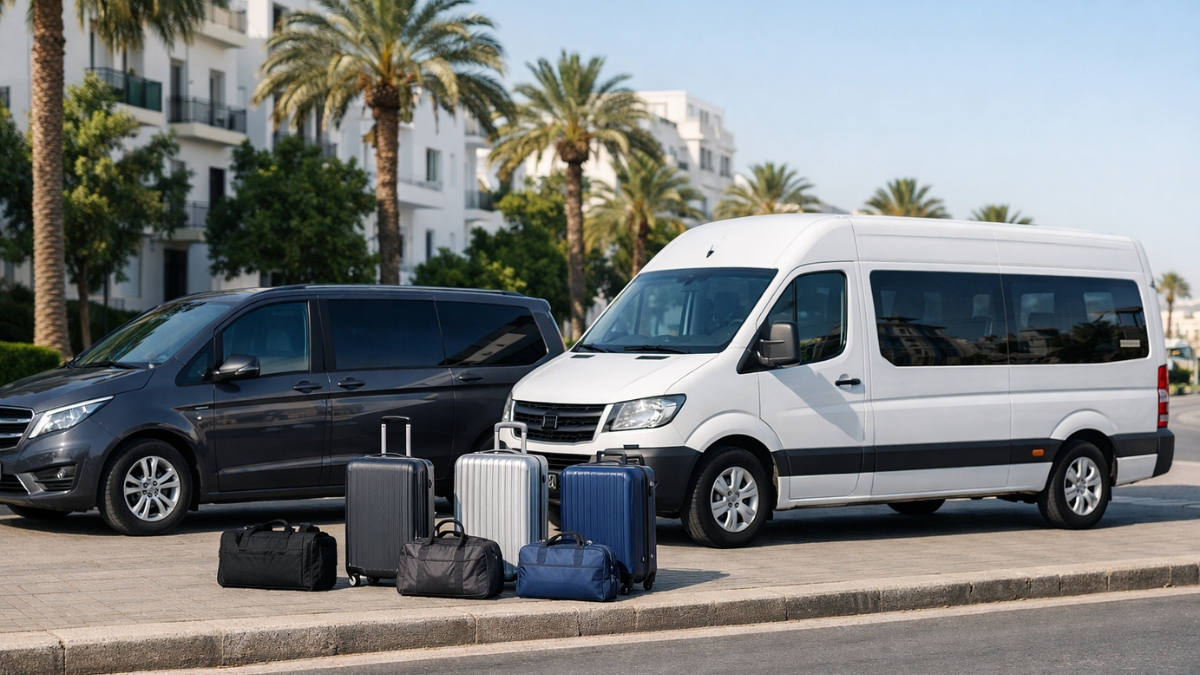
When you search for a “van rental” in Tangier, you’ll see listings labeled minivan, people carrier, 7-seater, 9-seater, passenger van, or sometimes just “van.” The problem is that different rental companies use these words differently, so travelers book the wrong size, then get surprised by luggage space, seat comfort, or even what kind of vehicle shows up.
This guide makes it simple: what usually counts as a minivan versus a passenger van, how to choose based on your group and bags, and the practical questions to ask before you confirm.
Table of contents
The quick difference in one sentence
What most rentals mean by “minivan” in Tangier
What “passenger van” usually means
Seat count rules that change the category
Luggage space: why seats don’t tell the whole story
Comfort, doors, and ride feel
Fuel and toll cost expectations
Which one you should book: real scenarios
Booking checklist: questions that prevent surprises
FAQ
1. The quick difference in one sentence
A minivan is usually a car-based family vehicle (often 5–8 seats) built for comfort and flexible seating, while a passenger van is typically a larger, more “bus-like” vehicle (often 9+ seats) built to carry more people, sometimes at the expense of luggage space and car-like handling.
2. What most rentals mean by “minivan” in Tangier
In rental terms, a minivan usually refers to a family mover with sliding doors (often), a lower step-in height than big vans, and seats you can fold or remove to create luggage room. In many markets, these are described as MPVs/people carriers.
Typical minivan setups you’ll see:
5 seats with huge trunk (great for luggage-heavy couples/families)
7 seats (2+3+2) with moderate trunk space
8 seats in some models, but luggage space shrinks when all seats are up
What matters: minivans are designed to feel close to a car—easier to park, easier to drive in city traffic, smoother for longer rides.
3. What “passenger van” usually means
A passenger van is the larger category: taller body, longer wheelbase, and more rows. These are made to move groups, often with higher roof options.
Common passenger-van setups:
9 seats (very common in North Africa rentals)
12–15 seats (less common for self-drive rentals, more common with a driver)
Important reality: a 9-seater can be perfect for a group if you understand the luggage trade-off. With every seat filled, the “trunk” might be smaller than you expect. Some layouts leave only a narrow rear cargo strip.
Safety and handling are also different. A larger passenger van does not drive like a minivan, especially when fully loaded—NHTSA specifically notes that big passenger vans handle differently and require extra caution compared to smaller family vans. (External reference: NHTSA guidance on 15-passenger vans)
4. Seat count rules that change the category
In practice, rentals often draw the line at seat count:
Up to 8 passenger seats (plus driver) often gets treated like a “car category” in many classification systems.
More than 8 passenger seats (plus driver) typically moves into a bus/minibus-style category in formal vehicle classification.
A well-known reference point is the European M-category breakdown: M1 is up to 8 passenger seats, while M2 is more than 8 passenger seats (small bus/minibus territory). (External reference: EU vehicle type categories M1/M2)
Why you should care: category boundaries often affect insurance terms, deposit rules, and whether a company prefers to supply the van with a driver.
5. Luggage space: why seats don’t tell the whole story
This is where most booking mistakes happen.
A “7-seater” does not automatically mean “fits 7 people + 7 suitcases.” Here’s the real pattern:
Minivan (7 seats):
With 7 passengers, luggage space is limited (often best for soft bags).
With 5 passengers, luggage space is usually excellent.
Passenger van (9 seats):
With 9 passengers, luggage can become the main problem unless you pack light.
Some 9-seaters have better rear space than others—model matters a lot.
Best rule: count suitcases first, then choose seats. If everyone has a large suitcase, you may need either:
fewer passengers per vehicle, or
a second vehicle, or
a bigger van with smarter luggage planning, or
a driver solution that includes proper luggage configuration.
6. Comfort, doors, and ride feel
Minivan comfort strengths:
More car-like suspension
Easier entry for kids and older travelers
Often quieter at motorway speed
Sliding doors can be a lifesaver in tight parking
Passenger van strengths:
More seats, more upright cabin
Higher roof can feel roomy
Better for short-to-medium city transfers with groups
Great for “everyone together” logistics
Where passengers feel the difference most: the last row. In many vans, the last row is best for smaller adults or teenagers on longer trips.
7. Fuel and toll cost expectations
Even when fuel prices shift, the pattern stays consistent:
Minivan: usually lighter and more aerodynamic → often better fuel economy than large vans.
Passenger van: heavier and taller → often higher fuel use, especially loaded.
On toll roads, the category/axle class can sometimes influence tolling in some systems, but most travelers notice the cost difference mainly through fuel and time spent maneuvering/parking.
8. Which one you should book: real scenarios
Choose a minivan if:
You’re 4–6 people with luggage (best balance)
You’ll do city driving in Tangier and want easy parking
Comfort matters for a longer day trip
You want flexible seats (fold/slide) for mixed luggage days
Choose a 9-seat passenger van if:
You’re 7–9 people, and luggage is light-to-moderate
Your priority is keeping everyone in one vehicle
You’re doing mostly motorway or planned routes with easier parking
You’re okay with a bigger vehicle feel
Consider two vehicles instead of one van if:
Everyone has a large suitcase
You’ll be parking in tight spots often
You want faster loading/unloading and less stress
Consider a driver if:
Your group is large and you want zero navigation/parking pressure
You’re arriving late or managing a tight schedule
You want a smoother, safer group experience in a larger van
9. Booking checklist: questions that prevent surprises
Ask these before you confirm:
What is the exact seat count (including driver seat)?
What is the exact model (or at least “similar to” list)?
With all seats up, how many large suitcases fit?
Does the minivan have sliding doors?
Is luggage allowed on seats (some companies say no for safety/cleanliness)?
Are there restrictions on where you can drive (mountain/desert routes)?
What’s the policy if you need to swap for a bigger vehicle at pickup?
If the answer is vague (“it fits everyone”), push for the suitcase number. That’s the clearest truth test.
FAQ
What counts as a minivan in Tangier rentals?
Usually a 5–8 seat family vehicle (often called MPV/people carrier) designed for comfort and flexible seating, not maximum passenger count.
Is a 9-seater a minivan or a passenger van?
In most rental usage, a 9-seater is treated as a passenger van because it crosses the “more than 8 passenger seats” threshold used in many vehicle classifications.
Can 9 people travel with 9 suitcases in one van?
Often no, unless bags are small/soft or the van has exceptional rear cargo space. This is the most common mismatch.
Which is easier to drive in Tangier city: minivan or passenger van?
Minivan. It’s typically more car-like, easier to park, and less stressful in tight streets.
Do passenger vans feel different on the highway?
Yes. Larger passenger vans can feel more sensitive to load, wind, and braking distance, especially fully occupied.
What’s the safest way to choose if I’m unsure?
Count passengers + count large suitcases. If luggage is heavy, either step down passenger count, use two vehicles, or choose a bigger solution (often with a driver).
