
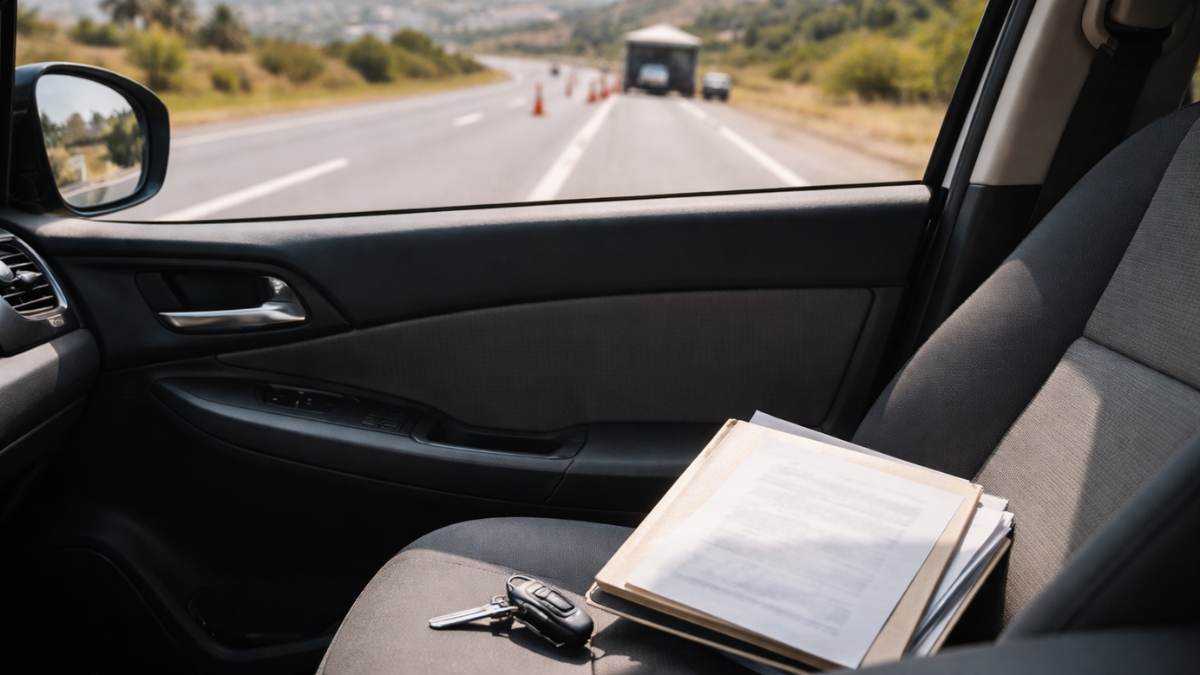
Police checks around Tangier are normal, especially on busy approaches and intercity roads. Most of the time, they’re quick: you slow down, follow the signal, show the right papers, and you’re on your way. The travelers who get delayed are usually the ones who look unprepared (digging for documents, giving mixed answers, or arguing about small things).
This guide is built to help you pass through smoothly, whether you’re driving your own car or a rental.
Table of contents
Why checks are common around Tangier
The documents to keep ready (driver + vehicle)
Rental-car specifics that prevent delays
The “30-second” approach that keeps it calm
Typical questions you may be asked
What can slow you down (and how to avoid it)
If there’s a fine or issue: keep it official
Mini checklist before you start the engine
1. Why checks are common around Tangier
Tangier is a high-movement area: ports, cross-country traffic, airport transfers, and a lot of day trips toward coastal towns and nearby cities. That mix naturally creates more roadside controls than quieter regions.
You’re more likely to notice checks:
On main entrances/exits to the city (ring-road style approaches)
On roads linking Tangier with nearby destinations (coastal and intercity corridors)
Around port access routes and high-traffic junctions
The key thing to remember: these checks are routine. Acting like it’s routine helps it stay routine.
2. The documents to keep ready (driver + vehicle)
Think of it as two piles: your personal ID and the car’s paperwork. If you can hand over both quickly, you’ve already done 90% of the “smoothness.”
Driver documents (keep accessible)
Passport or national ID (original is best; if you’re worried about carrying it, keep it secure and easy to reach)
Valid driving licence matching the vehicle category
Vehicle documents (keep in the glovebox)
Moroccan road-safety guidance emphasizes carrying core vehicle papers such as the driving licence, proof of insurance, and registration. Here’s the official checklist reference: NARSA driving documents checklist.
At a minimum, have:
Vehicle registration (often called “carte grise”)
Proof of insurance
Up-to-date inspection proof where applicable (commonly handled by the owner/rental company)
If you’re in a rental, you may have copies instead of originals, what matters is that the paperwork clearly matches the car you’re driving.
3. Rental-car specifics that prevent delays
Rental cars are common in Tangier, and officers see them every day. Still, these details help a lot:
Rental agreement / contract: keep the printed contract or the rental sheet that shows the vehicle details and rental dates.
Named driver(s): if you have a second driver, make sure they are listed. If they’re not, don’t let them drive “just for a bit”, that’s the kind of situation that turns a quick stop into questions.
Vehicle matches paperwork: plate number, model, and VIN reference (if shown) should match the documents.
A simple habit: before you leave the pickup point, take 30 seconds to confirm the plate number on the papers matches the car.
4. The “30-second” approach that keeps it calm
When you see a checkpoint or an officer signaling vehicles:
Slow down early and stay predictable
No sudden lane changes, no hard braking last second.Window down, lights on if needed, hands visible
This is a universal “I’m cooperative” signal.Greet politely and wait for the request
A simple “Salam” / “Bonjour” is enough. Short, respectful, calm.Hand over documents in one clean motion
This is where most delays happen, people rummage through bags, open ten apps, or hand over the wrong thing first.
Tip: Keep your documents in a slim folder in the glovebox so you can grab everything together.
5. Typical questions you may be asked
Most checks are just documents. Sometimes you’ll get a quick question or two, especially around Tangier because many drivers are crossing regions.
Common questions include:
Where are you coming from?
Where are you going?
Who owns the car / is it a rental?
How long are you staying?
Keep answers simple and consistent. You don’t need a long story, just clear basics.
If language is a barrier, a translation app can help, but don’t start filming or recording the stop. That can make things unnecessarily tense.
6. What can slow you down (and how to avoid it)
Here are the most common “avoidable slowdowns”:
Documents scattered in different places
Fix: keep everything in one folder (glovebox), and keep ID on you.A driver not listed on the rental contract
Fix: list the second driver officially or don’t switch drivers.Unclear insurance proof
Fix: keep the insurance page visible and readable (even if it’s a copy).Arguing about process
Fix: stay calm, let the officer speak, respond politely, and handle questions step-by-step.Looking distracted or impatient
Fix: treat it like a routine security step, because it is.
7. If there’s a fine or issue: keep it official
Sometimes a stop can involve a fine (speed, phone use, paperwork problem). The smooth path is always the official one:
Ask clearly what the issue is.
Ask what the official next step is.
If paperwork is missing because it’s a rental-company issue, call the rental company immediately and ask them to confirm/send the needed document.
One practical reference many travelers rely on for “what authorities expect you to carry” is government travel guidance. For example, the UK government advises motorists to carry insurance, licence, and registration documents while driving in Morocco: UK government Morocco travel advice (vehicle documentation).
Just keep everything respectful and straightforward. The goal is not to “win a debate”, it’s to finish the interaction quickly and correctly.
8. Mini checklist before you start the engine
Passport/ID accessible (secure, but reachable)
Driving licence accessible
Rental contract printed or saved offline
Registration + insurance proof in glovebox folder
Second driver listed (if applicable)
Phone on hands-free (don’t hold it while driving)
Calm plan for answers: start point + destination
