
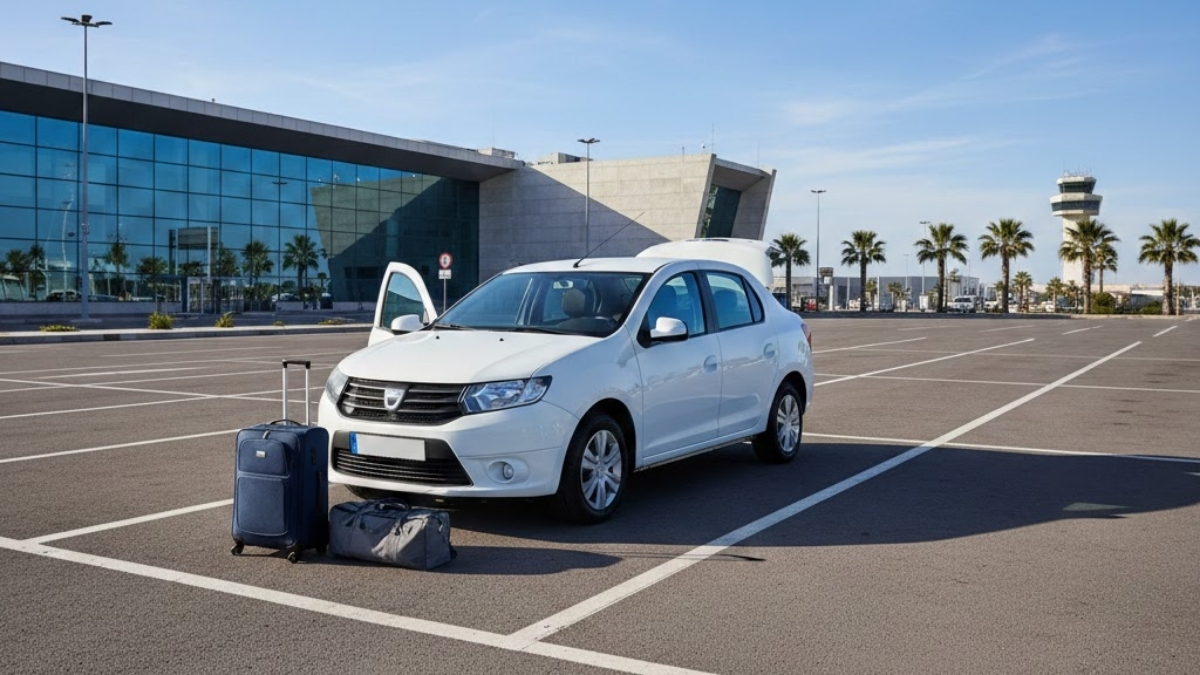
Returning a rental car at Tangier Ibn Battouta Airport (TNG) is usually simple, until you arrive during a busy window, miss the correct airport access lane, or try to do the inspection in a hurry. The best returns follow a clear method: confirm the meeting point, time your arrival with a buffer, and complete a fast but thorough check before you hand over the keys.
At MarHire Car Tangier, the smoothest airport returns are the ones that treat the last 30 minutes as a process, not a guess. This guide shows you where to meet, what to check, and how early to arrive so your return is calm, even during peak traffic or tight flight schedules.
Table of Contents
Quick Overview
Know Your Return Type: Airport Meet-Up vs Drop-Off
Where to Meet at TNG: The Practical Meeting Point System
WhatsApp Coordination: The 5 Messages That Prevent Confusion
How Early to Arrive: Smart Timing Rules
Fuel, Parking, and Airport Access Tips
The 8-Minute Return Checklist
If You’re Late: What to Do (Without Stress)
FAQ
Quick Overview
Your return can be either: agent meet-up at the airport or drop-off in/near airport parking. Confirm which one you have.
Use a meeting point that is easy to describe, well-lit, and stable (doesn’t change if you move 20 meters).
Plan arrival time using predictive traffic, not only live traffic. Waze “Plan a drive” is built for this
For airport access and official passenger guidance, the ONDA airport page is the most reliable reference
Do not skip photos. A 60-second photo routine prevents most return-day misunderstandings.
Know Your Return Type: Airport Meet-Up vs Drop-Off
Before anything else, confirm which return method applies:
Option A: Agent meet-up at the airport
You return the car and meet the agent at a defined spot. This is common when:
the car is being collected directly at the airport
you have a tight schedule and want a fast handover
the agency manages the return on-site and completes the paperwork with you
Option B: Drop-off in a designated parking zone (then meet/confirm)
You park the car in an agreed area (often airport parking) and either:
meet the agent there, or
confirm by WhatsApp that the vehicle is parked and ready for inspection
This method is often calmer because the car is stationary, lighting is better, and you can do the inspection without pressure from traffic flow.
The mistake to avoid: arriving and asking “where should I go?” while you are already inside airport circulation lanes. Decide the return type and meeting point before you start the drive.
Where to Meet at TNG: The Practical Meeting Point System
Airports can feel confusing because “outside arrivals” might mean several different exits. Instead of guessing, use a simple system:
Meeting Point Rule 1: Choose a point you can prove with a photo
A good meeting point is one you can instantly show:
the terminal frontage area signage (without needing to explain)
a clearly named “parking” entry sign or a fixed landmark
a well-lit curb area that is safe to stand beside luggage
Meeting Point Rule 2: Avoid “moving targets”
Avoid instructions like:
“near the taxis”
“by the café”
“outside the main door”
Those areas change with crowds and traffic. You want a fixed point that remains valid even if people are arriving at the same time.
Meeting Point Rule 3: Always set a fallback
Your fallback is a second point and a simple timing rule:
“If we miss each other, we both go to the fallback spot and wait 7 minutes.”
This prevents the classic problem where both sides are present but keep moving and never meet.
WhatsApp Coordination: The 5 Messages That Prevent Confusion
WhatsApp is not for long explanations. It is for short status updates tied to real milestones. Use these five:
Before you leave your hotel:
“Heading to TNG now. ETA __ minutes. Return type: meet-up / parking drop-off.”When you enter the airport approach:
“Approaching airport. I will go to meeting point: __ (sending photo if needed).”When parked or stopped at the meeting point:
“Arrived. I’m at __. Sending location photo now.”After inspection photos are taken:
“Photos done: fuel + mileage + bumpers + wheels.”When keys are handed over:
“Return completed. Thank you.”
This sequence keeps everyone aligned and reduces the risk of delays caused by “Where are you?” loops.
How Early to Arrive: Smart Timing Rules
The right return time depends on what you must do after the return (flight, ferry, meeting). For airport returns, use these timing rules:
Rule A: Add two buffers
Buffer 1: Traffic buffer (getting there)
Off-peak: add 15–20 minutes
Busy periods: add 30–60 minutes (more if you’re far from the airport)
Buffer 2: Return buffer (handover + inspection)
Plan 15–25 minutes for:
finding the exact return bay/parking row
unloading luggage
photos and walkaround
paperwork and confirmation message
Rule B: Use predictive departure timing
Live traffic can look fine at the moment you check it, then spike 10 minutes later. For returns during busy hours, use a planned-drive feature so you depart with enough margin. Waze “Plan a drive” is specifically designed for this: https://support.google.com/waze/answer/6262569?co=GENIE.Platform%3DAndroid&hl=en
Rule C: Treat the “last mile” as the risk zone
The last 1–3 km can be slower than the first 10 km because of:
airport circulation lanes and signage
parking barriers and internal speed limits
stopping restrictions in curb areas
Arriving “on time” for the return meeting point can still mean “late” for your flight check-in if you have no buffer.
Fuel, Parking, and Airport Access Tips
Fuel strategy
If your policy requires a certain fuel level, refuel before you enter airport traffic. Don’t plan to refuel “near the terminal” unless you already know exactly where you will do it.
Best practice:
refuel 10–20 minutes before reaching the airport
keep the receipt (or a photo of it) until everything is closed
Parking strategy
If the return is in a parking zone:
park cleanly within lines
avoid blocking lanes or tight corners
choose a spot with decent lighting when possible (helps with photos)
Access strategy
Airport access is all about following signs and not improvising last second. If you are uncertain, quickly review the airport access/parking guidance on the ONDA page before your return drive: https://www.onda.ma/Nos-Aéroports/Aéroport-Tanger-Ibn-Batouta
The 8-Minute Return Checklist
Do this checklist every time. It is fast, professional, and reduces disputes.
Remove personal items
Check glovebox, door pockets, under seats, trunk corners.Quick interior reset
Remove trash, shake mats if dusty, wipe obvious spills.Fuel check
Photo of fuel gauge + keep refuel receipt if you topped up.Mileage photo
Dashboard photo showing mileage clearly.Exterior walkaround photos
Front bumper, rear bumper, both sides, and all four wheels.Note anything new immediately
If you notice a fresh scratch or unknown mark, mention it before leaving.Return time confirmation
If you are even slightly late, send the message early rather than arriving silently.Keys and final message
Hand keys as agreed and send “Return completed” with location confirmation.
If You’re Late: What to Do Without Stress
If you realize you will arrive late:
message the agent with your updated ETA immediately
avoid aggressive driving to “make up time”
keep the process calm: park, photos, handover, confirmation
Late returns become a problem mainly when communication stops.
FAQ
Where exactly do I meet the agent at Tangier Airport?
Your meeting point depends on whether it’s a curb meet-up or a parking return. Confirm the plan in advance and use a fixed, photo-verifiable landmark.
How early should I arrive for an airport return?
As a safe approach: arrive 30–60 minutes earlier than your “normal” expectation during busy periods, plus 15–25 minutes for the return process.
Should I rely on Google Maps time estimates?
Use them as a baseline, but for busy periods use a planned-drive feature that predicts traffic and suggests when to leave.
What’s the biggest mistake travelers make?
They plan the drive time but forget the last steps: parking, inspection photos, and paperwork.
Do I really need photos if everything is fine?
Yes. Photos are the simplest way to keep the return clean and quick.
What if I’m returning with lots of luggage?
Choose a parking-based return if possible. It gives you space to unload safely and do the inspection calmly.
