
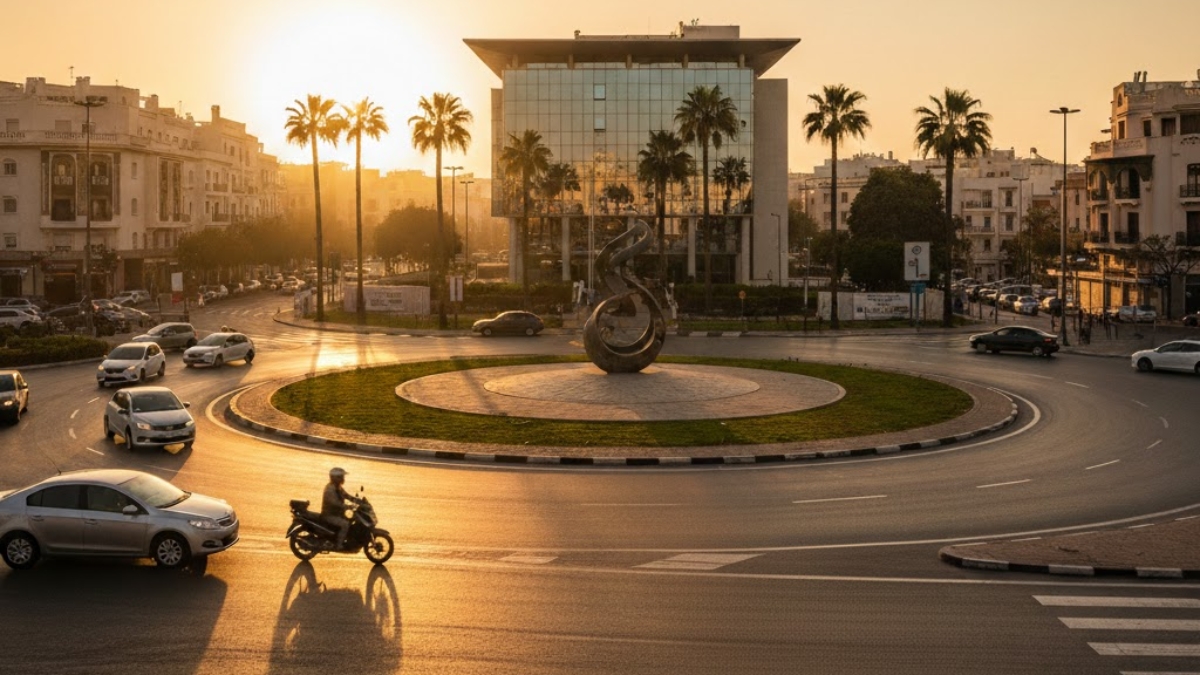
Returning a rental car in Tangier can be very quick, depending on when you arrive. Rush hour in Tangier brings the usual mix: dense roundabouts, stop-and-go near main arteries, and slower access around busy zones like the Corniche/Malabata, city-center boulevards, and airport approaches. The result is predictable: travelers plan the return using “Google says 20 minutes,” then arrive late, stressed, and rushed during inspection.
At MarHire Car Tangier, the easiest returns follow one simple rule: time your return around traffic patterns, not just distance. This guide gives you a practical timing strategy, what to do if you can’t avoid rush hour, and the checklist that keeps the handover smooth.
Table of Contents
What “Rush Hour” Looks Like in Tangier
The Smart Timing Rule: Build a Traffic Buffer
Best Return Windows by Return Location
If You Must Return During Rush Hour: Do This
Airport Returns vs City Returns: What Changes
The 10-Minute Return Checklist That Prevents Disputes
FAQ
What “Rush Hour” Looks Like in Tangier
Tangier’s rush hour is less about one single highway jam and more about multiple slow zones stacking together:
Roundabout clusters where traffic pulses (you wait, then move 10 meters, then wait again).
Coastal/corniche flow where lanes compress and parking activity slows traffic.
City-center merges where drivers change lanes late and create sudden braking waves.
Airport approach traffic (especially when flight arrival/departure windows overlap and more taxis/shuttles appear).
The important point: rush hour delays are not always visible at the start of your drive. You can have a “fast first 10 minutes,” then lose 25 minutes in the final 3–5 km.
The Smart Timing Rule: Build a Traffic Buffer
A smart return timing plan has two buffers, not one.
Buffer 1: Traffic buffer (getting there)
Off-peak: add 15–20 minutes
Rush hour: add 30–60 minutes (depending on distance and route complexity)
Buffer 2: Handover buffer (finishing the return)
Even when you arrive on time, you still need:
parking and locating the return bay/agent
a quick inspection
fuel and mileage confirmation
paperwork closeout
deposit/hold notes (if applicable)
Plan 15–25 minutes for handover when you want it stress-free. If you’re in a rush, you’ll skip photos and forget questions, exactly how misunderstandings happen.
Best Return Windows by Return Location
You typically return either in the city (agency office / downtown) or at Tangier Ibn Battouta Airport. Each behaves differently during rush hour.
1) City returns (downtown / hotel-zone proximity)
Best windows:
Mid-morning to early afternoon (generally calmer)
After the main evening peak settles (depending on your area)
Why city returns slow down in rush hour:
more lane changes
more double-parking activity
more short, aggressive merges
more “last 500 meters” congestion
Best practice: if your return time is fixed (meeting, train, ferry), aim to arrive 45 minutes early during peak hours.
2) Airport returns (TNG)
Best windows:
Arrive with enough time to handle: airport access roads + parking flow + return meeting point + terminal entry
Why airport returns slow down in rush hour:
access roads can become dense
parking entrances and internal circulation add delays
if you’re also catching a flight, your stress level is higher and you’ll rush the inspection
Best practice: treat airport return like a mini-project: “arrive early, finish return calmly, then go to the terminal.”
If You Must Return During Rush Hour: Do This
Sometimes you cannot avoid it (work schedule, ferry, flight, hotel checkout). In that case, you win by following a tight process:
1) “Plan a drive” instead of guessing
Use a tool that predicts traffic rather than just showing current conditions. Waze’s “Plan a drive” (Go later) is useful because it considers typical congestion patterns and can warn you earlier. Use the official guidance here so you know where the feature is in the app:
https://support.google.com/waze/thread/181468712/where-is-the-“plan-a-drive”-or-“go-later”-option?hl=en
2) Aim for “arrive early,” not “arrive on time”
During rush hour, “on time” becomes “late” very quickly due to one unexpected bottleneck. Arrive early enough that a 20-minute delay doesn’t matter.
3) Don’t add last-minute stops
The biggest self-inflicted delay is the “quick coffee / quick shopping / quick ATM” stop. If you must stop:
do it before you enter the dense area
keep it to a single stop
park legally (avoid getting blocked in)
4) Keep return communication short and precise
If you’re meeting an agent (airport or city), message:
your ETA
your exact location once you arrive
your plate number if requested
Short messages prevent confusion when everyone is busy.
Airport Returns vs City Returns: What Changes
Airport returns: expect structure, but expect movement
Airports are organized, but they also have:
vehicle circulation rules
parking barriers
traffic officers guiding flow
limited “stop anywhere” tolerance
If you’re not familiar with the airport, take 2 minutes beforehand to confirm parking/access information using the official airport operator page (ONDA):
https://www.onda.ma/Nos-Aéroports/Aéroport-Tanger-Ibn-Batouta
City returns: expect flexibility, but expect unpredictability
In the city, returns can feel simpler, but street conditions can change quickly:
a blocked lane
a busy drop-off zone
a surge of taxis
a new one-way pattern you didn’t anticipate
In practical terms: city returns need a bigger “last mile” buffer.
The 10-Minute Return Checklist That Prevents Disputes
Do this every time, especially when you’re returning under time pressure:
Fuel check
Match the agreed policy. If you refueled, keep the receipt (or a photo).Dashboard photo
Mileage + fuel gauge in one photo if possible.Exterior walk-around photos
Front bumper, rear bumper, each side, and wheels.Interior quick check
Remove trash, shake out sand from mats if you visited beaches, and check under seats for small items.Confirm return time
If you’re even slightly late, mention it immediately—surprises cause friction.Keys and documents
Hand over everything exactly as agreed (keys, papers, parking ticket if applicable).Final confirmation message
A simple “Returned now” with location is enough.
FAQ
What time is rush hour in Tangier?
It varies by season and area, but the consistent pattern is: morning commute windows and late afternoon/evening commute windows. Your safest approach is to plan as if congestion will happen and build a buffer.
Is it easier to return at the airport or in the city?
Airport returns are more structured but can include circulation and parking steps. City returns can be closer to your hotel but more affected by unpredictable street congestion.
How early should I arrive during rush hour?
A strong rule is: arrive 30–60 minutes earlier than normal, plus 15–25 minutes for the handover itself.
What’s the #1 mistake tourists make?
They time the drive to the return point, but forget the last steps: finding the exact entrance, parking, inspection, and paperwork.
I went to the beach, what should I do before return?
Shake out mats, remove sand from door sills, and don’t leave wet items inside the car. Beach sand is the easiest “avoidable problem” at return.
Can I rely only on live traffic when leaving?
Live traffic helps, but predictive timing is better for rush hour. If you can, use a planned-drive feature so you don’t depart too late.
