
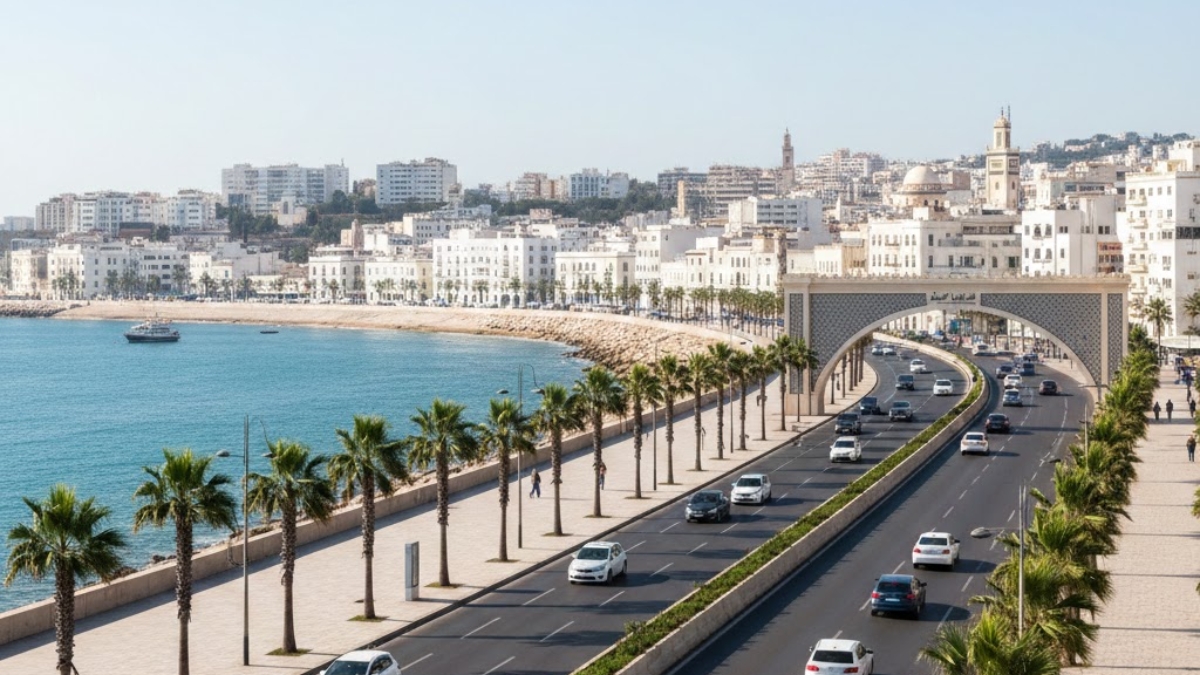
Tangier’s coastal roads are some of the most scenic in northern Morocco, but they are also among the city’s most congested. The Corniche road and the Malabata waterfront axis connect beaches, hotels, cafés, residential districts, and the city center, making them essential routes for both locals and visitors.
If you’re driving in Tangier, understanding when and why traffic builds up along the Corniche and Malabata can save you time, fuel, and stress. This guide breaks down daily and weekly traffic patterns, peak congestion hours, seasonal factors, and practical tips for avoiding delays.
Table of Contents
Why the Corniche and Malabata Matter in Tangier
Overview of Tangier’s Traffic Flow
Morning Traffic: When Congestion Begins
Afternoon & School-Hour Bottlenecks
Evening Rush Hour on the Coast
Weekend Traffic Patterns
Summer & Holiday Congestion
Weather and Event-Driven Traffic
Best Times to Drive the Corniche
Alternative Routes and Detours
FAQs About Tangier Traffic
Why the Corniche and Malabata Matter in Tangier
The Corniche and Malabata roads are not simple coastal drives. They function as:
Main connectors between Tangier city center and eastern districts
Access roads to beaches, hotels, cafés, and shopping areas
A corridor used by commuters, taxis, buses, and tourists
Because of this mixed usage, traffic intensity changes dramatically depending on time of day, day of the week, and season.
Overview of Tangier’s Traffic Flow
Tangier traffic follows predictable urban patterns, with congestion concentrated around:
Commuter hours
School drop-off and pickup times
Evening leisure activity along the coast
Traffic data from global urban congestion tracking platforms consistently shows that coastal and mixed-use roads experience sharper peaks than residential streets, especially in growing port cities like Tangier. Urban congestion trends in cities of similar size and structure are tracked internationally by the TomTom Traffic Index, which highlights how peak hours disproportionately affect coastal corridors.
https://www.tomtom.com/traffic-index/
Morning Traffic: When Congestion Begins
7:30 AM – 9:30 AM
Morning congestion on the Corniche and Malabata typically starts around 7:30 AM and peaks between 8:00 and 9:00 AM.
Main causes:
Office commuters heading toward the city center
School drop-offs near Malabata and residential zones
Taxi concentration near hotels and main intersections
Traffic flows more smoothly closer to the seafront than at inland junctions, where merging lanes often slow movement.
Afternoon & School-Hour Bottlenecks
12:30 PM – 2:00 PM
Midday congestion is less intense but still noticeable, particularly on weekdays. This period is driven by:
School pickups
Lunch breaks for office workers
Delivery traffic near cafés and restaurants
While traffic usually moves steadily, roundabouts and traffic lights near Malabata can create short but frequent delays.
Evening Rush Hour on the Coast
5:30 PM – 8:00 PM (Most Congested)
This is the most congested time for both the Corniche and Malabata.
Why evenings are the worst:
Workers returning home
Residents heading to cafés and seaside restaurants
Hotel shuttles and taxis operating at full volume
Pedestrian crossings increasing along the promenade
Between 6:30 PM and 7:30 PM, stop-and-go traffic is common, especially near beach access points and major intersections.
Weekend Traffic Patterns
Fridays, Saturdays & Sundays
Weekends shift congestion patterns later into the day:
Late mornings remain relatively calm
Traffic builds from 4:00 PM onward
Peak congestion often extends past 9:00 PM
On summer weekends, beach traffic alone can double normal vehicle volume along the Corniche.
Summer & Holiday Congestion
During July, August, and public holidays, congestion increases significantly:
Tourist arrivals rise sharply
Local families head to the coast daily
Parking searches slow overall traffic flow
During these periods, even off-peak hours can feel busy. Real-time traffic tools become especially useful for navigating delays, and many drivers rely on live congestion layers in navigation apps. Google explains how real-time traffic data and congestion indicators work in Google Maps’ traffic features, which are widely used in Moroccan cities.
https://support.google.com/maps/answer/144339
Weather and Event-Driven Traffic
Traffic conditions worsen noticeably when:
Rain reduces visibility and driving speed
Cultural or sporting events take place near the seafront
Weekend festivals attract pedestrian crowds
Even light rain can slow traffic along the Corniche due to reduced lane visibility and cautious driving behavior.
Best Times to Drive the Corniche
If you want a smooth drive with minimal congestion, aim for:
Before 7:30 AM
Between 10:00 AM and 12:00 PM
After 9:00 PM (especially on weekdays)
These windows offer the best balance between visibility, traffic flow, and parking availability.
Alternative Routes and Detours
When congestion peaks, local drivers often:
Use parallel inland roads to bypass seafront bottlenecks
Avoid roundabouts near major beach entrances
Delay short trips until traffic eases
Navigation apps can help identify temporary detours, but local knowledge often provides the fastest escape from coastal congestion.
FAQs About Tangier Traffic Patterns
Is the Corniche always congested?
No. Congestion is highly time-dependent, with evenings being the worst.
Is Malabata busier than the Corniche?
During rush hour, Malabata often experiences heavier congestion due to residential traffic.
Does traffic improve late at night?
Yes. After 9:00 PM, traffic usually flows smoothly.
Is summer traffic much worse?
Yes. Tourist season significantly increases congestion.
Are weekends worse than weekdays?
Evenings and late afternoons are worse on weekends.
Can traffic conditions change suddenly?
Yes. Weather and events can cause rapid congestion spikes.
